View methods side by side.
Choose up to four methods. Add them using the search and share the comparison by copying its link.
| Criterion |  Decision Making Constraint Analysis |  Operations Time Blocking |  Operations Root Cause Analysis | 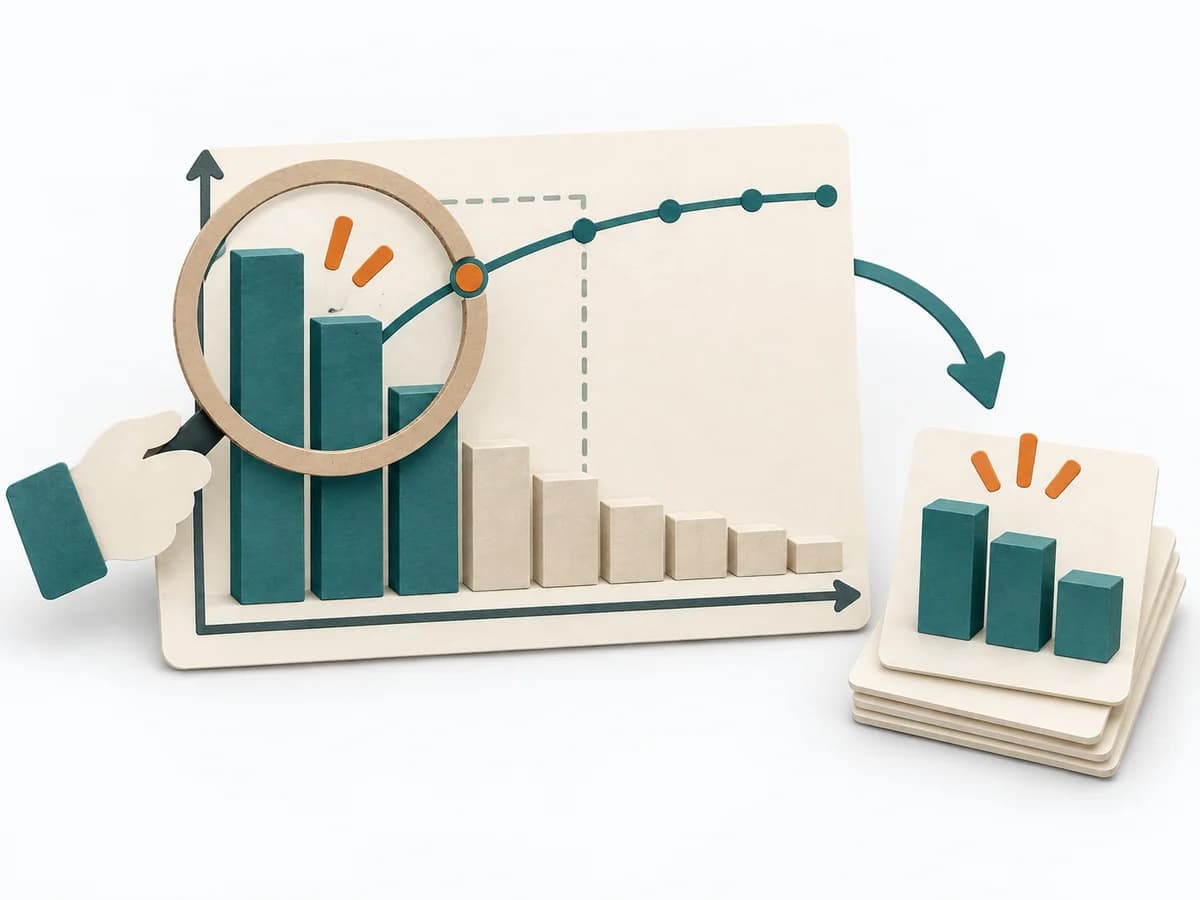 Decision Making Pareto Analysis |
|---|---|---|---|---|
Purposedifferent | When an initiative stalls, the limit often lies not in the idea but in hard or soft boundary conditions. Constraint Analysis separates these limits and shows which of them can actually be shaped. | With a calendar that grows on request, the method makes available time explicit again. It combines appointments, focus work, and buffer into a more realistic day structure. | When a problem keeps recurring and the cause stays unclear, the method exposes the underlying mechanism. It separates symptom, guess, and robust explanation from one another. | In many problem situations, effect is distributed unequally across many causes. A Pareto Analysis separates the few drivers with high leverage from the long remainder and focuses attention on what measurably moves the needle. |
Complexitydifferent | Low | Low | Medium | Low |
Timedifferent | 30-90 min | 15-30 min Planung, laufend | 1-4 h | 30-60 min |
Participantsdifferent | 2-8 | 1 | 3-8 | 1-6 |
Formatdifferent | Workshop + async | Async | Workshop + async | Workshop + async |
Outputdifferent | Constraint List, Hard/Soft Classification, Option Impact Notes, Decision Boundaries | Blocked Calendar, Capacity View, Focus Plan | Problem Statement, Cause Hypotheses, Confirmed Causes, Action Plan | Pareto Chart, Top Causes, Focus List |
Tagsno overlap | ConstraintsDecisionPlanningOptions | PlanningTime managementFocus | Root causeProblem solvingQualityIncident | PrioritizationQualityFocusRoot cause |