View methods side by side.
Choose up to four methods. Add them using the search and share the comparison by copying its link.
| Criterion |  Decision Making Constraint Analysis | 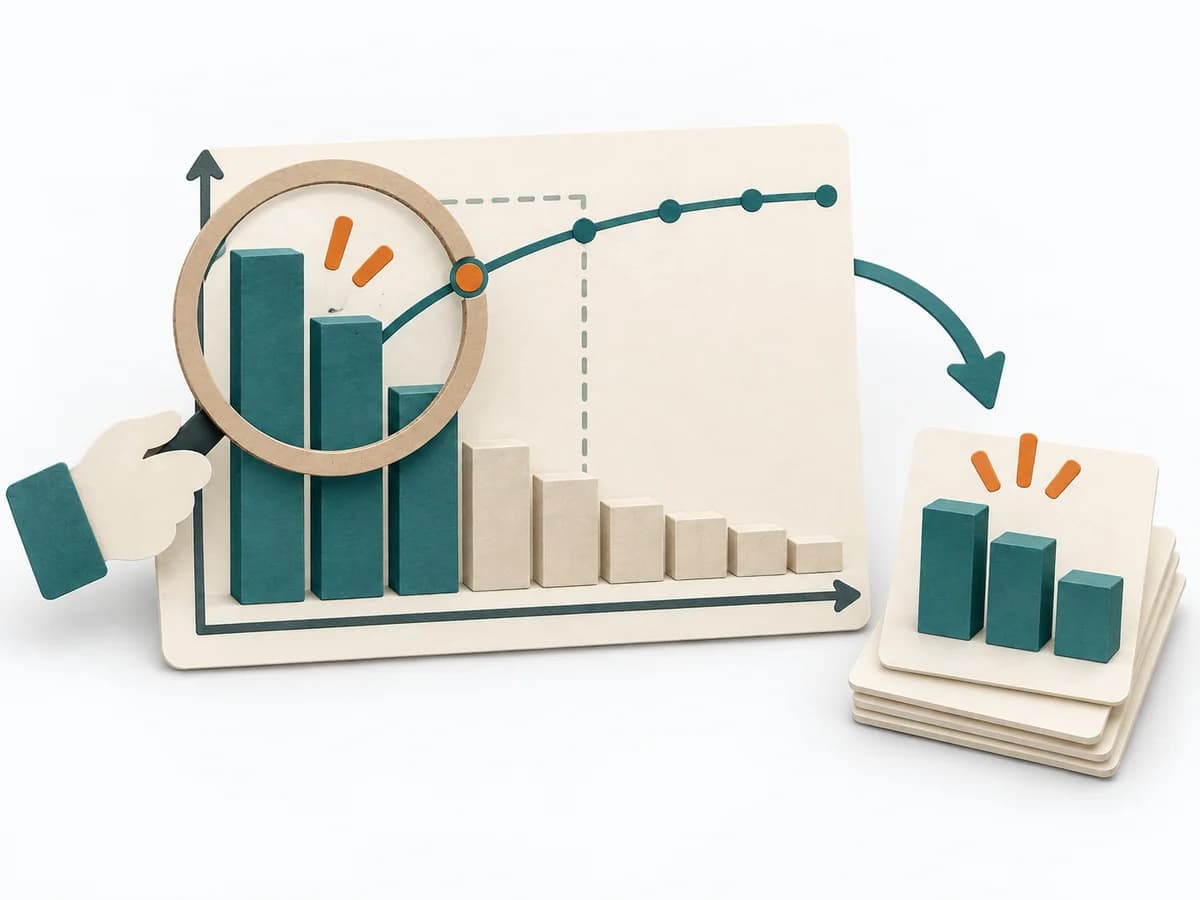 Decision Making Pareto Analysis | 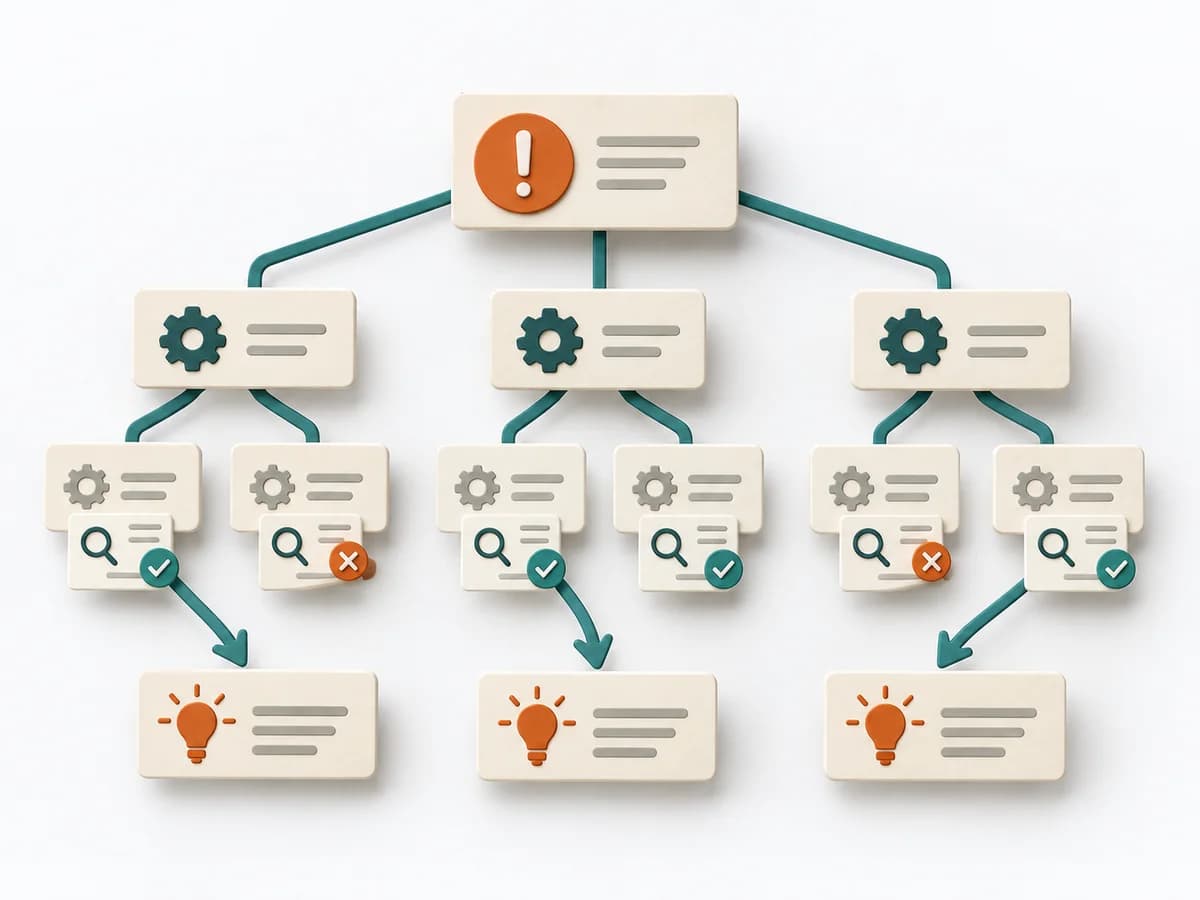 Operations Root Cause Tree Analysis |  Decision Making Decision Tree |
|---|---|---|---|---|
Purposedifferent | When an initiative stalls, the limit often lies not in the idea but in hard or soft boundary conditions. Constraint Analysis separates these limits and shows which of them can actually be shaped. | In many problem situations, effect is distributed unequally across many causes. A Pareto Analysis separates the few drivers with high leverage from the long remainder and focuses attention on what measurably moves the needle. | For a problem with several suspected causes, the method builds a causal structure instead of a mere list. It makes visible how causes connect and where the strongest points of leverage lie. | For decisions with follow-on paths and dependencies, a linear comparison is often not enough. A Decision Tree shows how options branch under conditions and which consequences hang on each branch. |
Complexitydifferent | Low | Low | Medium | Medium |
Timedifferent | 30-90 min | 30-60 min | 1-3 h | 30-90 min |
Participantsdifferent | 2-8 | 1-6 | 2-8 | 1-6 |
Formatdifferent | Workshop + async | Workshop + async | Workshop | Workshop + async |
Outputdifferent | Constraint List, Hard/Soft Classification, Option Impact Notes, Decision Boundaries | Pareto Chart, Top Causes, Focus List | Cause Tree, Evidence Notes, Countermeasures | Decision Tree, Option Map, Assumption List |
Tagsno overlap | ConstraintsDecisionPlanningOptions | PrioritizationQualityFocusRoot cause | Root causeTreeIncidentQuality | DecisionTreeOptions |