View methods side by side.
Choose up to four methods. Add them using the search and share the comparison by copying its link.
| Criterion |  Facilitation Consensus Workshop | 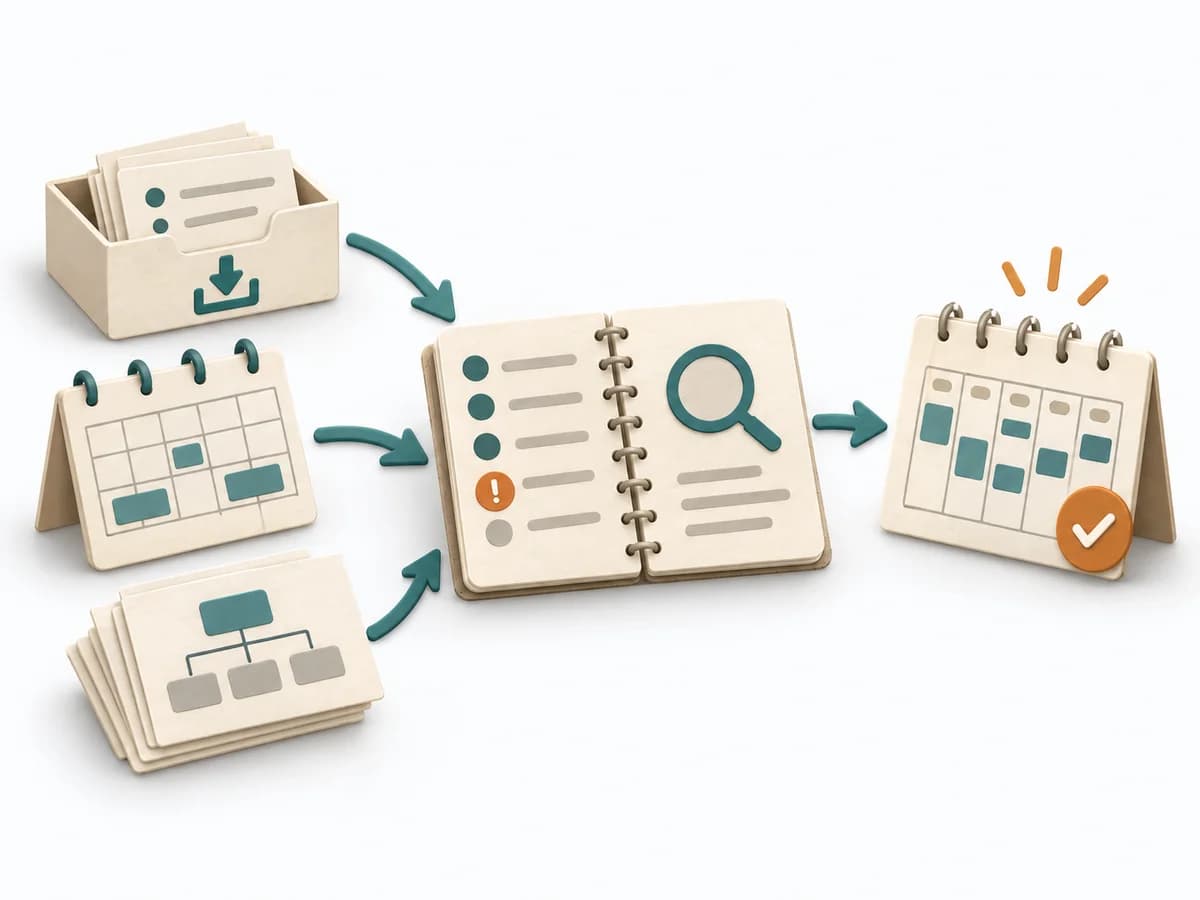 Operations Weekly Review |  Operations Pomodoro Technique |  Facilitation Power Interest Grid |
|---|---|---|---|---|
Purposedifferent | When a group needs a solid decision without outvoting individual factions, a Consensus Workshop creates a negotiable common ground. It makes agreement, reservations, and open tensions discussable at the same time. | In a week with many open loops, the method creates distance from operational noise. It organizes commitments, calendar, and projects so the next week becomes workable. | For easily distracted solo work, the method sets clear time boundaries for concentrated work. It protects attention when large tasks would otherwise fall apart into small avoidance moves. | When many stakeholders compete for attention at once, the Power Interest Grid sorts them by influence and stake. It turns individual contributions into a visible selection. The result is captured as a Power Interest Grid and a stakeholder-specific strategy. |
Complexitydifferent | Medium | Low | Low | Low |
Timedifferent | 1-3 h | 30-60 min | 25 min Zyklen | 30-60 min |
Participantsdifferent | 5-30 | 1 | 1 | 2-8 |
Formatdifferent | Workshop | Async | Async | Workshop |
Outputdifferent | Consensus Clusters, Theme Titles, Priority Areas | Updated Task System, Weekly Focus, Next Actions | Focus Sessions, Task Progress, Interruption Notes | Power Interest Grid, Strategy per Stakeholder |
Tagsno overlap | FacilitationConsensusWorkshopAlignment | ProductivityExecutionPlanning | FocusTime managementProductivityExecution | StakeholdersFacilitationAlignmentPlanning |