View methods side by side.
Choose up to four methods. Add them using the search and share the comparison by copying its link.
| Criterion |  Knowledge Modeling Concept Mapping | 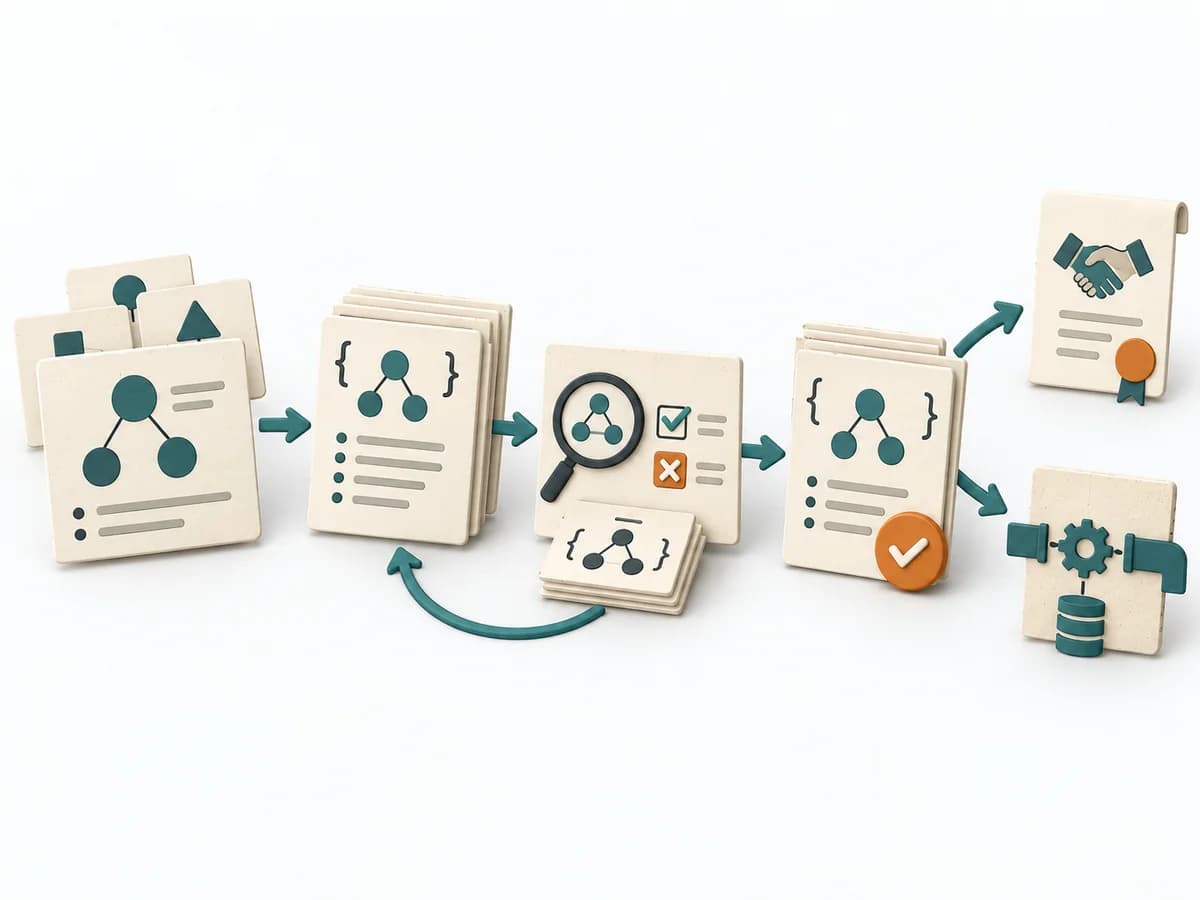 Knowledge Modeling Shape-First Modeling |  Decision Making Red Teaming |  Product Discovery Assumption Mapping |
|---|---|---|---|---|
Purposedifferent | Concept Mapping arranges terms and relationships in a network that makes subject-matter connections tangible. It fits when a topic needs to be understood structurally rather than linearly. | Shape-First Modeling defines data quality through shapes before implementation or integration frays at the edges. The approach fits when validation and data contracts should be part of the design from the start. | For strategic decisions with high reach, agreement and gut feeling are often not enough. Red teaming brings deliberate opposition into the situation and tests where a plan breaks under real counterarguments. | When assumptions still sit unordered in the room, it weighs uncertainty against leverage. It makes visible which hypotheses should be checked first. |
Complexitydifferent | Medium | Medium | High | Medium |
Timedifferent | 1-2 h | Halber Tag pro Domain Slice | 1-4 h | 45-60 min |
Participantsdifferent | 1-8 | 1-4 | 3-8 | 2-8 |
Formatdifferent | Workshop + async | Workshop + async | Workshop | Workshop + async |
Outputdifferent | Concept Map, Relationship Labels, Knowledge Gaps | SHACL or ShEx Shapes, Validation Reports, Data Contracts, Shape Documentation | Challenge Findings, Risk Register, Mitigation Plan | Assumption map, Test backlog, Risk ranking |
Tagsno overlap | KnowledgeConceptsMappingSensemaking | Knowledge graphValidationSemantic | RiskDecisionSensemaking | AssumptionsRiskExperimentsValidation |