View methods side by side.
Choose up to four methods. Add them using the search and share the comparison by copying its link.
| Criterion |  Knowledge Modeling Concept Mapping | 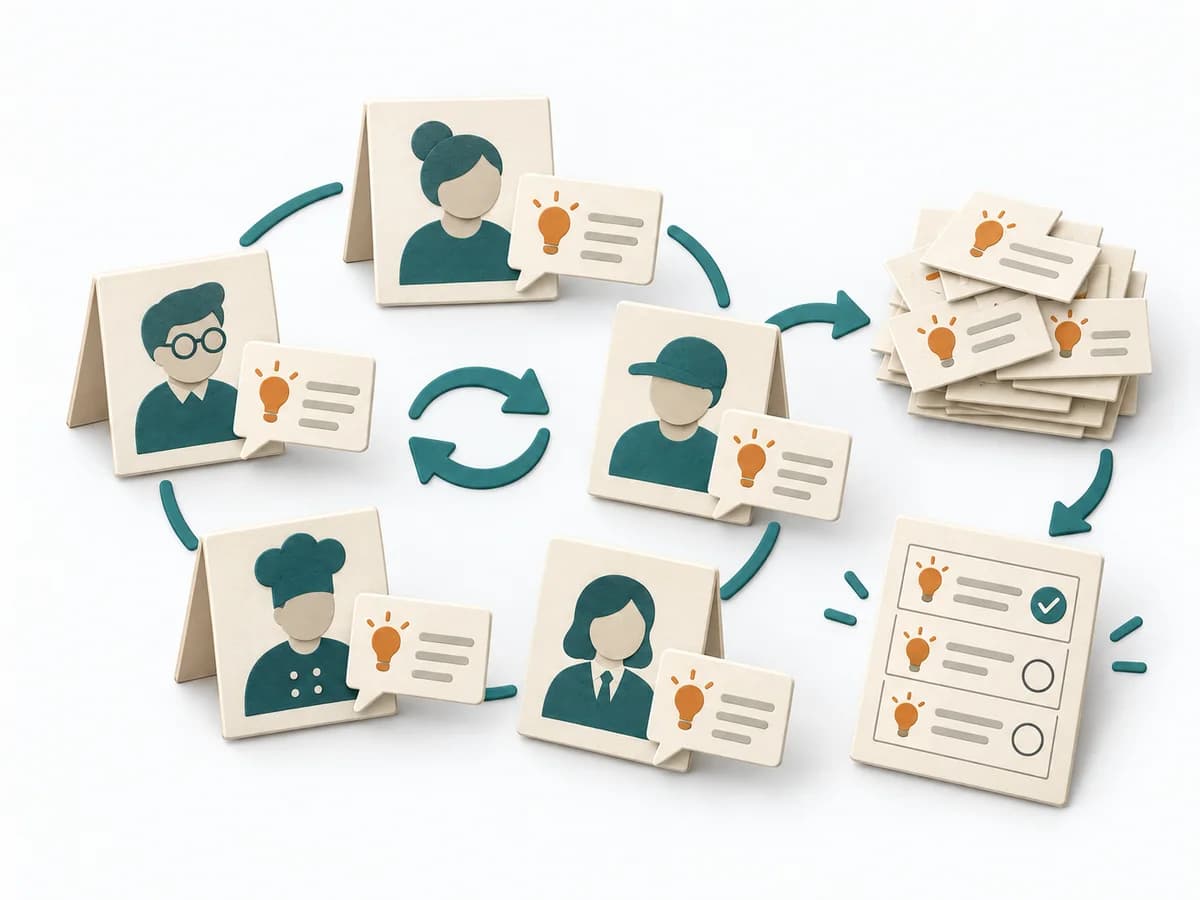 Innovation Rolestorming | 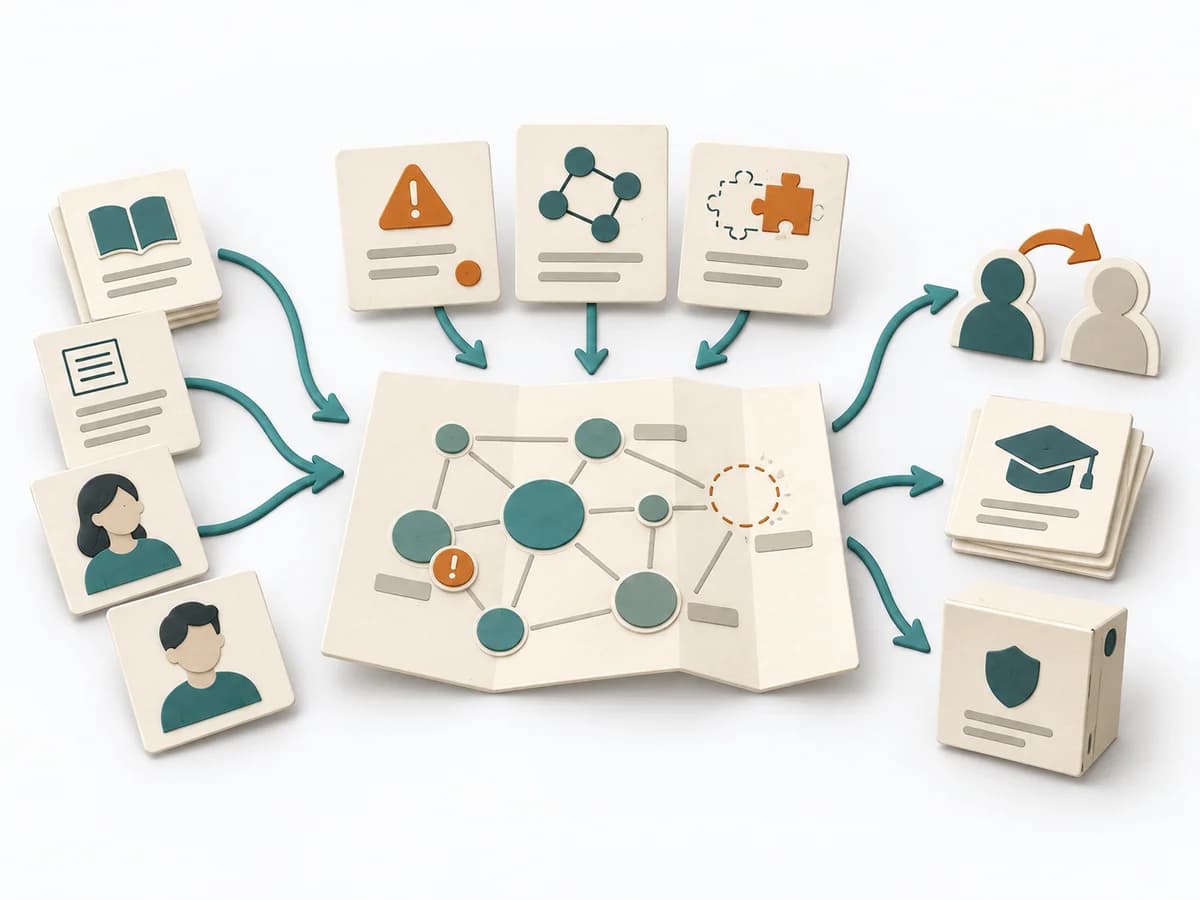 Knowledge Modeling Knowledge Mapping | 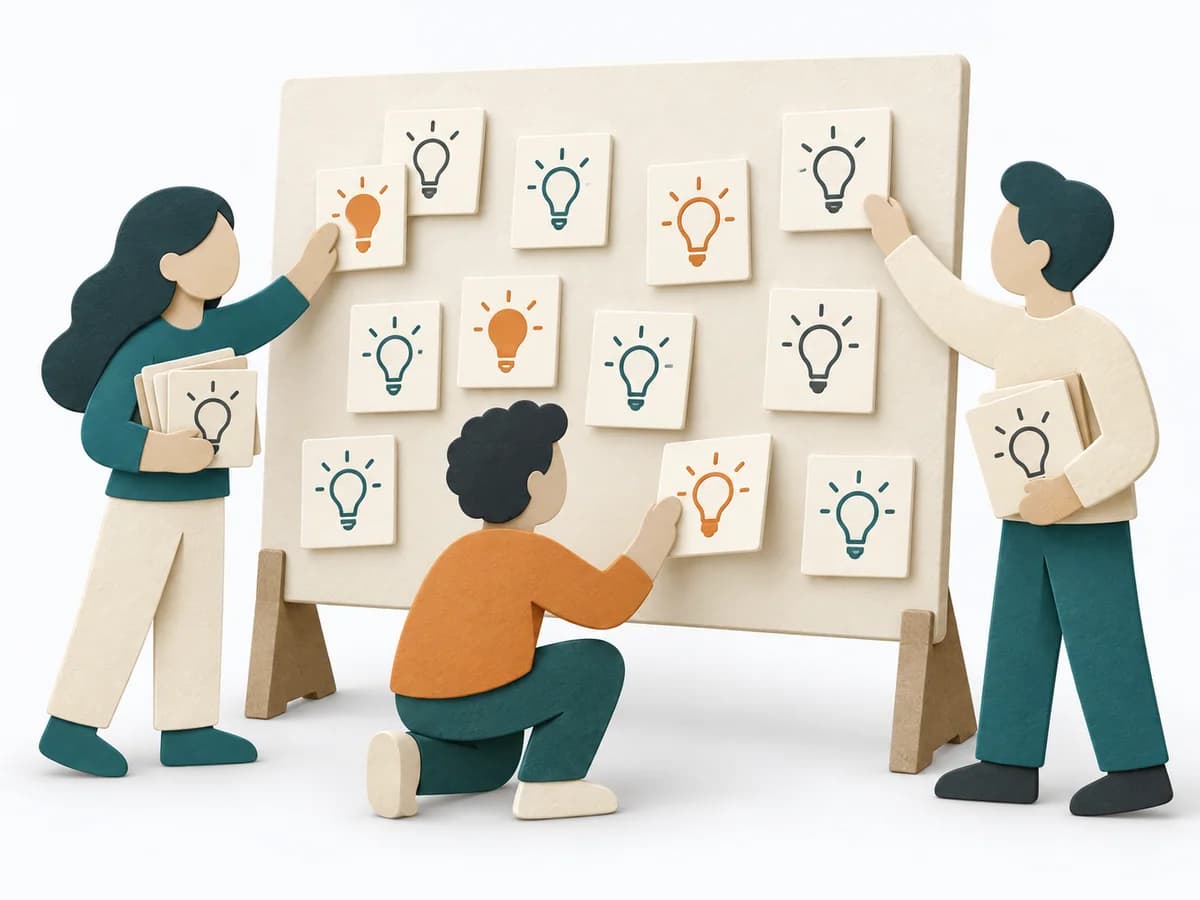 Innovation Brainstorming |
|---|---|---|---|---|
Purposedifferent | Concept Mapping arranges terms and relationships in a network that makes subject-matter connections tangible. It fits when a topic needs to be understood structurally rather than linearly. | When a search for ideas stalls, switching roles helps people step outside their own perspective and activate new logics of action. The method reduces habit because contributions arise from a different stance. This brings unfamiliar, often fitting solution approaches into play. | Knowledge Mapping makes knowledge, gaps, and transfer paths visible across a field. It fits when expertise should not just exist but also be findable and transferable. | When a team faces an open question with many obvious directions, the method first creates breadth instead of premature commitment. It separates idea flow from evaluation and makes lines of thought visible, creating a pool for selection and further development. |
Complexitydifferent | Medium | Low | Medium | Low |
Timedifferent | 1-2 h | 30-60 min | 1-3 h | 30-60 min |
Participantsdifferent | 1-8 | 3-12 | 3-12 | 4-12 |
Formatdifferent | Workshop + async | Workshop | Workshop | Workshop |
Outputdifferent | Concept Map, Relationship Labels, Knowledge Gaps | Rollenkarten, Ideenpool pro Rolle, Konsolidierte Shortlist | Knowledge Map, Critical Knowledge Areas, Transfer Plan | Idea pool, Theme clusters, Shortlist |
Tagsno overlap | KnowledgeConceptsMappingSensemaking | BrainstormingIdeationCreativity | KnowledgeMappingRisk | BrainstormingIdeationCreativityWorkshopDivergence |