View methods side by side.
Choose up to four methods. Add them using the search and share the comparison by copying its link.
| Criterion |  Knowledge Modeling Concept Mapping | 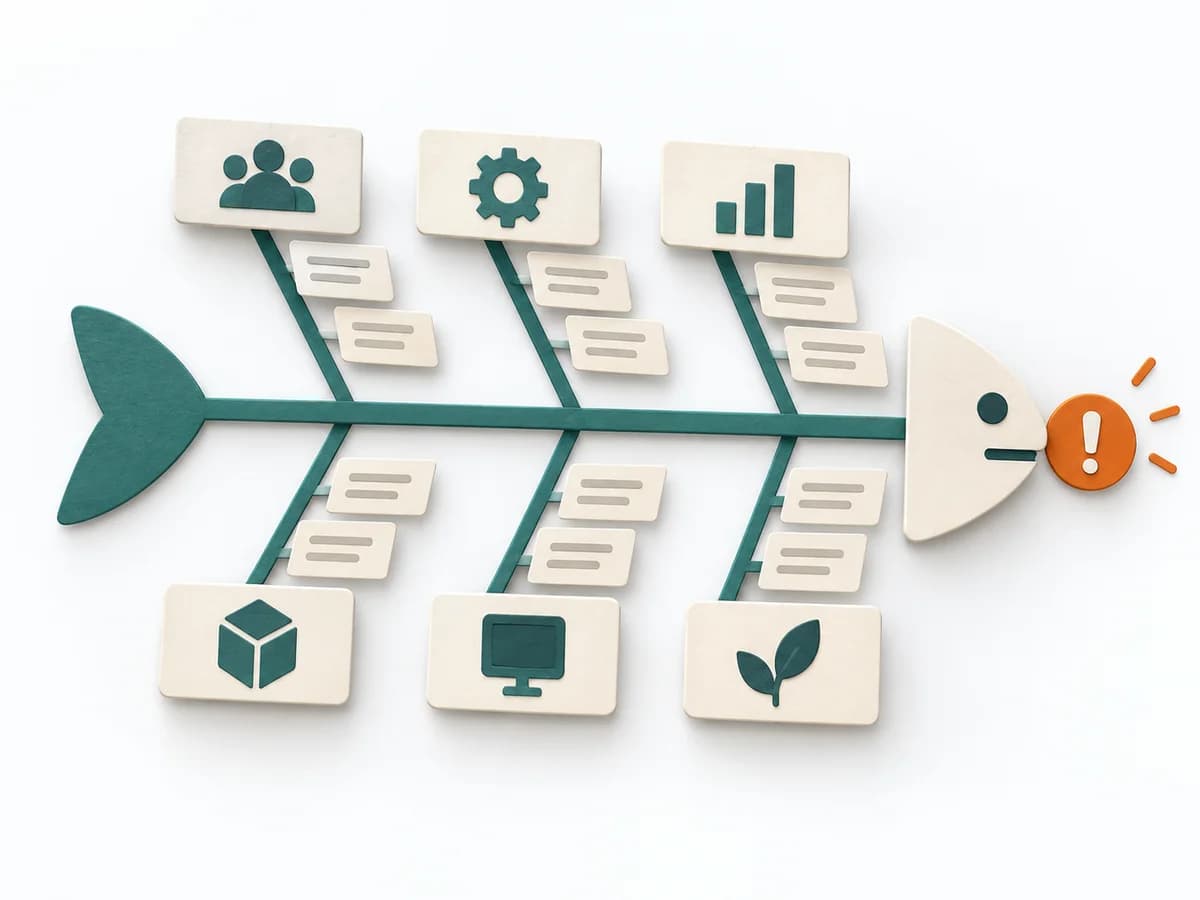 Operations Fishbone Diagram |  Knowledge Modeling Knowledge Mapping | 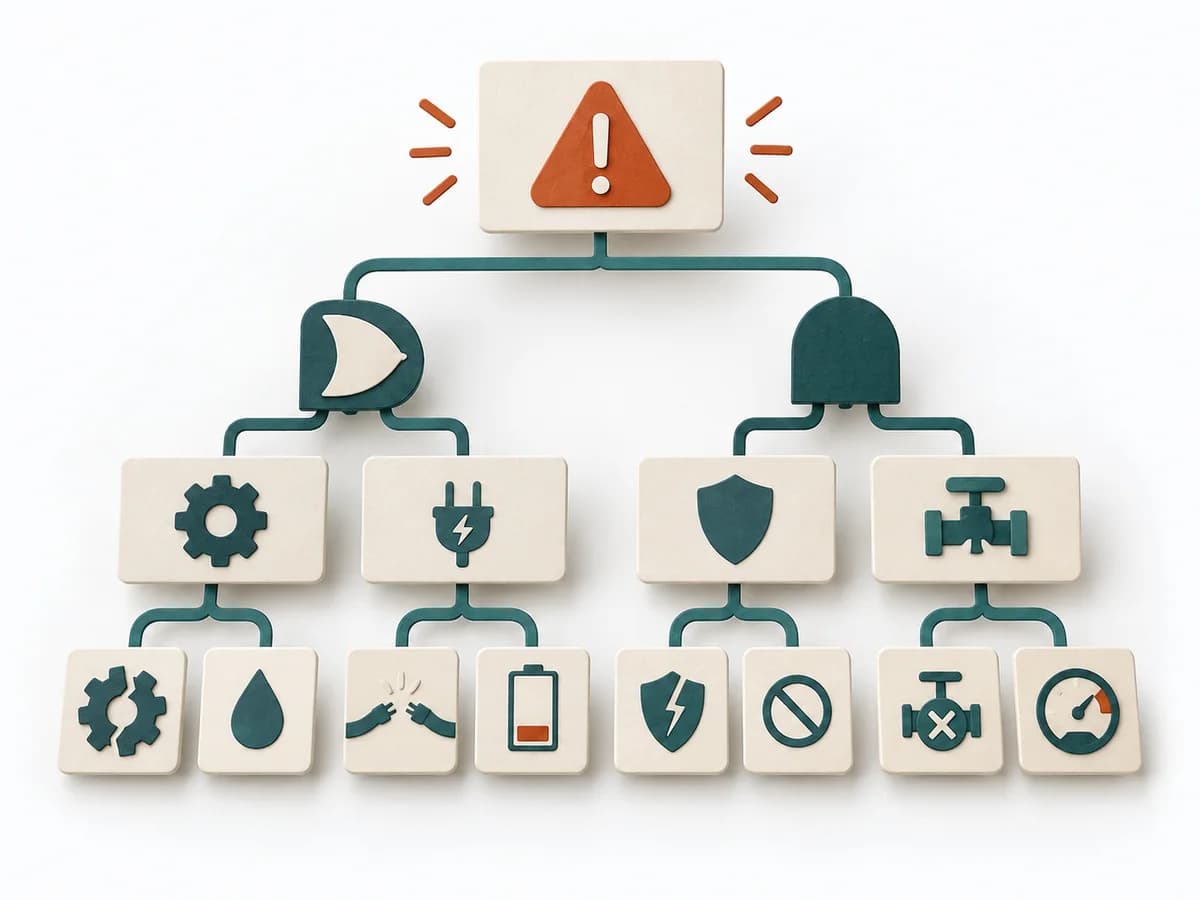 Operations Fault Tree Analysis |
|---|---|---|---|---|
Purposedifferent | Concept Mapping arranges terms and relationships in a network that makes subject-matter connections tangible. It fits when a topic needs to be understood structurally rather than linearly. | When a problem has several possible contributing factors, the method sorts causes by cause areas. It prevents an initial hunch from blocking the view of other plausible drivers. | Knowledge Mapping makes knowledge, gaps, and transfer paths visible across a field. It fits when expertise should not just exist but also be findable and transferable. | For a critical top event with several possible triggers, the method logically models failure paths. It makes visible which combinations of conditions can lead to damage. |
Complexitydifferent | Medium | Low | Medium | High |
Timedifferent | 1-2 h | 30-60 min | 1-3 h | 2-6 h |
Participantsdifferent | 1-8 | 2-8 | 3-12 | 3-8 |
Formatdifferent | Workshop + async | Workshop | Workshop | Workshop + async |
Outputdifferent | Concept Map, Relationship Labels, Knowledge Gaps | Fishbone Diagram, Cause Categories, Investigation Backlog | Knowledge Map, Critical Knowledge Areas, Transfer Plan | Fault Tree, Critical Paths, Cause Hypotheses, Control Actions |
Tagsno overlap | KnowledgeConceptsMappingSensemaking | Root causeQualityOperations | KnowledgeMappingRisk | RiskRoot causeSafety |