View methods side by side.
Choose up to four methods. Add them using the search and share the comparison by copying its link.
| Criterion |  Knowledge Modeling Concept Mapping | 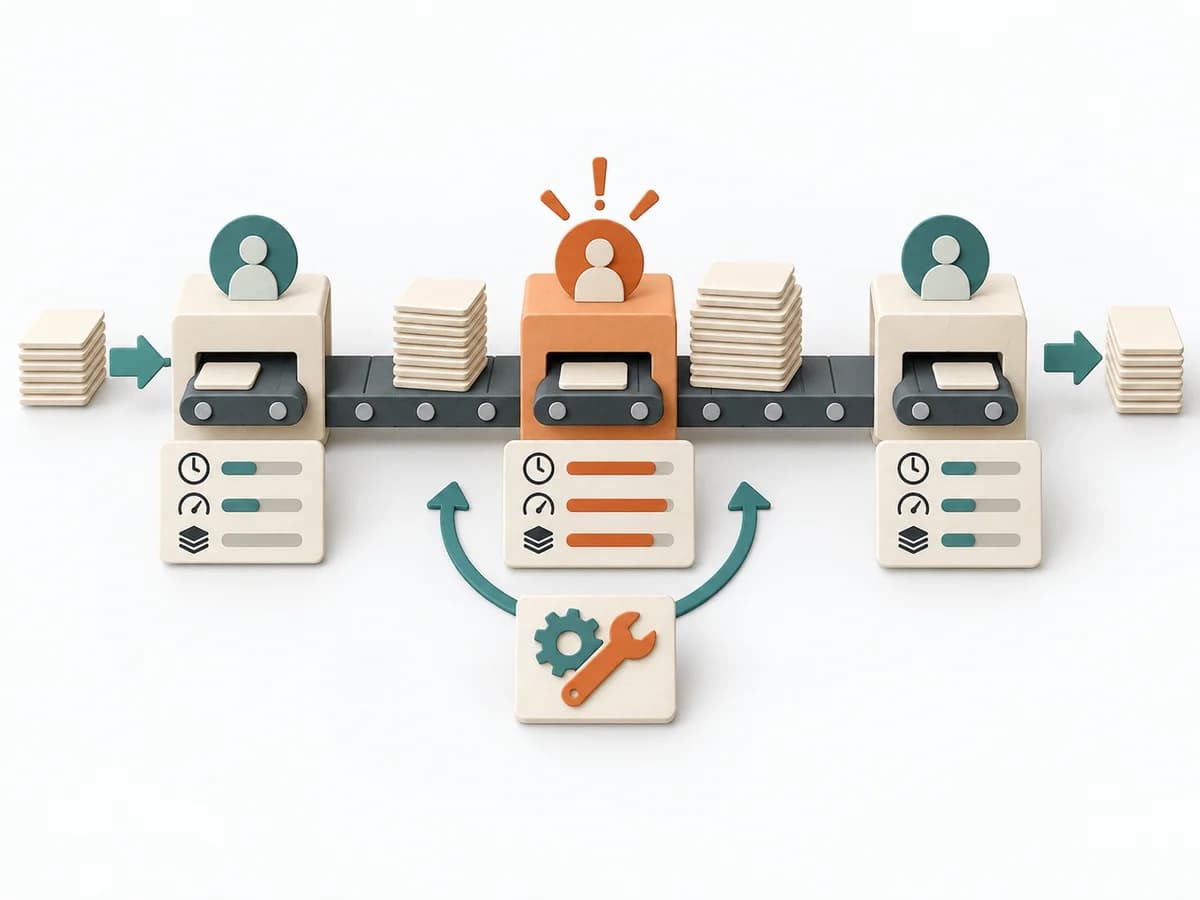 Operations Bottleneck Analysis | 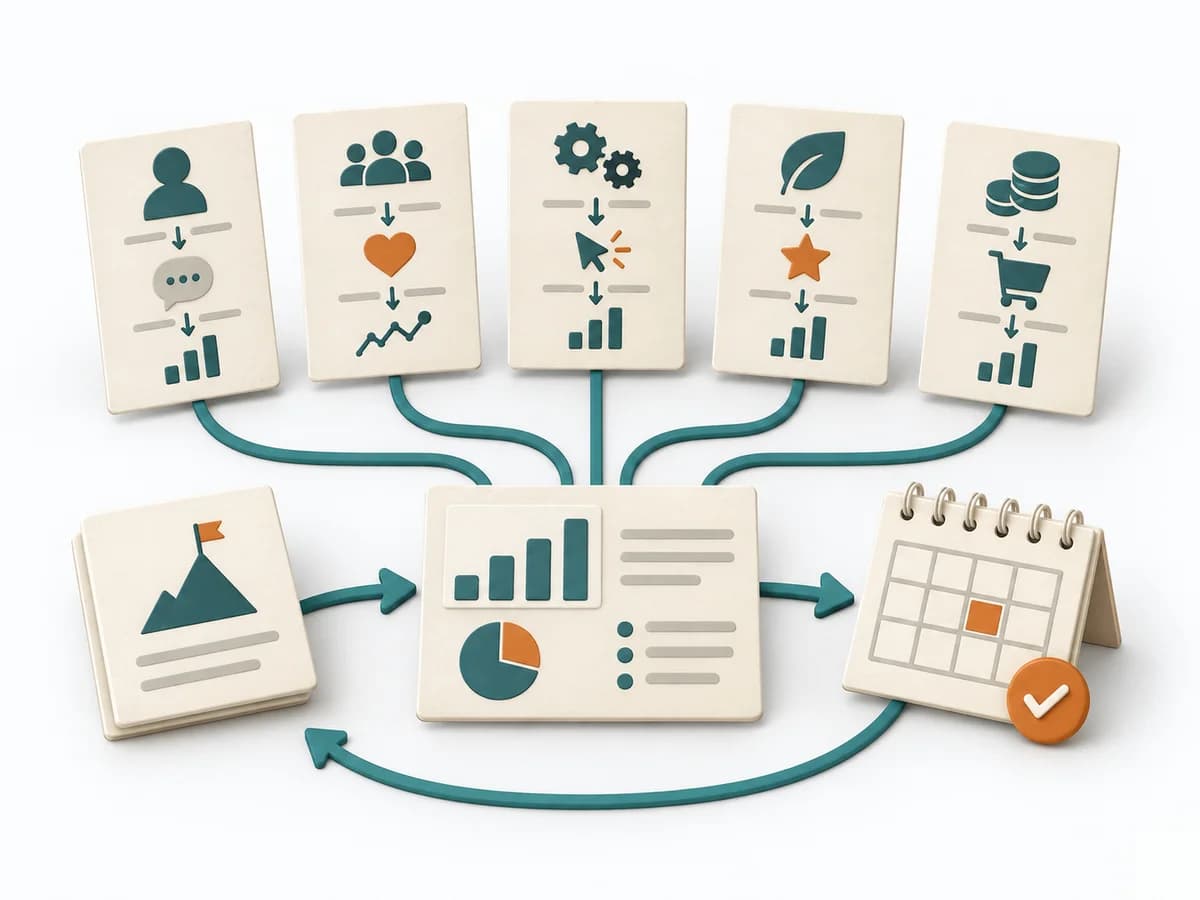 UX Research HEART Framework |  Knowledge Modeling Knowledge Mapping |
|---|---|---|---|---|
Purposedifferent | Concept Mapping arranges terms and relationships in a network that makes subject-matter connections tangible. It fits when a topic needs to be understood structurally rather than linearly. | For a flow that backs up at one point, the method looks for the capacity limit with the greatest leverage. It explains why extra effort elsewhere barely improves throughput. | Helps clarify observations, needs, and patterns in concrete terms. It groups observations into patterns, questions, and decisions. The result is captured as a HEART-GSM table and dashboard. | Knowledge Mapping makes knowledge, gaps, and transfer paths visible across a field. It fits when expertise should not just exist but also be findable and transferable. |
Complexitysame | Medium | Medium | Medium | Medium |
Timedifferent | 1-2 h | 1-3 h | 120 min initial, dann laufend | 1-3 h |
Participantsdifferent | 1-8 | 3-8 | 3-6 | 3-12 |
Formatdifferent | Workshop + async | Workshop + async | Workshop + async | Workshop |
Outputdifferent | Concept Map, Relationship Labels, Knowledge Gaps | Bottleneck Map, Flow Metrics, Improvement Options, Follow-up Measures | HEART-GSM Table, Dashboard | Knowledge Map, Critical Knowledge Areas, Transfer Plan |
Tagsno overlap | KnowledgeConceptsMappingSensemaking | FlowMeasurementConstraints | MetricsUX researchMeasurementSatisfaction | KnowledgeMappingRisk |