View methods side by side.
Choose up to four methods. Add them using the search and share the comparison by copying its link.
| Criterion | 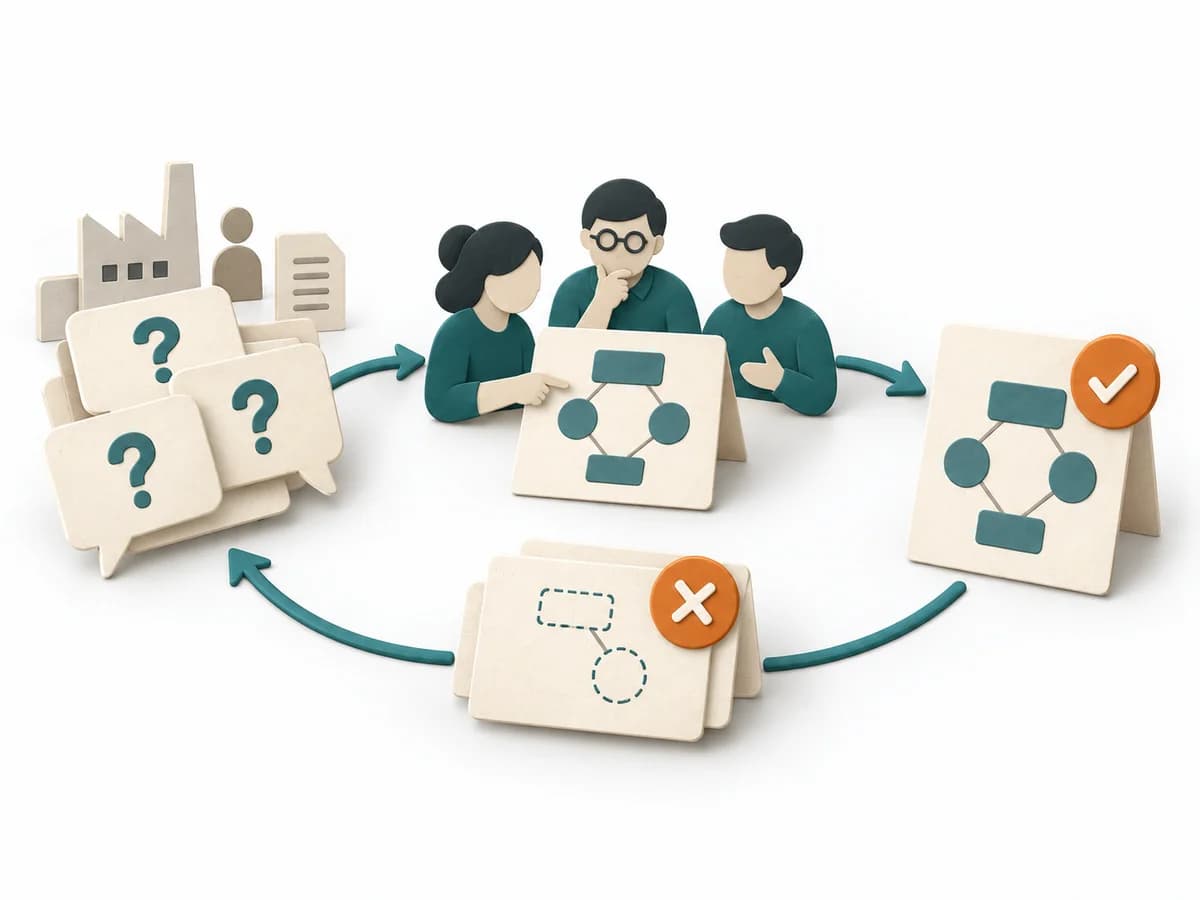 Knowledge Modeling Competency Questions | 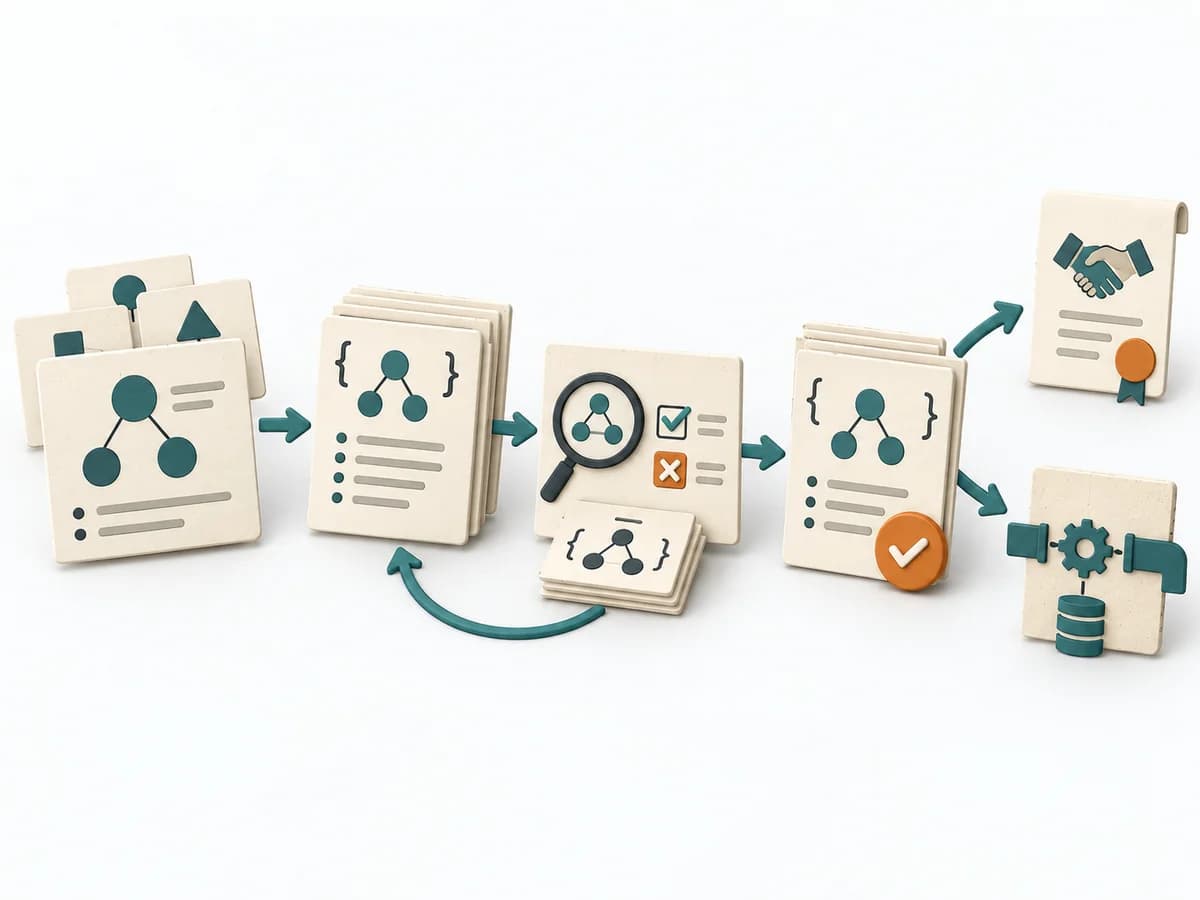 Knowledge Modeling Shape-First Modeling |  Product Discovery Fake Door Test | 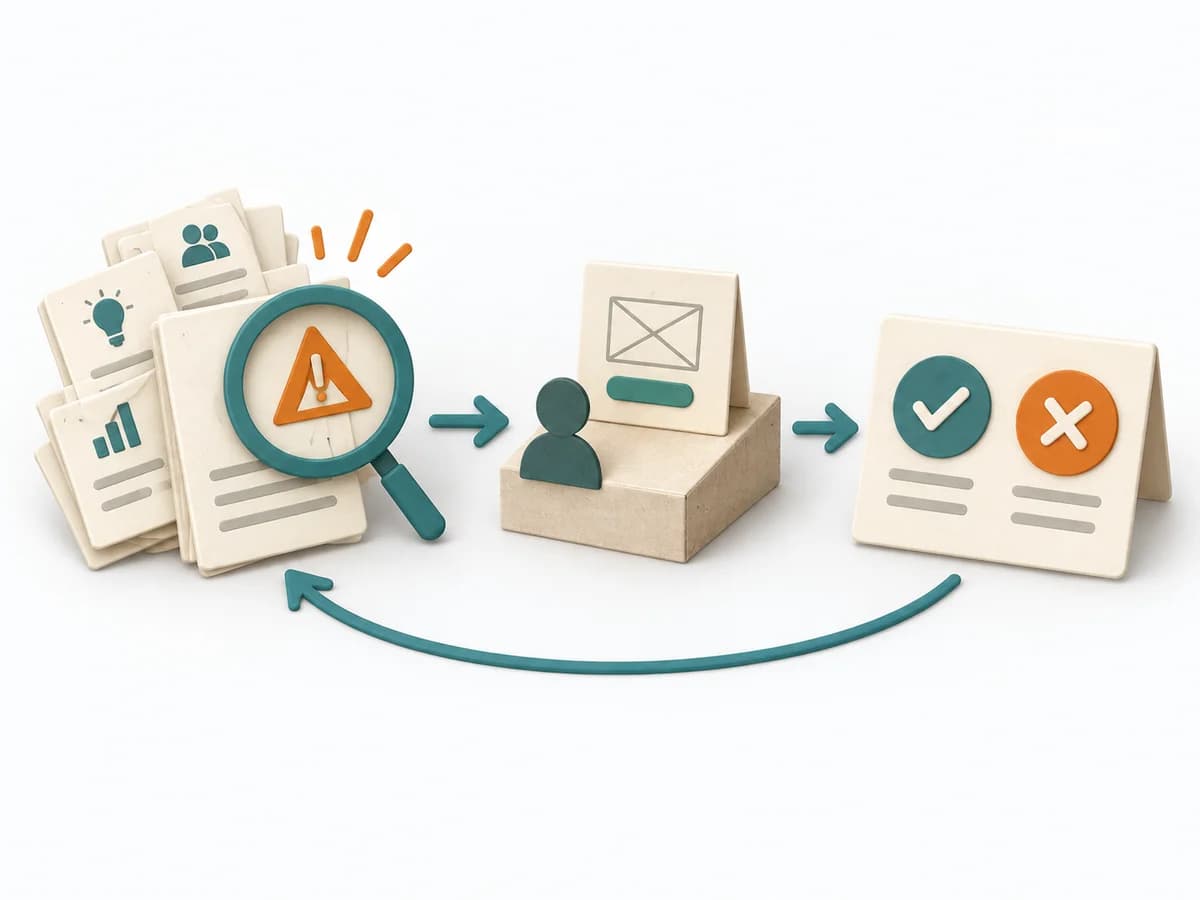 Product Discovery Riskiest Assumption Test |
|---|---|---|---|---|
Purposedifferent | Competency Questions translate a domain model into concrete questions that it must be able to answer. The method keeps the model's scope clean and prevents pretty but useless structures. | Shape-First Modeling defines data quality through shapes before implementation or integration frays at the edges. The approach fits when validation and data contracts should be part of the design from the start. | When demand is still unclear, it measures interest in a feature before it is built. It separates real behavior from polite agreement and deliberately keeps build effort small. | When an idea hinges on one critical unknown, it prioritizes testing that exact piece of uncertainty first. It separates problem, assumption, solution, and evidence. The result is captured as a prioritized list of assumptions, a test plan, and a result report. |
Complexitysame | Medium | Medium | Medium | Medium |
Timedifferent | 2-4 h | Halber Tag pro Domain Slice | 1-5 Tage | 1-2 Wochen pro Iteration |
Participantsdifferent | 2-8 | 1-4 | Nutzertraffic | 2-6 |
Formatdifferent | Workshop + async | Workshop + async | Async | Workshop + async |
Outputdifferent | Competency Question Set, Required Concepts, Test Queries, Coverage Matrix | SHACL or ShEx Shapes, Validation Reports, Data Contracts, Shape Documentation | Click Data, Interest Signal, Learning Decision | Prioritized Assumption List, Test Plan, Results Report |
Tagsno overlap | OntologyKnowledge graphScopeRequirementsSemantic | Knowledge graphValidationSemantic | ValidationExperimentsDemandDiscovery | ExperimentsValidationDiscoveryAssumptions |