View methods side by side.
Choose up to four methods. Add them using the search and share the comparison by copying its link.
Selected:Change AnalysisLean StartupSAAM (Software Architecture Analysis Method)LASR (Lightweight Approach for Software Reviews)
| Criterion |  Operations Change Analysis | 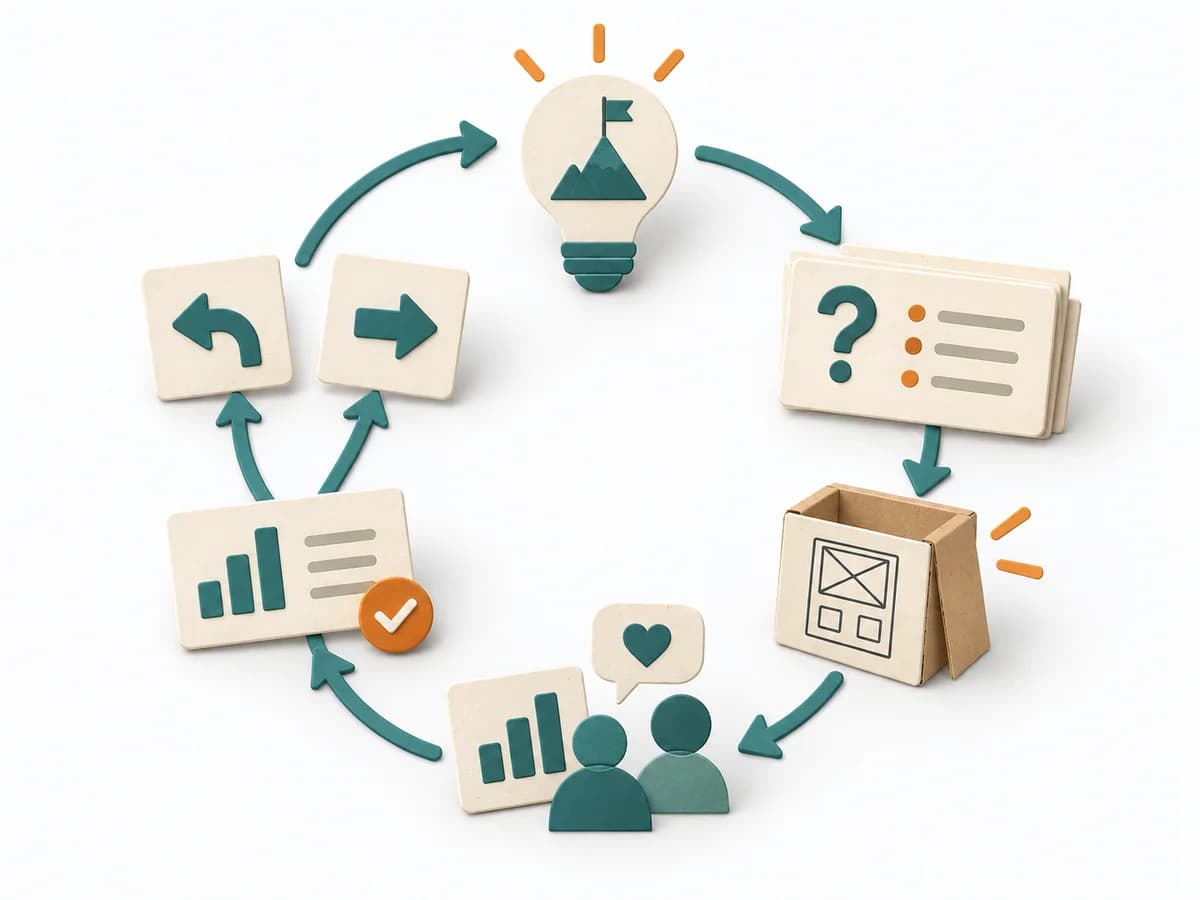 Innovation Lean Startup |  Architecture SAAM (Software Architecture Analysis Method) |  Architecture LASR (Lightweight Approach for Software Reviews) |
|---|---|---|---|---|
Purposedifferent | For a deviation after a change, the method isolates the influence of the altered condition. It narrows down which differences are relevant and which are just accompanying noise. | For uncertain business assumptions, the method forces the idea into contact with real market reactions early. It separates wishful picture, assumption, and observable behavior, so that learning becomes faster than planning. This translates uncertainty into measurable insight. | SAAM helps teams judge an architecture’s suitability for selected tasks and changes. It is particularly useful for examining modifiability and comparing architecture alternatives with clear reasoning. | LASR helps development teams identify where their software falls short of important quality goals and which improvements to consider. A small group with existing system knowledge can make an initial assessment and investigate open questions in more detail. |
Complexitydifferent | Medium | Medium | High | Medium |
Timedifferent | 45-120 min | Wochen bis Monate je Lernzyklus | Preparation, scenario analysis, and findings review; effort depends on scope | 3–4 h for initial assessment; preparation and deeper analysis additional |
Participantsdifferent | 2-6 | 2-8 | Architecture experts and stakeholders for scenarios and weighting | 1 or a small team; particularly suitable for 3–4 people |
Formatsame | Workshop + async | Workshop + async | Workshop + async | Workshop + async |
Outputdifferent | Change Matrix, Cause Hypotheses, Validation Questions, Action List | Hypothesis list, MVPs, Learning reports, Pivot or persevere decision | Domain functions mapped to components and connections, Quality attributes and evaluation criteria, Typical tasks and their effects on the architecture, Reasoned evaluation or comparison of alternatives | Lean Mission Statement describing the software’s purpose, Prioritized quality goals and evaluation criteria, Risks and estimated gaps against quality goals, More closely examined findings and open checks |
Tagsno overlap | ChangeRoot causeTroubleshootingComparison | LeanStartupValidationMVP | ArchitectureChangeAnalysisComparisonQuality | ArchitectureQualityRiskAssessmentLean |