View methods side by side.
Choose up to four methods. Add them using the search and share the comparison by copying its link.
| Criterion |  Operations Change Analysis | 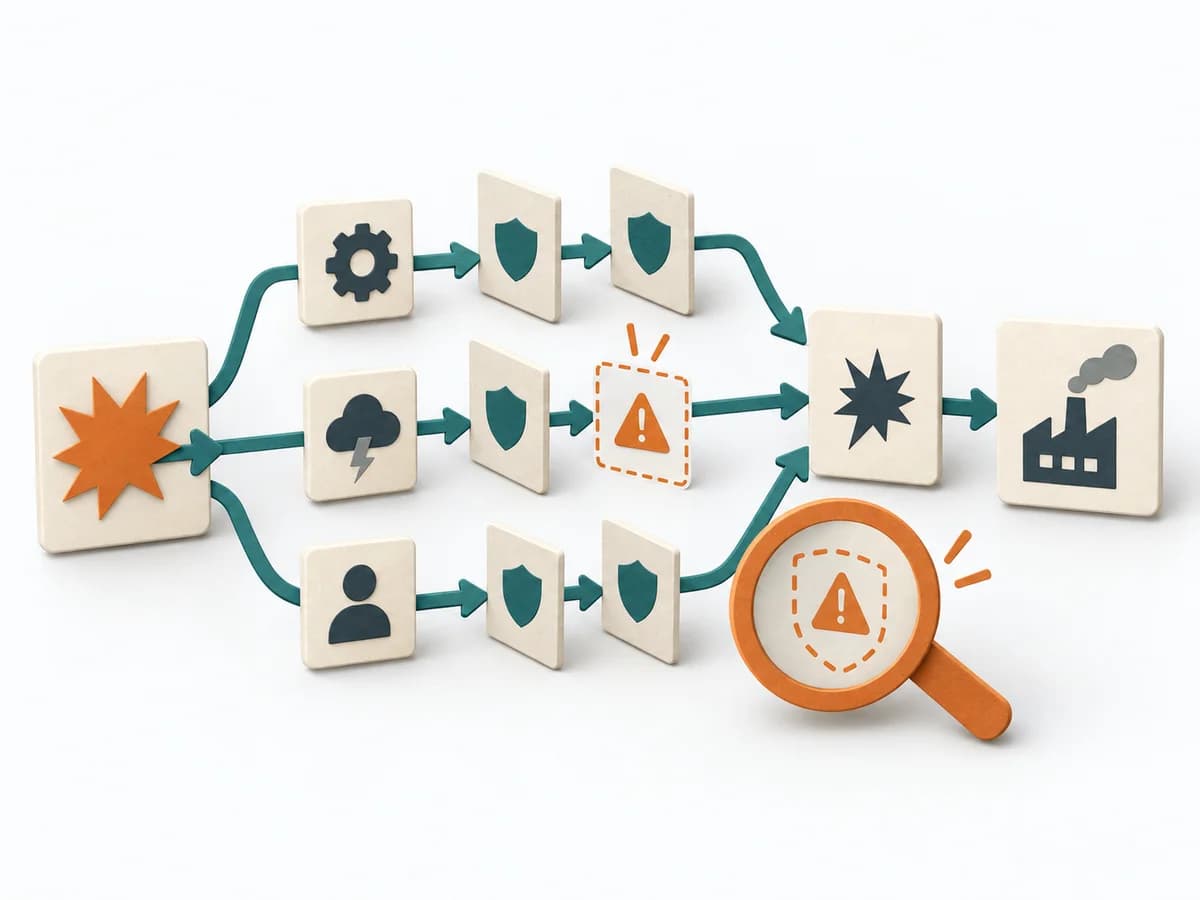 Engineering Failure Scenario Analysis | 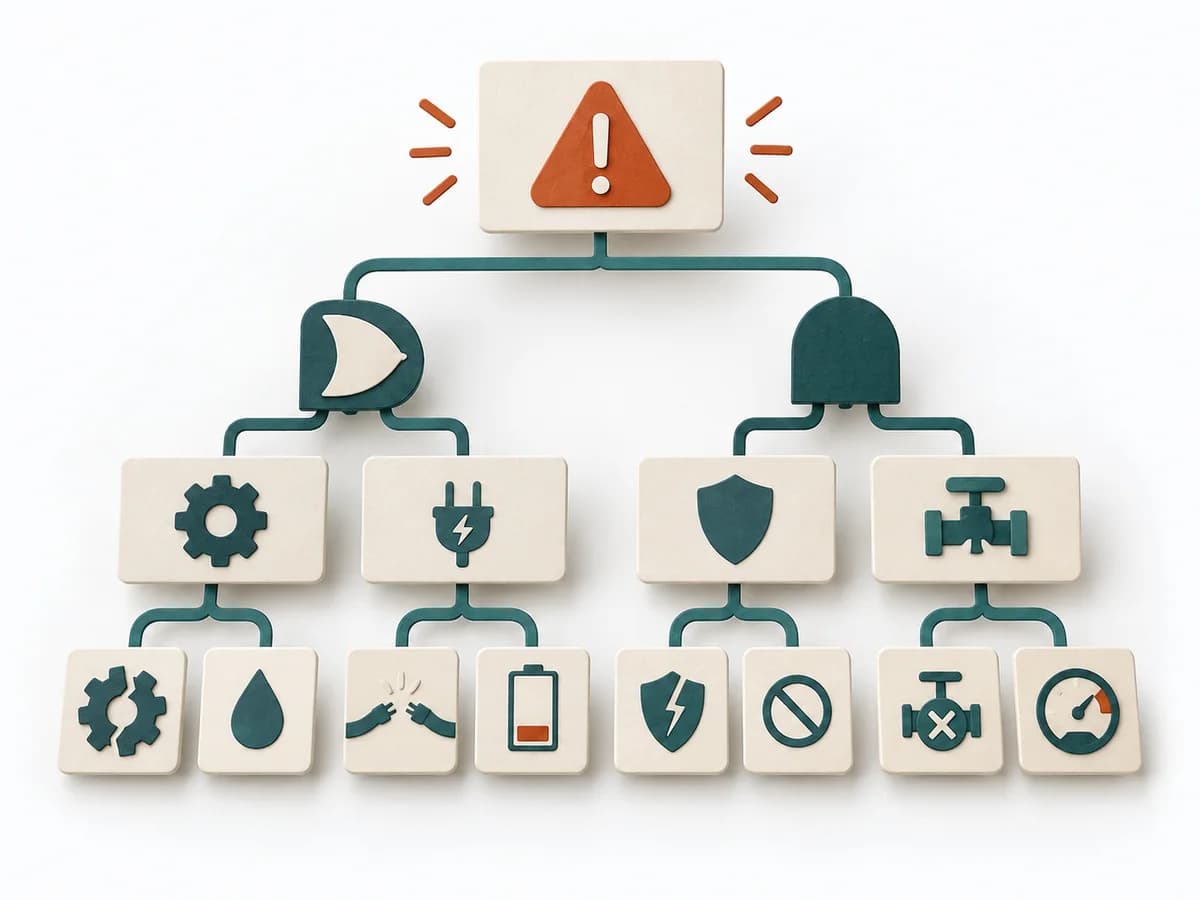 Operations Fault Tree Analysis | 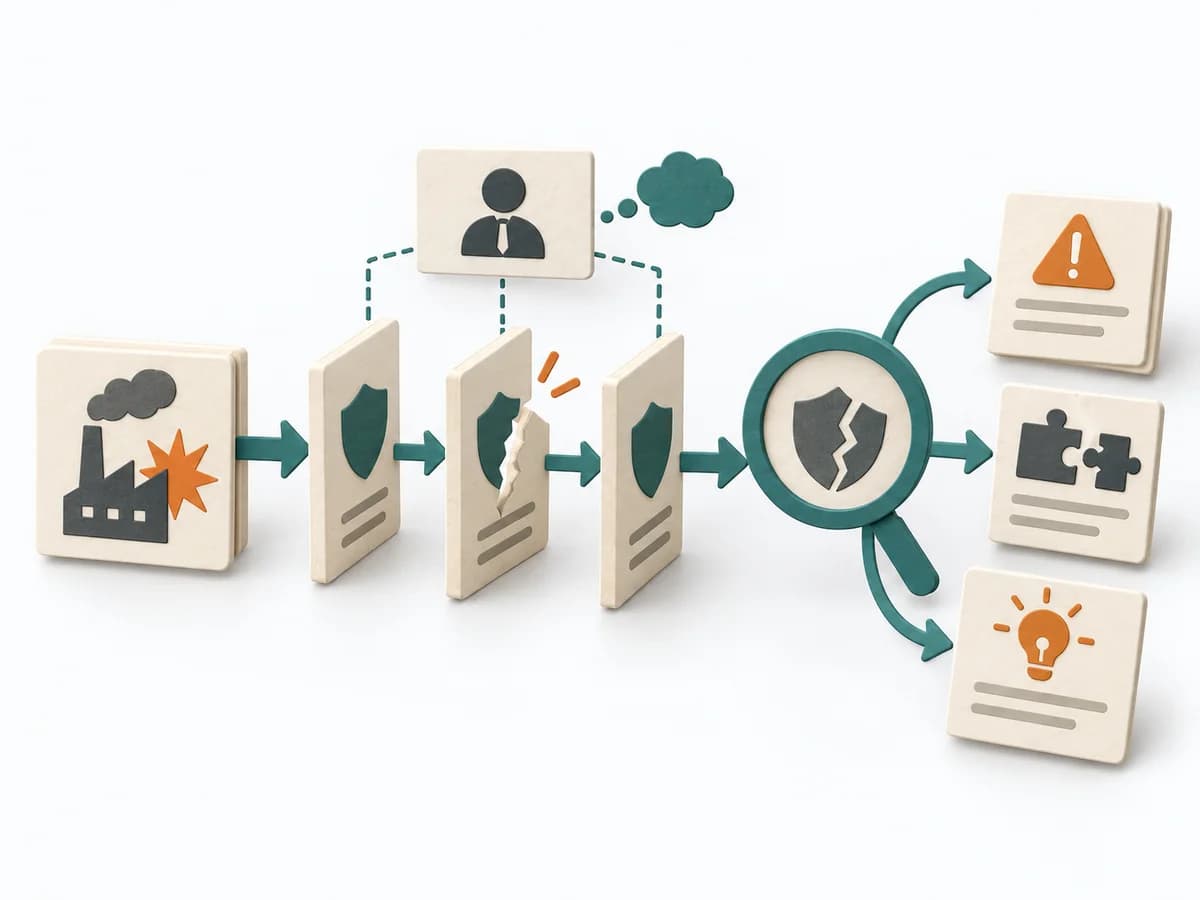 Operations MORT Analysis |
|---|---|---|---|---|
Purposedifferent | For a deviation after a change, the method isolates the influence of the altered condition. It narrows down which differences are relevant and which are just accompanying noise. | In critical processes, it is not enough to plan only for the normal case. Failure Scenario Analysis looks at the path into failure and shows which failures, chains, and control gaps cause the most damage. | For a critical top event with several possible triggers, the method logically models failure paths. It makes visible which combinations of conditions can lead to damage. | For a safety-relevant event or a system with high protection requirements, the method examines where controls failed. It exposes both technical and organizational gaps. |
Complexitydifferent | Medium | Medium | High | High |
Timedifferent | 45-120 min | 1-3 h | 2-6 h | Mehrere Tage bis Wochen |
Participantsdifferent | 2-6 | 3-8 | 3-8 | 2-6 |
Formatdifferent | Workshop + async | Workshop | Workshop + async | Workshop + async |
Outputdifferent | Change Matrix, Cause Hypotheses, Validation Questions, Action List | Failure Scenarios, Risk Notes, Control Gaps, Test and Response Actions | Fault Tree, Critical Paths, Cause Hypotheses, Control Actions | MORT Worksheets, Findings per Branch, Corrective Actions, Systemic Recommendations |
Tagsno overlap | ChangeRoot causeTroubleshootingComparison | FailureResilienceRisk | RiskRoot causeSafety | Root causeSafetySystemicIncident |