View methods side by side.
Choose up to four methods. Add them using the search and share the comparison by copying its link.
| Criterion |  Operations Change Analysis |  UX Research Card Sorting |  Innovation Design Sprint | 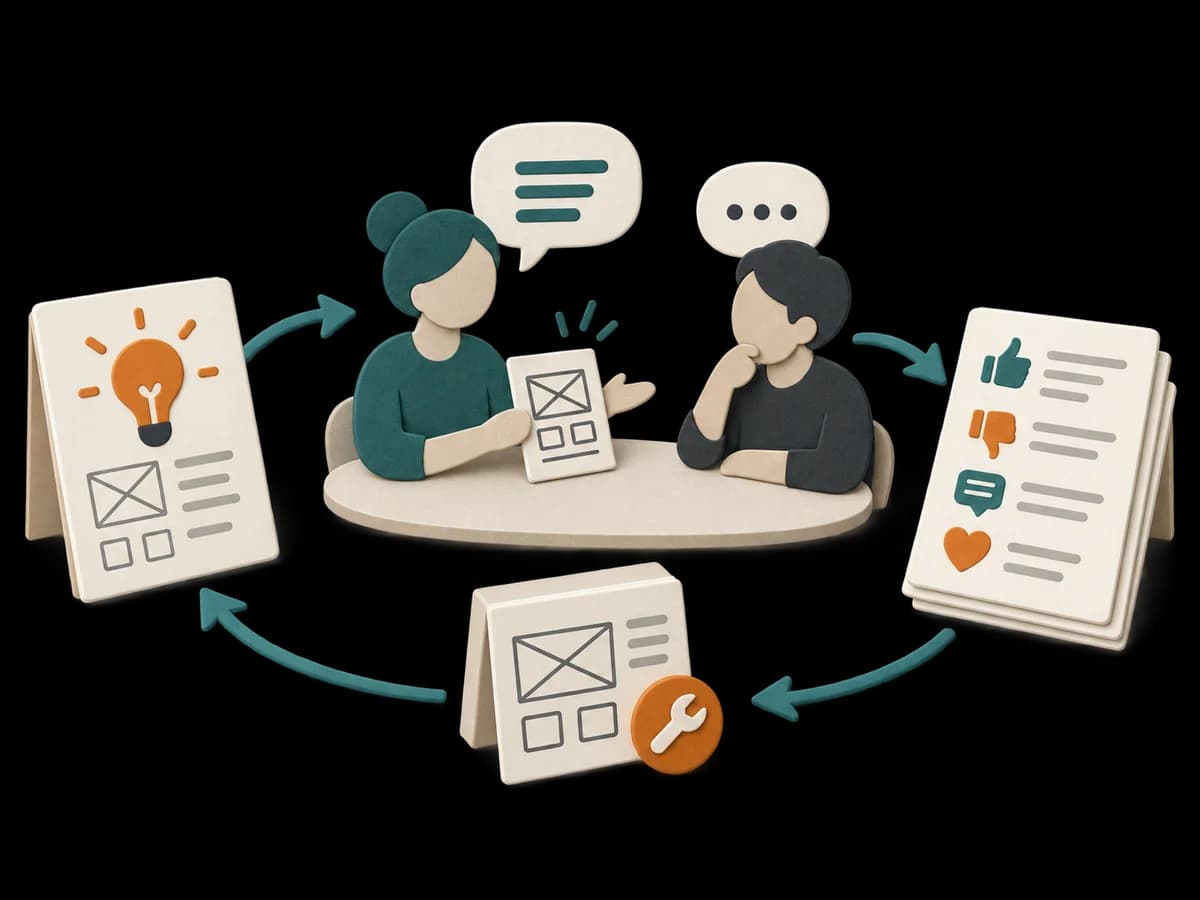 Product Discovery Solution Interview |
|---|---|---|---|---|
Purposedifferent | For a deviation after a change, the method isolates the influence of the altered condition. It narrows down which differences are relevant and which are just accompanying noise. | When content only makes sense internally and users can't find the structure again, card sorting exposes their mental order. Terms, groups, and naming are then aligned with the target group's expectations. | When the product question is unclear and time pressure is high, the method takes a team from an open idea to a testable solution. It connects problem understanding, decision, and learning in one compact format, lowering the risk of spending a lot of energy on a mere guess. | When a solution idea is already on the table, it checks how it is understood and evaluated. It looks for resonance, objections, and missing fit early in the conversation. |
Complexitydifferent | Medium | Low | High | Medium |
Timedifferent | 45-120 min | 20-45 min | 4-5 Tage | 30-60 min je Interview |
Participantsdifferent | 2-6 | Based on research question | 5-8 | 5-10 Interviews |
Formatdifferent | Workshop + async | Workshop + async | Workshop | Workshop + async |
Outputdifferent | Change Matrix, Cause Hypotheses, Validation Questions, Action List | Content groups, Label set, IA hypotheses | Prototype, Test Findings, Decision Rationale | Solution Feedback, Objection List, Validation Notes |
Tagsno overlap | ChangeRoot causeTroubleshootingComparison | Information architectureNavigationStructure | Design sprintPrototypeValidationInnovation | ValidationInterviewsPrototype |