View methods side by side.
Choose up to four methods. Add them using the search and share the comparison by copying its link.
| Criterion |  UX Research Card Sorting |  UX Research Tree Testing | 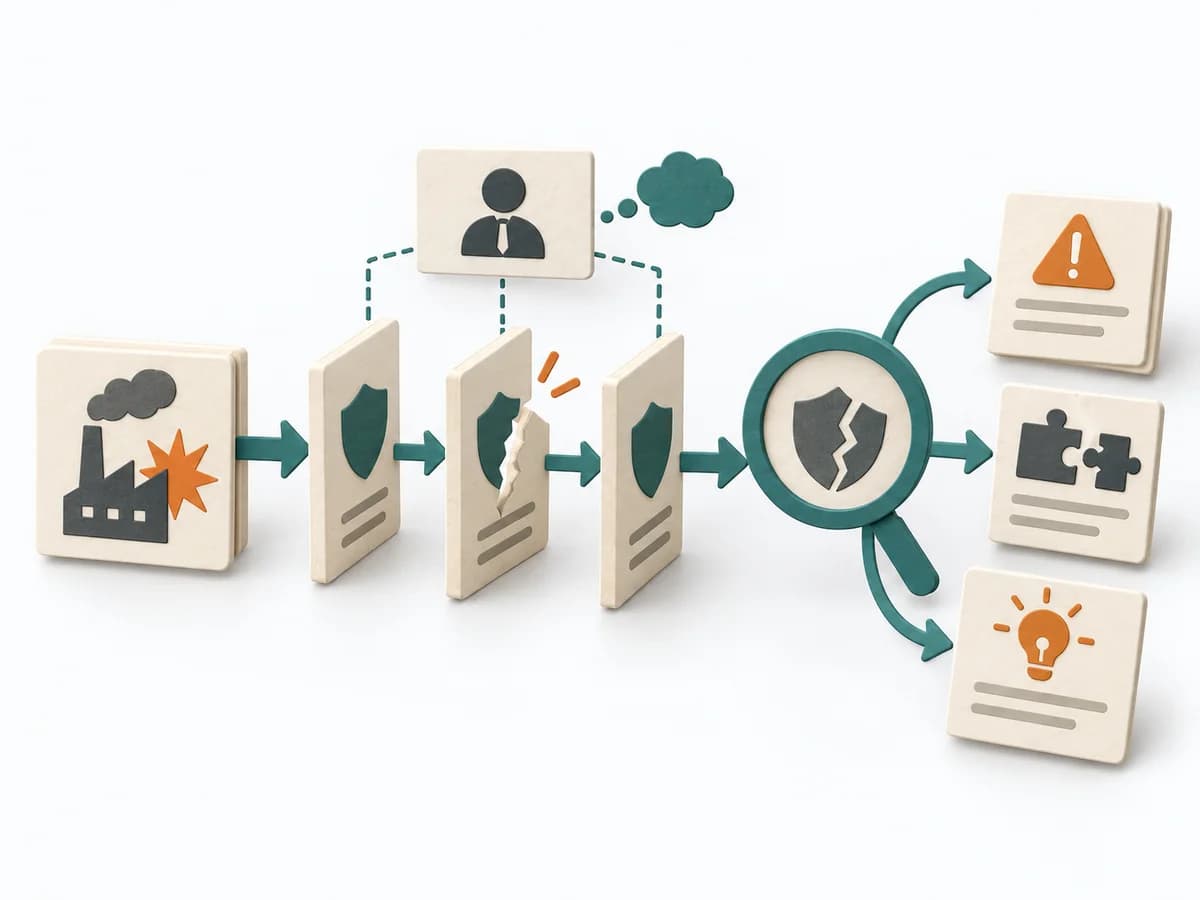 Operations MORT Analysis |  Operations 5 Whys |
|---|---|---|---|---|
Purposedifferent | When content only makes sense internally and users can't find the structure again, card sorting exposes their mental order. Terms, groups, and naming are then aligned with the target group's expectations. | When a navigation exists but search paths still fail, tree testing checks findability without visual distraction. The method shows whether labels, levels, and paths really lead to the intended destination. | For a safety-relevant event or a system with high protection requirements, the method examines where controls failed. It exposes both technical and organizational gaps. | For a single, hard-to-explain deviation, the method exposes the causal chain behind the visible symptom. It keeps the cause open until a controllable condition emerges instead of a mere description. |
Complexitydifferent | Low | Medium | High | Low |
Timedifferent | 20-45 min | 1-2 Tage | Mehrere Tage bis Wochen | 15-30 min |
Participantsdifferent | Based on research question | Based on research question | 2-6 | 2-6 |
Formatdifferent | Workshop + async | Async | Workshop + async | Workshop |
Outputdifferent | Content groups, Label set, IA hypotheses | Findability Metrics, Path Analysis, Revised IA | MORT Worksheets, Findings per Branch, Corrective Actions, Systemic Recommendations | Root cause notes, Countermeasures |
Tagsno overlap | Information architectureNavigationStructure | Information architectureNavigationFindability | Root causeSafetySystemicIncident | Root causeIncidentLeanProblem solving |