View methods side by side.
Choose up to four methods. Add them using the search and share the comparison by copying its link.
| Criterion |  UX Research Card Sorting | 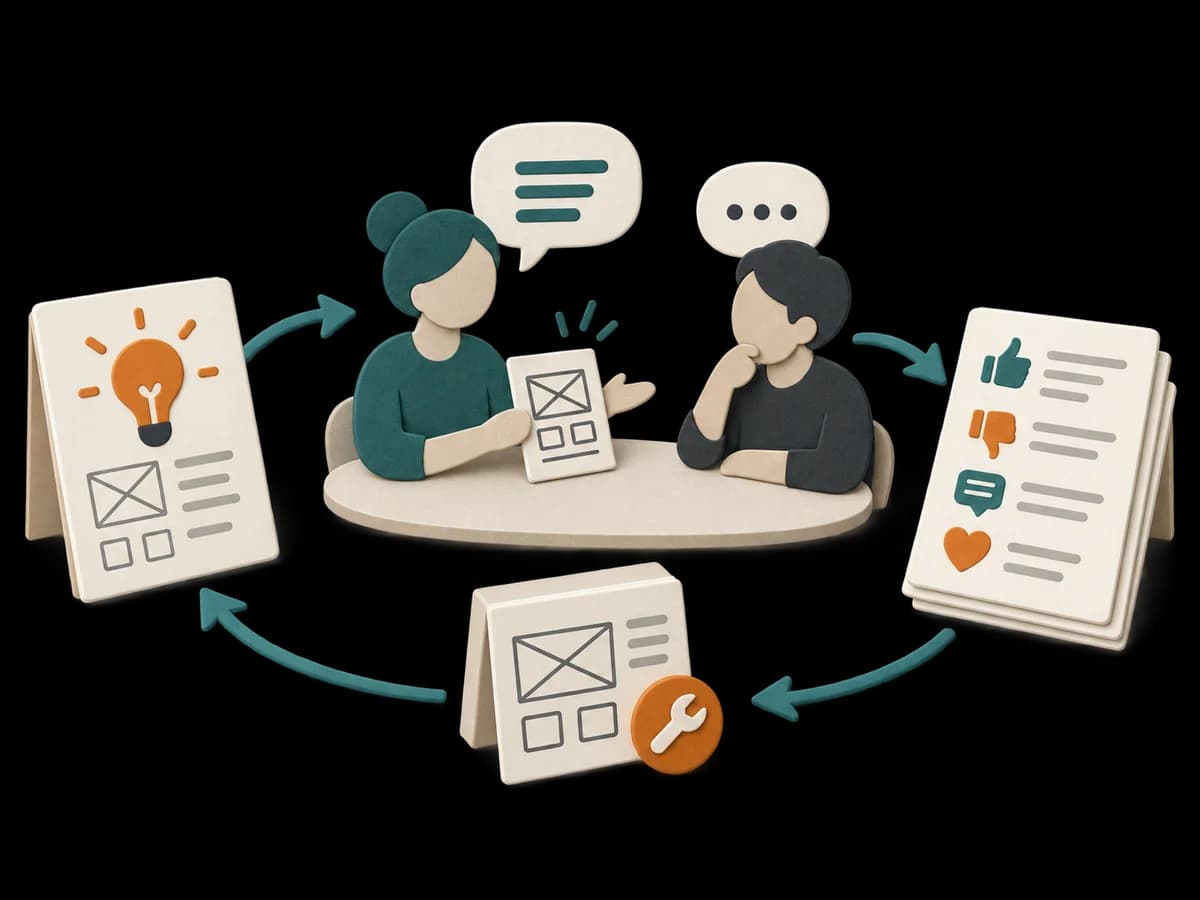 Product Discovery Solution Interview |  Product Discovery Assumption Mapping |  Decision Making Assumption Surfacing |
|---|---|---|---|---|
Purposedifferent | When content only makes sense internally and users can't find the structure again, card sorting exposes their mental order. Terms, groups, and naming are then aligned with the target group's expectations. | When a solution idea is already on the table, it checks how it is understood and evaluated. It looks for resonance, objections, and missing fit early in the conversation. | When assumptions still sit unordered in the room, it weighs uncertainty against leverage. It makes visible which hypotheses should be checked first. | Plans often contain assumptions that were never openly stated and remain dangerous precisely because of that. Assumption Surfacing makes these silent premises visible and prioritizes which of them carry the initiative or could sink it. |
Complexitydifferent | Low | Medium | Medium | Low |
Timedifferent | 20-45 min | 30-60 min je Interview | 45-60 min | 45-90 min |
Participantsdifferent | Based on research question | 5-10 Interviews | 2-8 | 2-8 |
Formatsame | Workshop + async | Workshop + async | Workshop + async | Workshop + async |
Outputdifferent | Content groups, Label set, IA hypotheses | Solution Feedback, Objection List, Validation Notes | Assumption map, Test backlog, Risk ranking | Assumption List, Critical Assumptions, Learning Plan |
Tagsno overlap | Information architectureNavigationStructure | ValidationInterviewsPrototype | AssumptionsRiskExperimentsValidation | AssumptionsRiskDecisionDiscovery |