View methods side by side.
Choose up to four methods. Add them using the search and share the comparison by copying its link.
| Criterion |  UX Research Card Sorting | 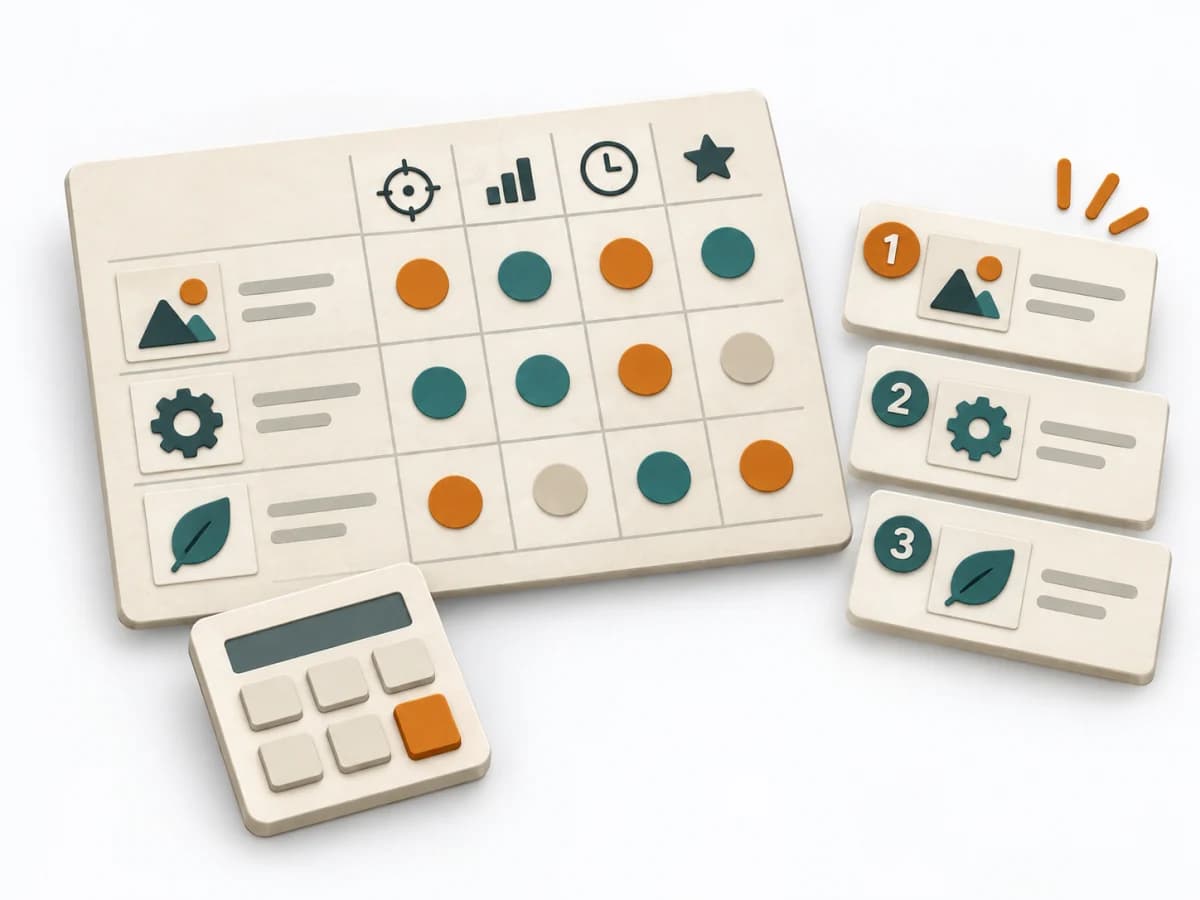 Product Strategy RICE Scoring |  UX Research Usability Testing | 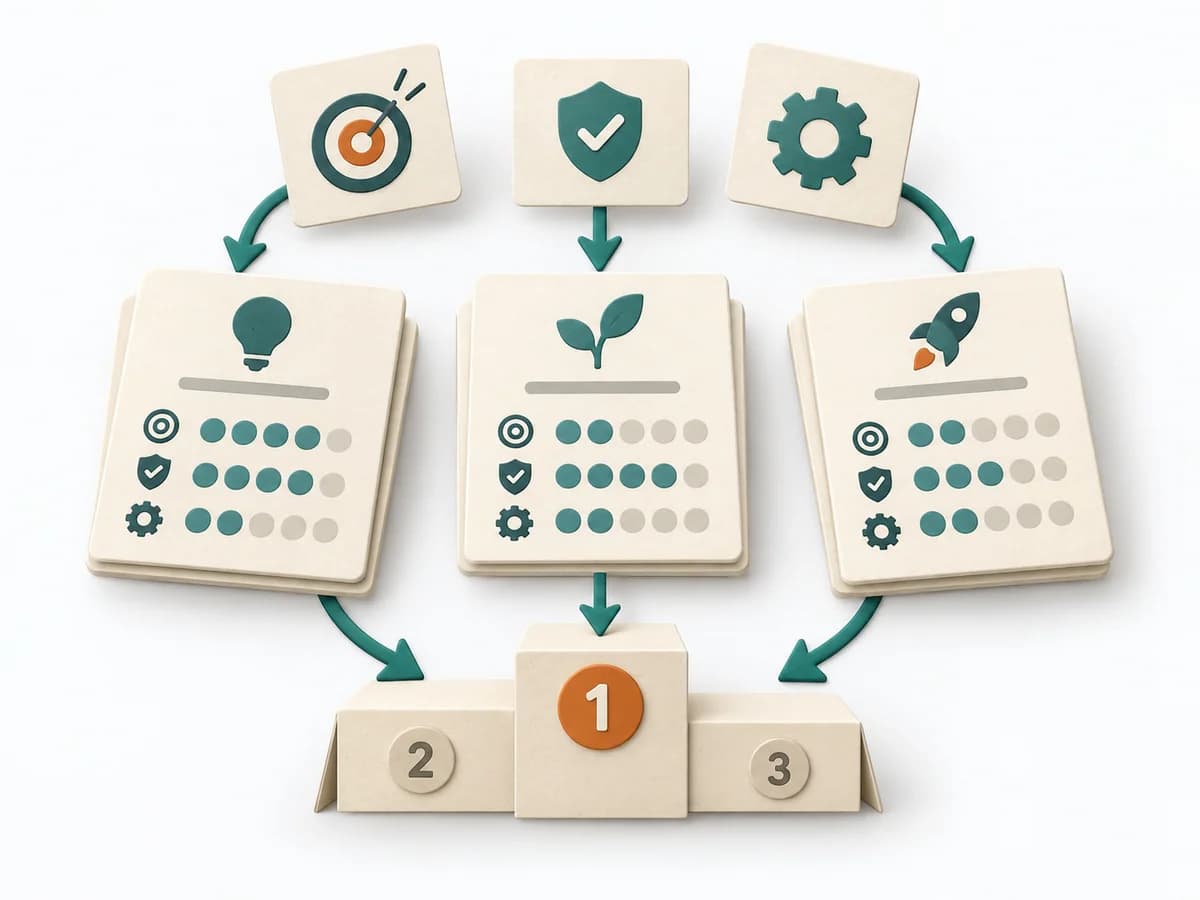 Product Strategy ICE Scoring |
|---|---|---|---|---|
Purposedifferent | When content only makes sense internally and users can't find the structure again, card sorting exposes their mental order. Terms, groups, and naming are then aligned with the target group's expectations. | When many initiatives compete for the same resources, it brings reach, impact, confidence, and effort into one shared ranking. It makes prioritization economically connectable. | When a product is built but people get stuck on tasks, usability testing shows the friction at concrete points. Observed use instead of self-report makes visible where orientation, understanding, or interaction breaks down. | When ideas need sorting quickly, it condenses impact, confidence, and effort into one compact score. It connects customer value, product logic, and decision priorities. The result is captured as an ICE table and top-ideas list. |
Complexitydifferent | Low | Medium | Medium | Low |
Timedifferent | 20-45 min | 60-90 min | 1-2 h je Session | 30-60 min |
Participantsdifferent | Based on research question | 2-10 | Based on research question | 2-8 |
Formatsame | Workshop + async | Workshop + async | Workshop + async | Workshop + async |
Outputdifferent | Content groups, Label set, IA hypotheses | RICE Scores, Ranked List, Assumption Log | Usability Issues, Severity List, Recommendations | ICE Table, Top Idea List |
Tagsno overlap | Information architectureNavigationStructure | PrioritizationScoringRoadmapTradeoffs | ValidationUXPrototype | PrioritizationScoringGrowthDecision |