View methods side by side.
Choose up to four methods. Add them using the search and share the comparison by copying its link.
| Criterion |  UX Research Card Sorting | 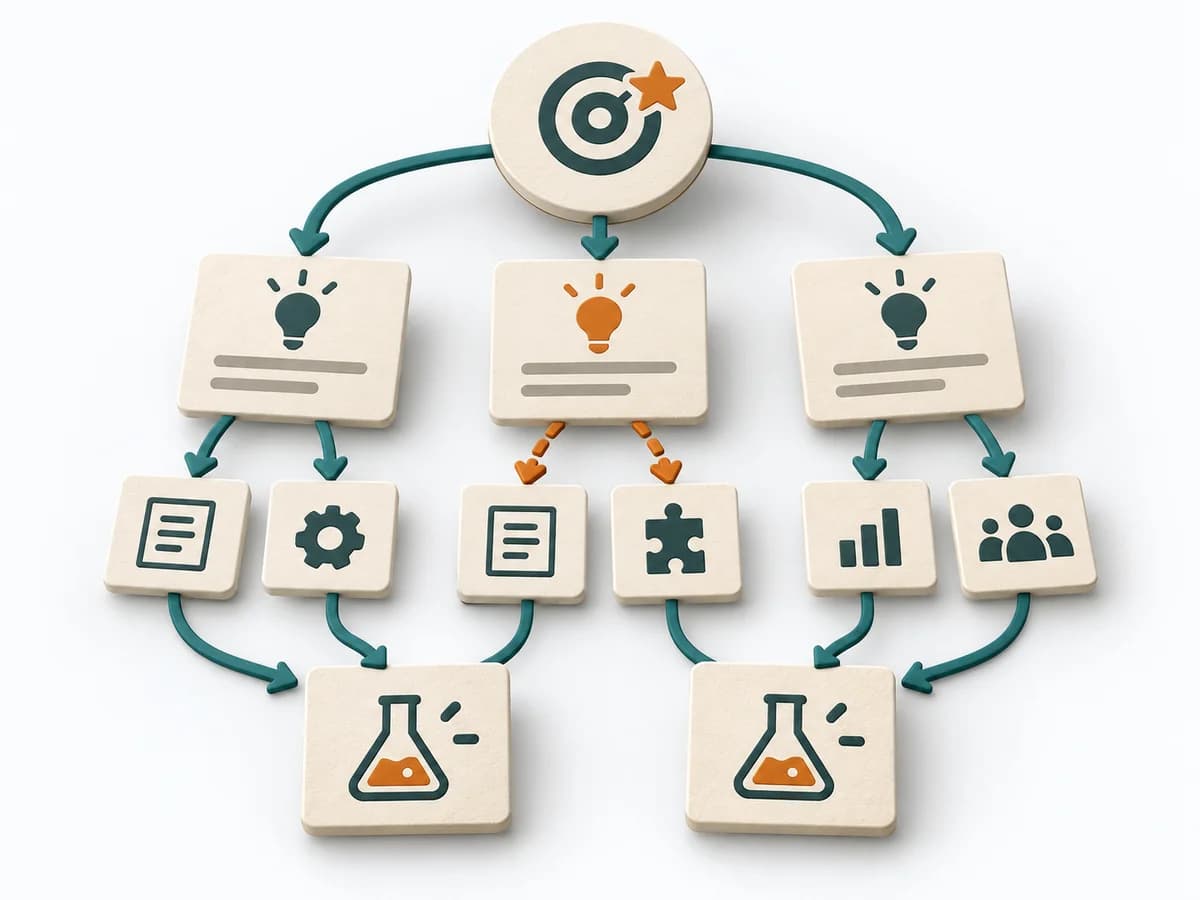 Product Discovery Opportunity Solution Tree | 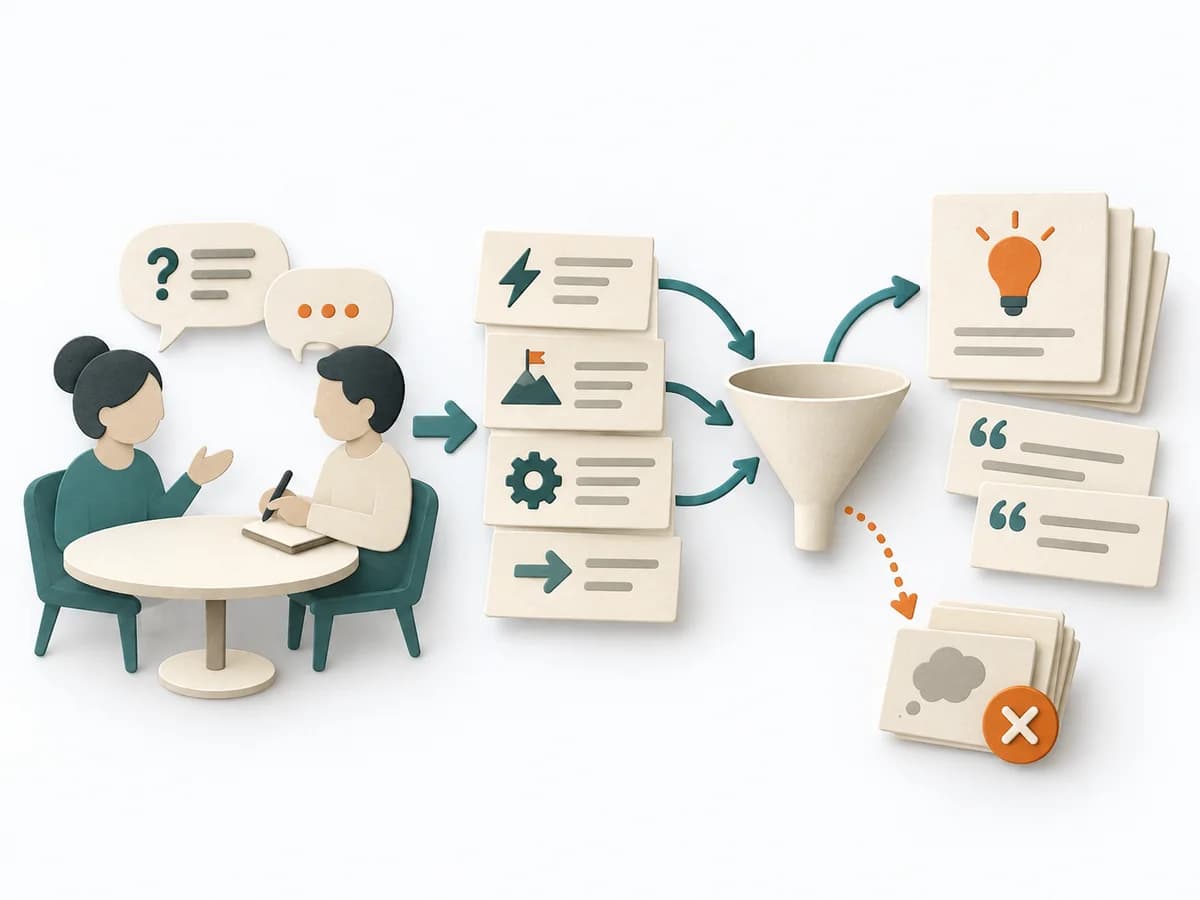 Product Discovery Opportunity Interview | 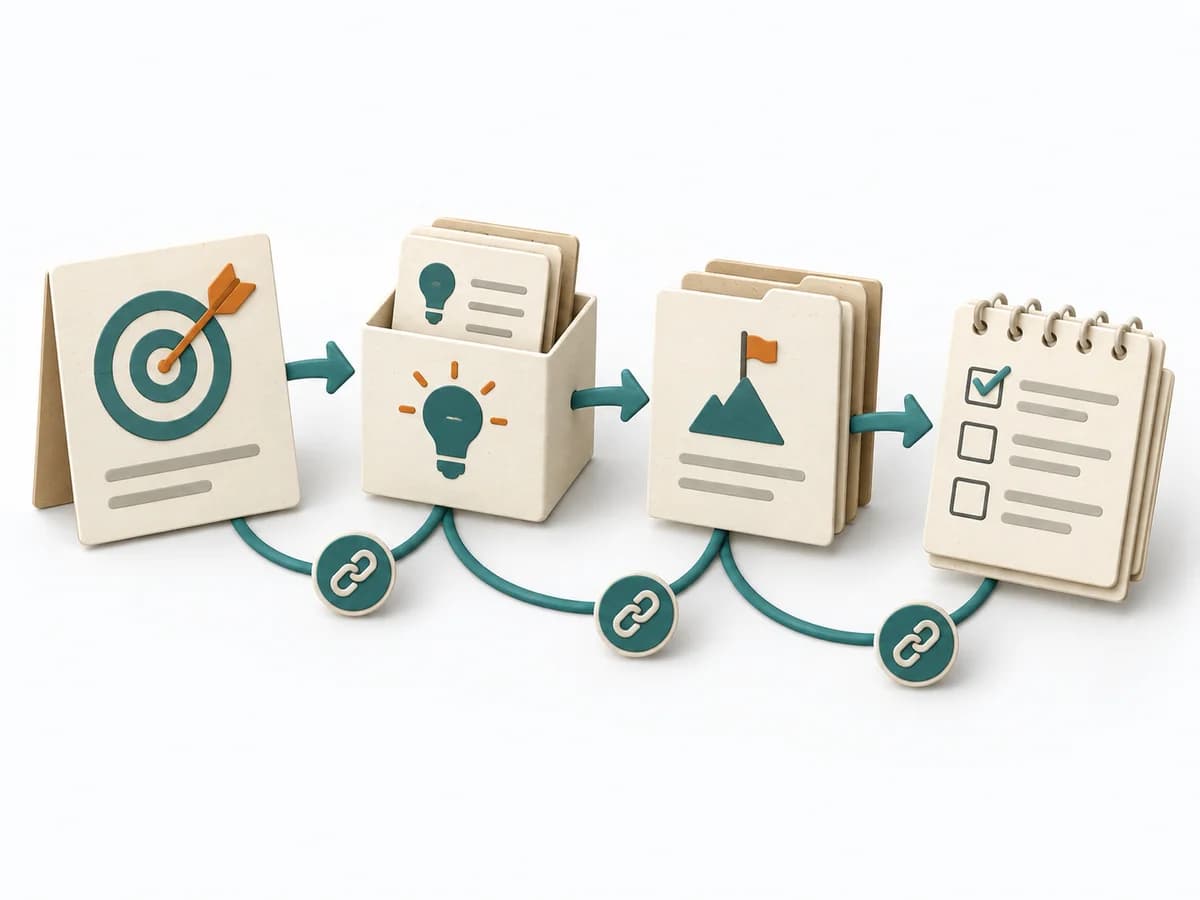 Product Strategy GIST Planning |
|---|---|---|---|---|
Purposedifferent | When content only makes sense internally and users can't find the structure again, card sorting exposes their mental order. Terms, groups, and naming are then aligned with the target group's expectations. | When discovery keeps swinging between goals, ideas, and learning loops, it creates clear steering logic. It connects the desired outcome, opportunities, and experiments into a legible structure. | When opportunities are still hidden behind signals of need, it structures conversations around needs and obstacles. It looks for patterns that lead to new product opportunities. | GIST Planning helps clarify target groups, value, goals, and priorities. It links customer value, product logic, and decision priorities, and captures the result as goals, an idea bank, and a step-project list. |
Complexitydifferent | Low | Medium | Medium | Medium |
Timedifferent | 20-45 min | 1-2 h Setup, laufend | 30-60 min je Interview | Wochen bis Monate je Goal |
Participantsdifferent | Based on research question | 2-6 | 5-12 Interviews | 3-10 |
Formatsame | Workshop + async | Workshop + async | Workshop + async | Workshop + async |
Outputdifferent | Content groups, Label set, IA hypotheses | Opportunity Solution Tree, Experiment Backlog, Learning Log | Interview Notes, Opportunity Themes, Customer Quotes | Goals, Idea bank, Step-project list, Tasks, Learning reports |
Tagsno overlap | Information architectureNavigationStructure | DiscoveryOutcomesExperimentsOpportunity | DiscoveryInterviewsOpportunityCustomer | RoadmapOutcomesPlanningExperiments |