View methods side by side.
Choose up to four methods. Add them using the search and share the comparison by copying its link.
| Criterion |  UX Research Card Sorting | 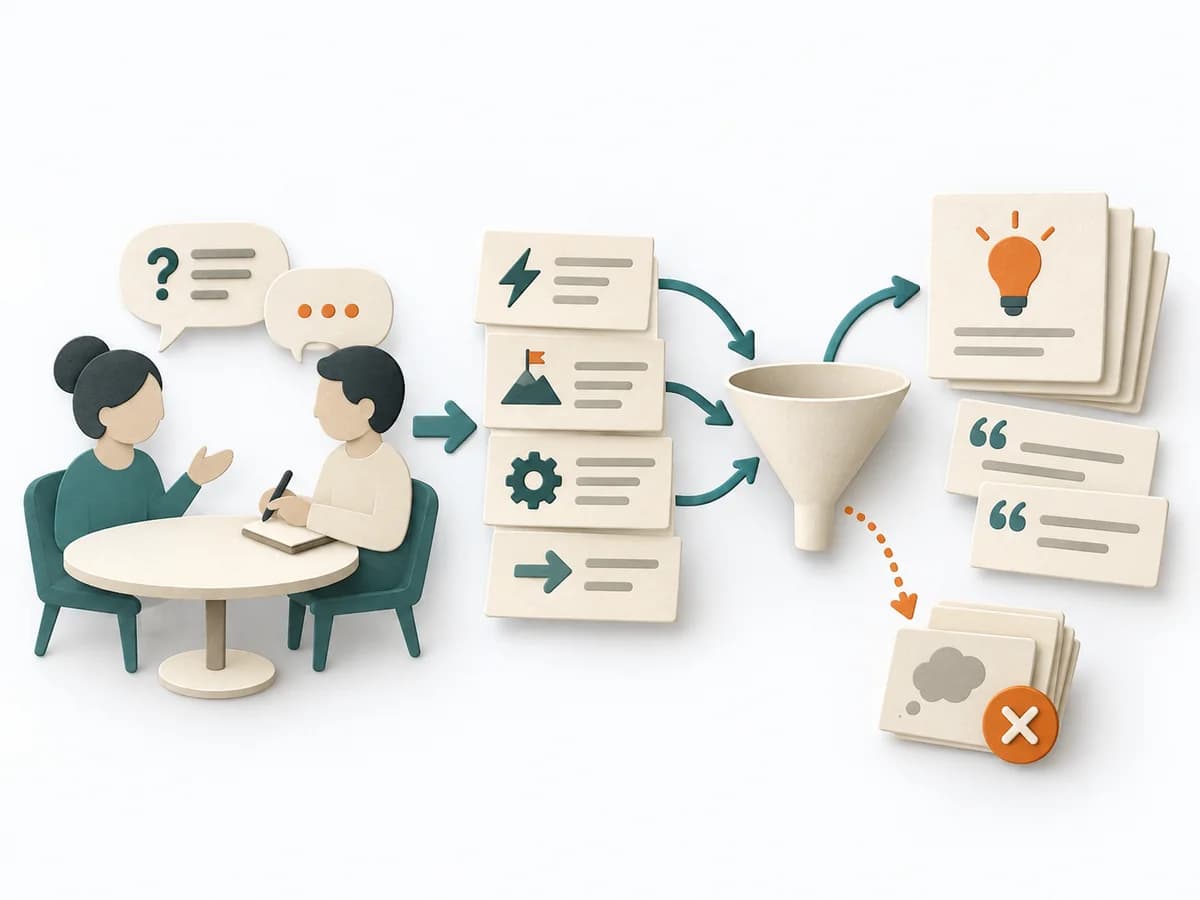 Product Discovery Opportunity Interview | 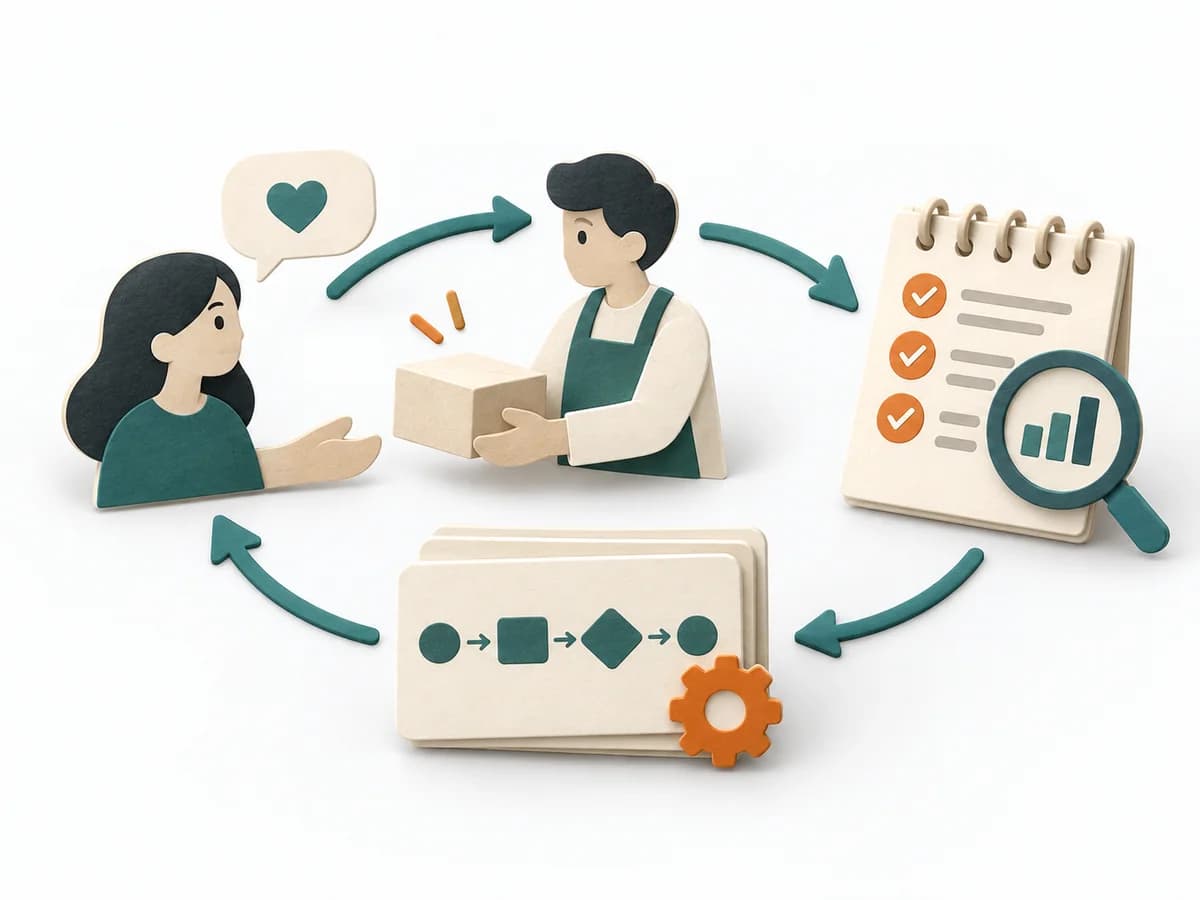 Product Discovery Concierge MVP | 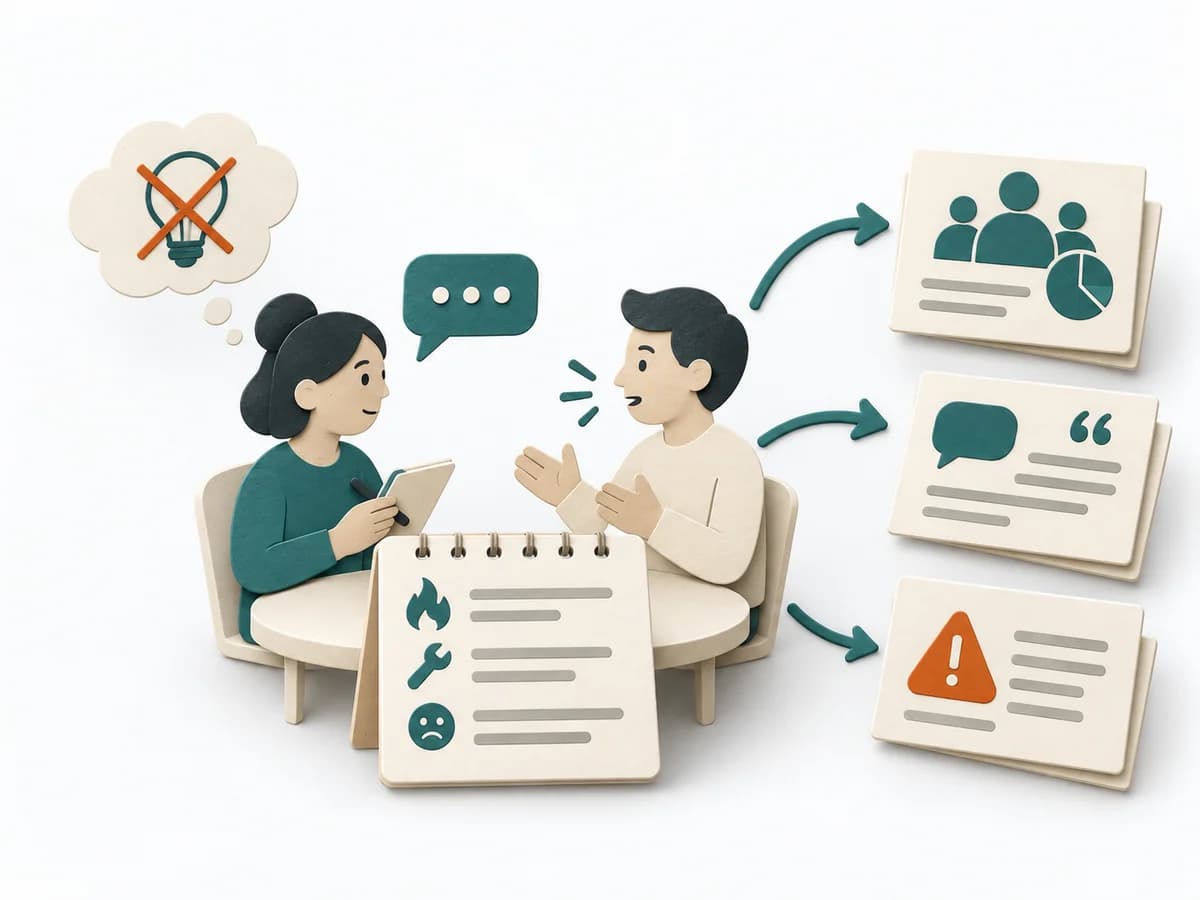 Product Discovery Problem Interview |
|---|---|---|---|---|
Purposedifferent | When content only makes sense internally and users can't find the structure again, card sorting exposes their mental order. Terms, groups, and naming are then aligned with the target group's expectations. | When opportunities are still hidden behind signals of need, it structures conversations around needs and obstacles. It looks for patterns that lead to new product opportunities. | When an idea can first fail or grow through genuine hands-on support, it relies on manual work instead of automation. It shows whether user value holds up even under manual execution. | When the picture of the problem still needs to become solid, it asks about real situations and consequences. It separates genuine suffering from mere interest in a solution. |
Complexitydifferent | Low | Medium | Medium | Medium |
Timedifferent | 20-45 min | 30-60 min je Interview | 1-4 Wochen | 30-60 min je Interview |
Participantsdifferent | Based on research question | 5-12 Interviews | 3-10 Kunden | 5-12 Interviews |
Formatsame | Workshop + async | Workshop + async | Workshop + async | Workshop + async |
Outputdifferent | Content groups, Label set, IA hypotheses | Interview Notes, Opportunity Themes, Customer Quotes | Concierge Learnings, Service Blueprint, MVP Risks | Problem Evidence, Risk Notes, Customer Segments |
Tagsno overlap | Information architectureNavigationStructure | DiscoveryInterviewsOpportunityCustomer | MVPValidationServiceDiscovery | DiscoveryInterviewsValidation |