View methods side by side.
Choose up to four methods. Add them using the search and share the comparison by copying its link.
| Criterion |  UX Research Card Sorting | 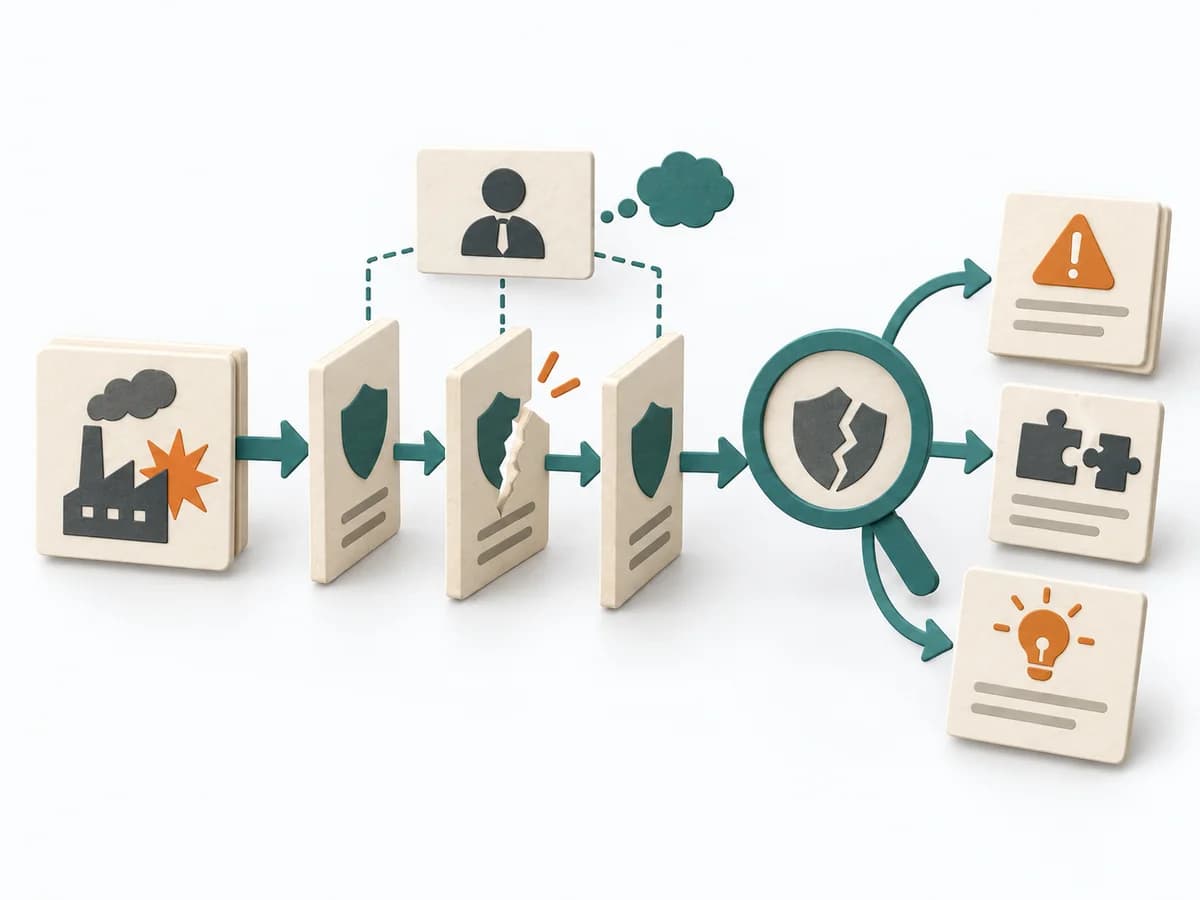 Operations MORT Analysis |  Operations Failure Mode and Effects Analysis |  Operations Fault Tree Analysis |
|---|---|---|---|---|
Purposedifferent | When content only makes sense internally and users can't find the structure again, card sorting exposes their mental order. Terms, groups, and naming are then aligned with the target group's expectations. | For a safety-relevant event or a system with high protection requirements, the method examines where controls failed. It exposes both technical and organizational gaps. | For a process, product, or service with noticeable failure risks, the method assesses possible failure modes in advance. It directs attention to combinations of occurrence, effect, and detectability. | For a critical top event with several possible triggers, the method logically models failure paths. It makes visible which combinations of conditions can lead to damage. |
Complexitydifferent | Low | High | High | High |
Timedifferent | 20-45 min | Mehrere Tage bis Wochen | 2-6 h | 2-6 h |
Participantsdifferent | Based on research question | 2-6 | 3-10 | 3-8 |
Formatdifferent | Workshop + async | Workshop + async | Workshop | Workshop + async |
Outputdifferent | Content groups, Label set, IA hypotheses | MORT Worksheets, Findings per Branch, Corrective Actions, Systemic Recommendations | FMEA Table, Risk Priority, Mitigation Actions | Fault Tree, Critical Paths, Cause Hypotheses, Control Actions |
Tagsno overlap | Information architectureNavigationStructure | Root causeSafetySystemicIncident | RiskQualityOperationsRoot cause | RiskRoot causeSafety |