View methods side by side.
Choose up to four methods. Add them using the search and share the comparison by copying its link.
| Criterion | 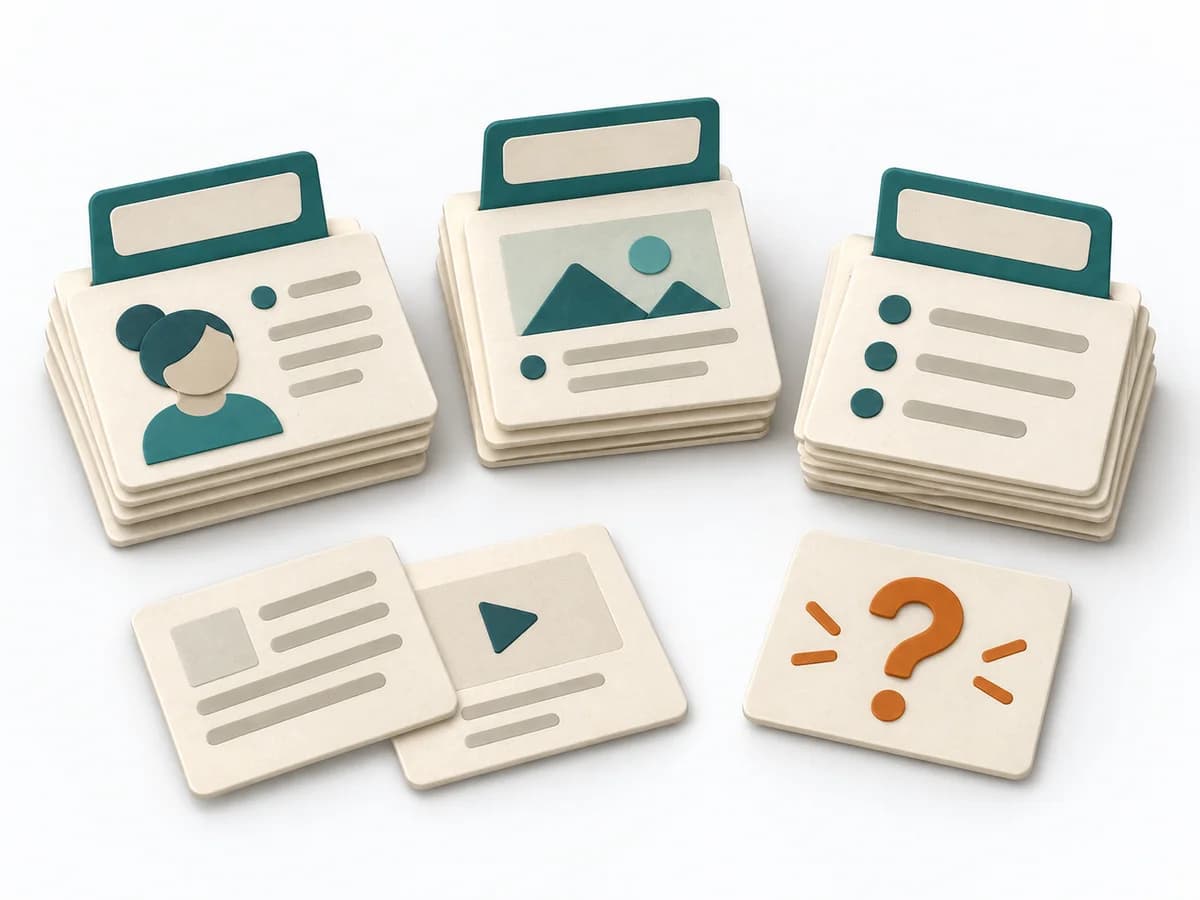 UX Research Card Sorting |  Domain Modeling Domain Context Map |  Facilitation Alignment Mapping | 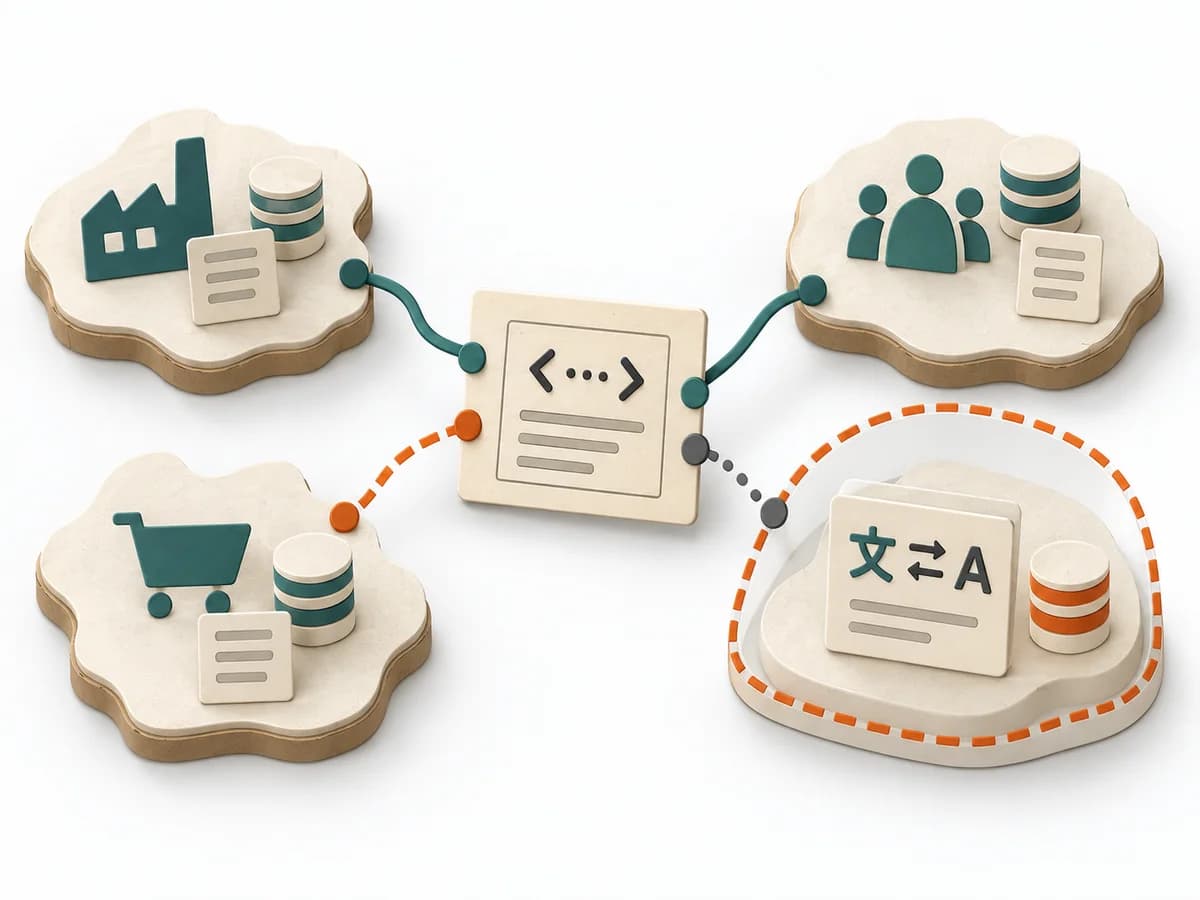 Domain Modeling Context Map |
|---|---|---|---|---|
Purposedifferent | When content only makes sense internally and users can't find the structure again, card sorting exposes their mental order. Terms, groups, and naming are then aligned with the target group's expectations. | When a domain model and its associated contexts need to be thought through together, it creates a shared overview. It connects the business view and organizational boundary into a readable whole. | When several people work toward one goal but hold different mental maps, Alignment Mapping makes the discrepancies visible. It arranges goals, assumptions, and priorities so shared direction becomes verifiable. | When several contexts need to talk to each other, it makes their relationships and dependencies legible. It helps sort integration pressure and responsibilities across system boundaries. |
Complexitydifferent | Low | Medium | Medium | Medium |
Timedifferent | 20-45 min | 1-3 h | 1-2 h | 1-3 h |
Participantsdifferent | Based on research question | 3-10 | 4-12 | 2-8 |
Formatdifferent | Workshop + async | Workshop | Workshop | Workshop + async |
Outputdifferent | Content groups, Label set, IA hypotheses | Domain Context Map, Boundary Notes, Ownership Map | Alignment Map, Open Issues, Decision Questions | Context Map, Integration Patterns, Boundary Notes |
Tagsno overlap | Information architectureNavigationStructure | Domain-Driven DesignContextBoundaries | AlignmentStakeholdersStrategyFacilitation | Domain-Driven DesignBoundariesStrategy |