View methods side by side.
Choose up to four methods. Add them using the search and share the comparison by copying its link.
| Criterion | 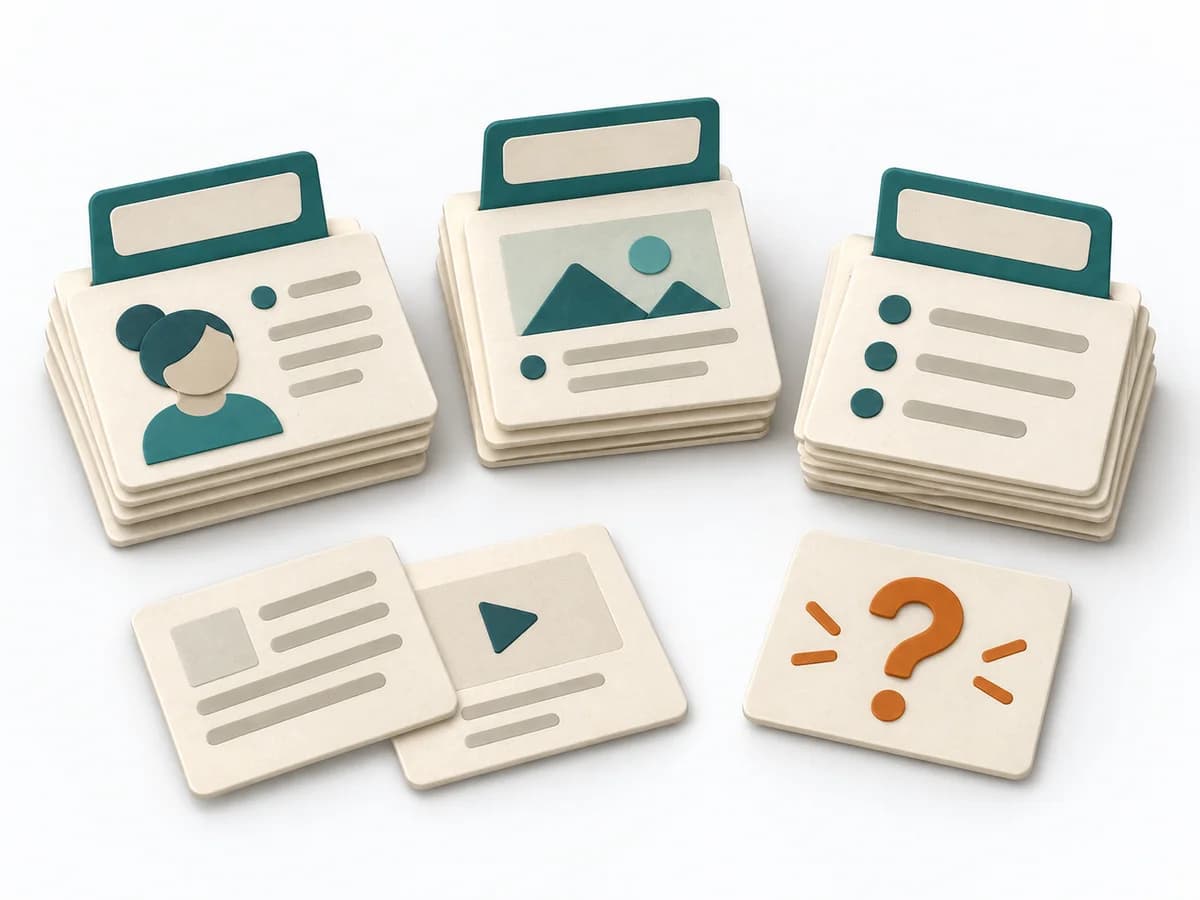 UX Research Card Sorting |  UX Research Diary Study |  Domain Modeling Context Map | 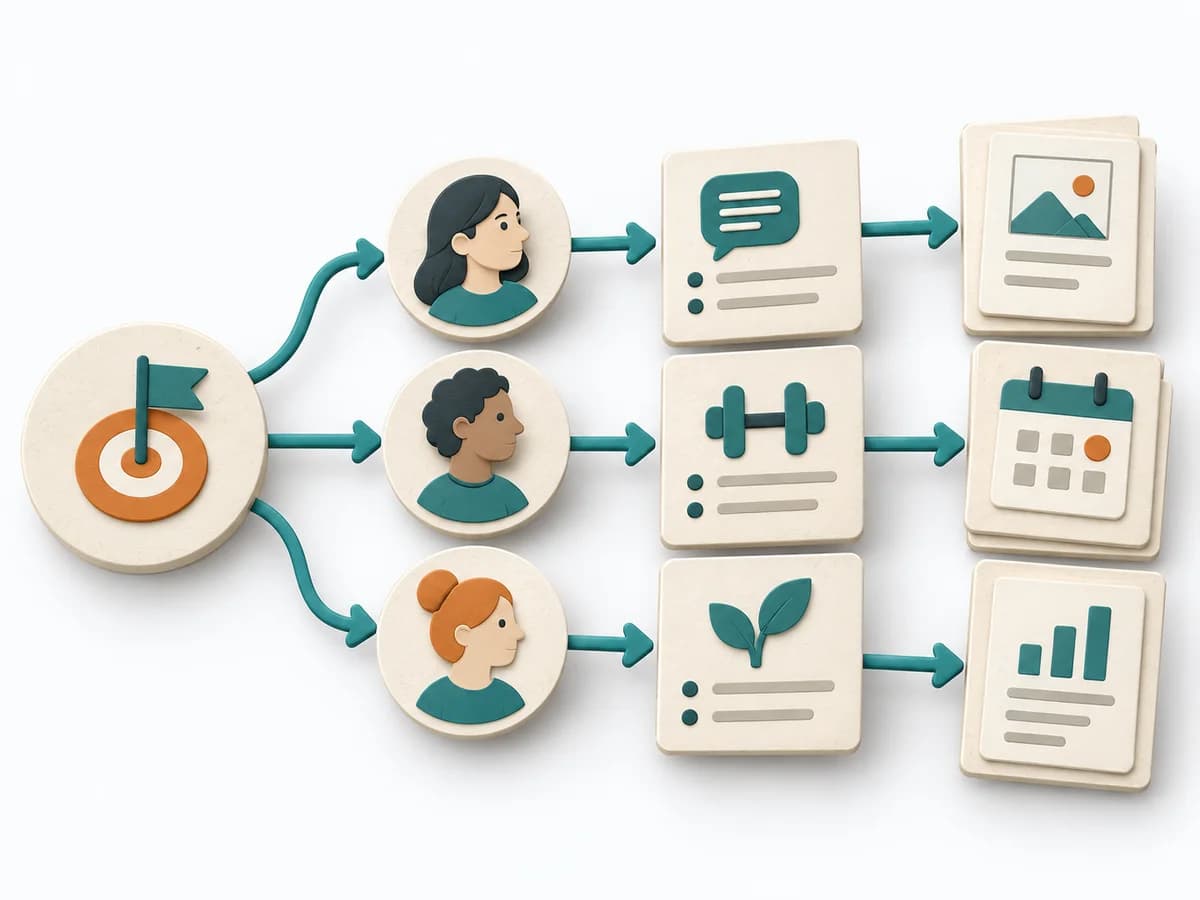 Product Strategy Impact Mapping |
|---|---|---|---|---|
Purposedifferent | When content only makes sense internally and users can't find the structure again, card sorting exposes their mental order. Terms, groups, and naming are then aligned with the target group's expectations. | When experiences build up over days or weeks and a single session cannot capture them, Diary Study records the course of everyday life. Recurring triggers, moods, and habits become visible this way, beyond the sharpness of memory. | When several contexts need to talk to each other, it makes their relationships and dependencies legible. It helps sort integration pressure and responsibilities across system boundaries. | When a goal needs to be connected to several possible paths, it shows chains of impact instead of feature lists. It connects business goal, behavior change, and measures. |
Complexitydifferent | Low | Medium | Medium | Medium |
Timedifferent | 20-45 min | 1-4 Wochen | 1-3 h | 45-90 min |
Participantsdifferent | Based on research question | 5-20 | 2-8 | 3-8 |
Formatdifferent | Workshop + async | Async | Workshop + async | Workshop |
Outputdifferent | Content groups, Label set, IA hypotheses | Diary Entries, Longitudinal Patterns, Experience Timeline | Context Map, Integration Patterns, Boundary Notes | Impact Map, Outcome Hypotheses, Delivery Options |
Tagsno overlap | Information architectureNavigationStructure | UX researchTrackingBehavior | Domain-Driven DesignBoundariesStrategy | OutcomesStrategyBehaviorPlanning |