View methods side by side.
Choose up to four methods. Add them using the search and share the comparison by copying its link.
| Criterion |  UX Research Card Sorting |  Facilitation Alignment Mapping |  Facilitation Power Interest Grid | 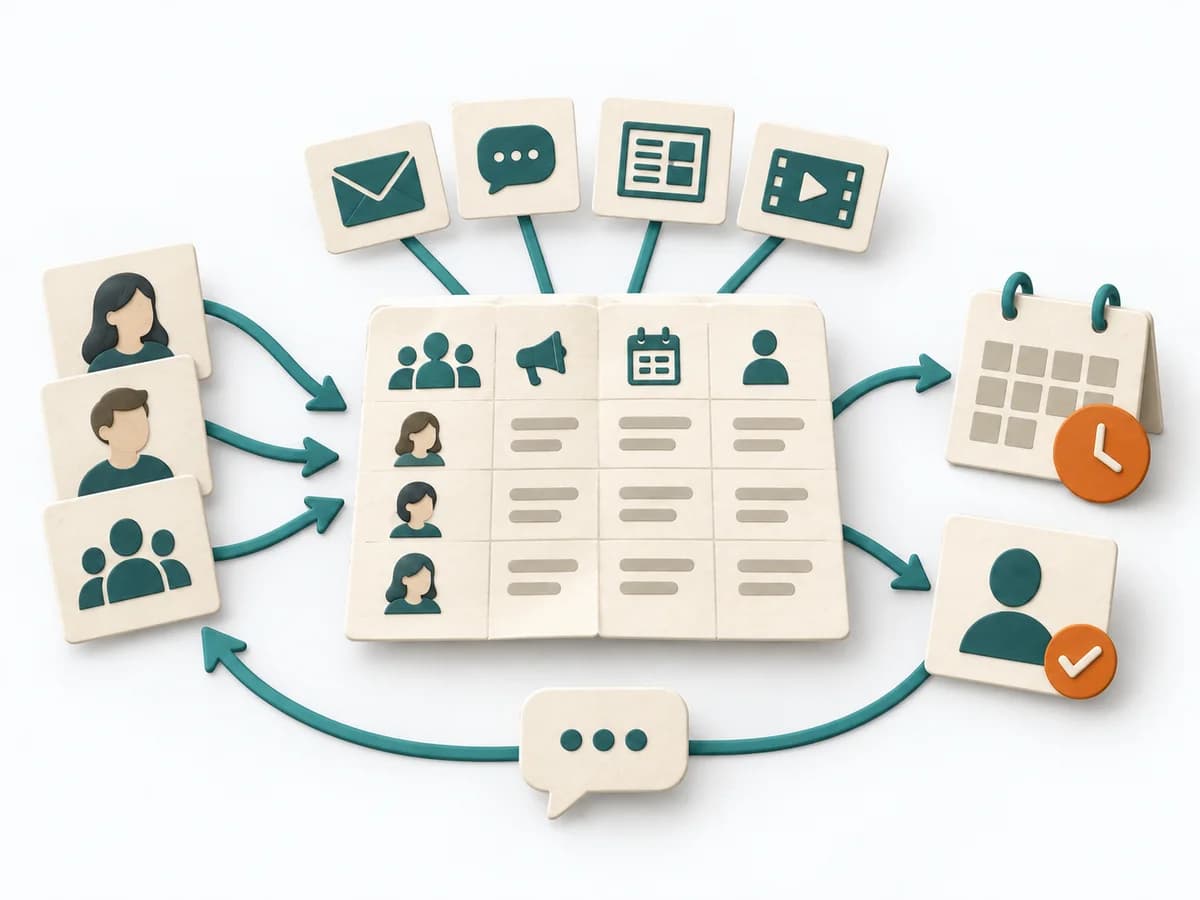 Delivery Communication Plan |
|---|---|---|---|---|
Purposedifferent | When content only makes sense internally and users can't find the structure again, card sorting exposes their mental order. Terms, groups, and naming are then aligned with the target group's expectations. | When several people work toward one goal but hold different mental maps, Alignment Mapping makes the discrepancies visible. It arranges goals, assumptions, and priorities so shared direction becomes verifiable. | When many stakeholders compete for attention at once, the Power Interest Grid sorts them by influence and stake. It turns individual contributions into a visible selection. The result is captured as a Power Interest Grid and a stakeholder-specific strategy. | When many people need to be informed in parallel and messages would otherwise arrive unevenly or too late, a Communication Plan orders communication reliably. Channels, audiences, and cadences interlock so important information doesn't get lost. |
Complexitydifferent | Low | Medium | Low | Low |
Timedifferent | 20-45 min | 1-2 h | 30-60 min | 45-90 min |
Participantsdifferent | Based on research question | 4-12 | 2-8 | 2-6 |
Formatdifferent | Workshop + async | Workshop | Workshop | Workshop + async |
Outputdifferent | Content groups, Label set, IA hypotheses | Alignment Map, Open Issues, Decision Questions | Power Interest Grid, Strategy per Stakeholder | Communication Plan, Channel Matrix, Message Cadence |
Tagsno overlap | Information architectureNavigationStructure | AlignmentStakeholdersStrategyFacilitation | StakeholdersFacilitationAlignmentPlanning | CommunicationStakeholdersDeliveryPlanning |