View methods side by side.
Choose up to four methods. Add them using the search and share the comparison by copying its link.
Selected:Business Model Stress TestATAM (Architecture Tradeoff Analysis Method)LASR (Lightweight Approach for Software Reviews)VRIO Framework
| Criterion | 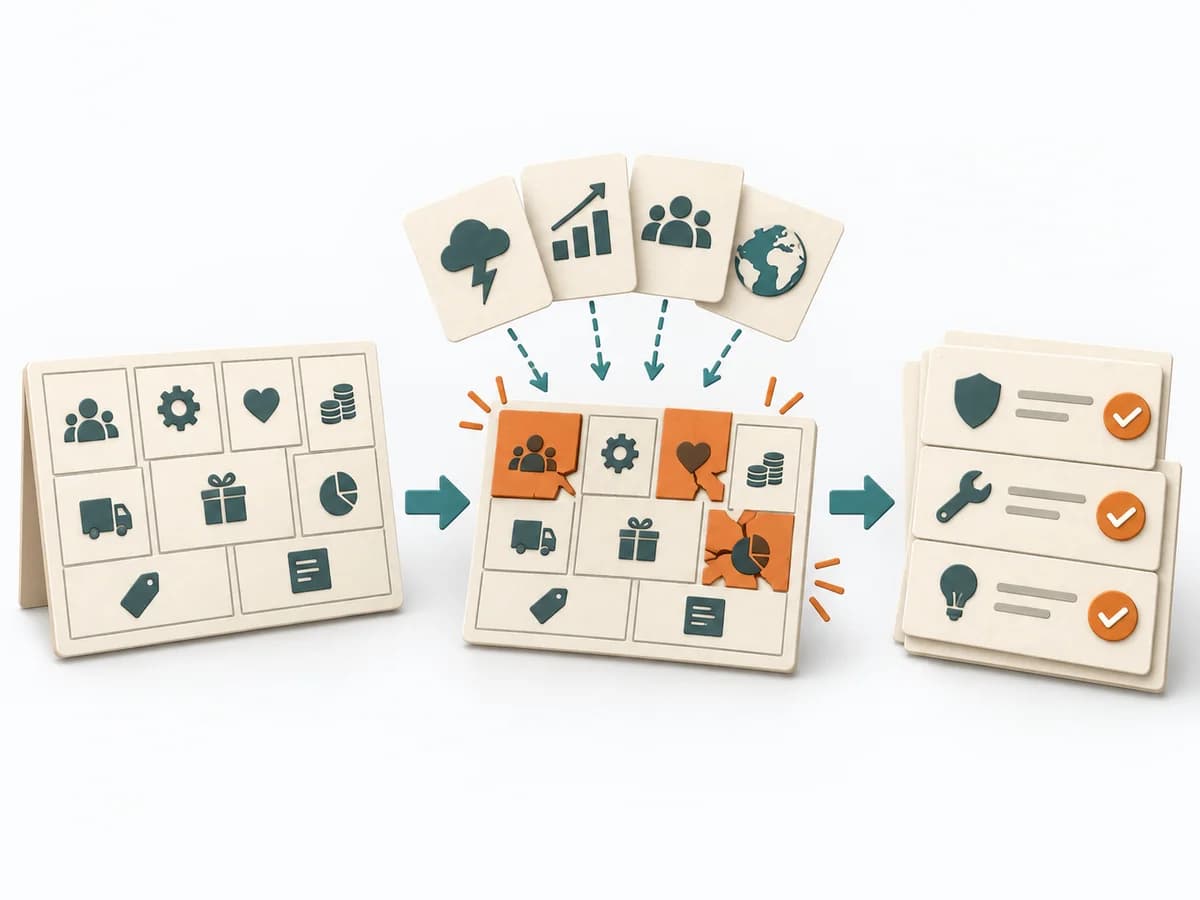 Business Strategy Business Model Stress Test |  Architecture ATAM (Architecture Tradeoff Analysis Method) |  Architecture LASR (Lightweight Approach for Software Reviews) | 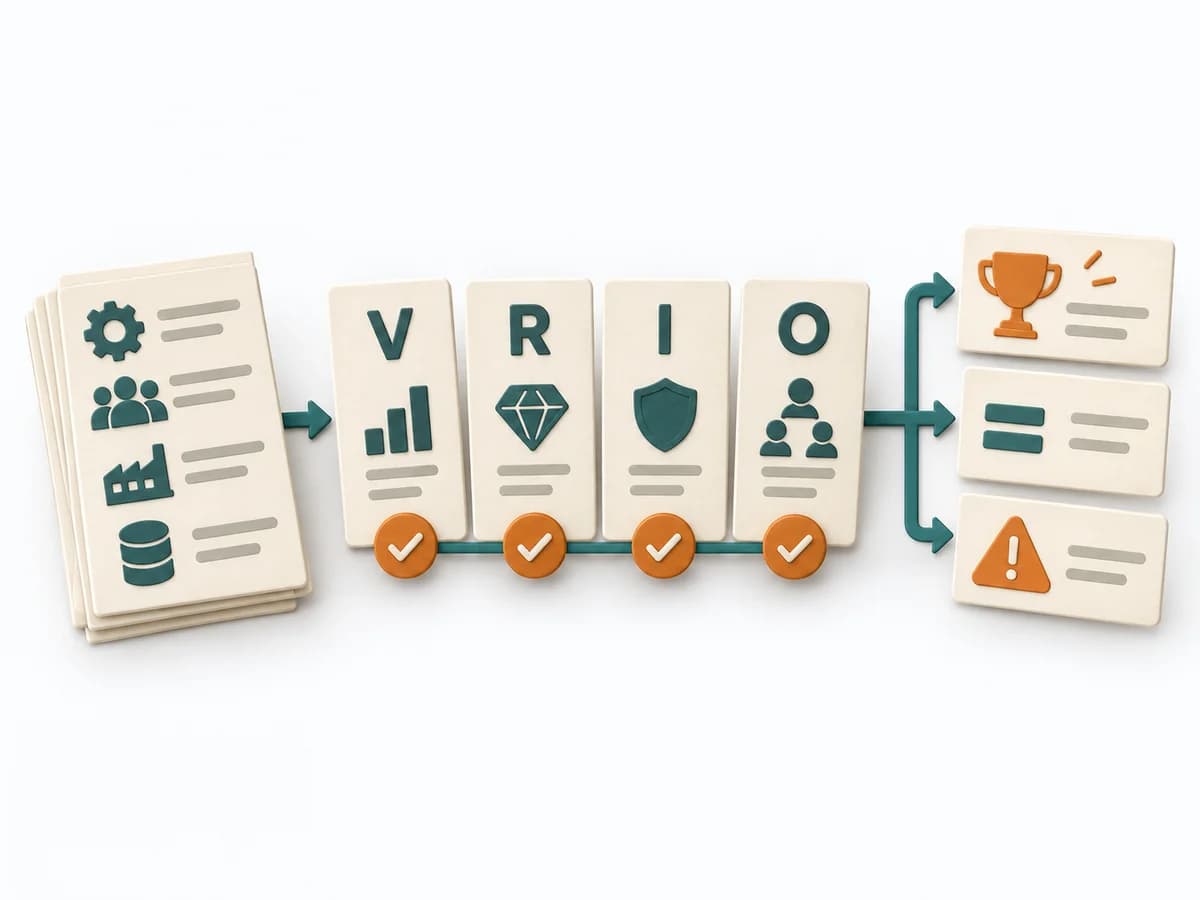 Business Strategy VRIO Framework |
|---|---|---|---|---|
Purposedifferent | A Business Model Stress Test checks how well a business model holds up under pressure and headwinds. It compares strengths, risks, market logic, and courses of action. The result is captured as a stress-test report and action plan per scenario. | ATAM helps teams weigh architecture decisions when quality goals compete. The team considers business goals, stakeholder expectations, and technical decisions together. The evaluation shows which risks need further investigation. | LASR helps development teams identify where their software falls short of important quality goals and which improvements to consider. A small group with existing system knowledge can make an initial assessment and investigate open questions in more detail. | The VRIO Framework rates resources and capabilities on whether they are Valuable, Rare, Inimitable, and Organized. It compares strengths, risks, market logic, and courses of action. The result is captured as a VRIO table and strategic actions. |
Complexitydifferent | High | High | Medium | Medium |
Timedifferent | Half day | Several meetings plus preparation and analysis; total effort depends on scope | 3–4 h for initial assessment; preparation and deeper analysis additional | 90-180 min |
Participantsdifferent | 3-8 | Evaluation team, architects, and relevant stakeholders | 1 or a small team; particularly suitable for 3–4 people | 3-6 |
Formatdifferent | Workshop | Workshop + async | Workshop + async | Workshop |
Outputdifferent | Stress Test Report, Action Plan per Scenario | Prioritized quality scenarios in a utility tree, Architecture risks with reasoning and assumptions, Sensitivity and trade-off points, Findings report with open investigations | Lean Mission Statement describing the software’s purpose, Prioritized quality goals and evaluation criteria, Risks and estimated gaps against quality goals, More closely examined findings and open checks | VRIO Table, Strategic Actions |
Tagsno overlap | StrategyBusiness modelRiskDiagnosis | ArchitectureQualityRiskTradeoffsStakeholders | ArchitectureQualityRiskAssessmentLean | StrategyDiagnosisBusiness modelCapability |