View methods side by side.
Choose up to four methods. Add them using the search and share the comparison by copying its link.
| Criterion | 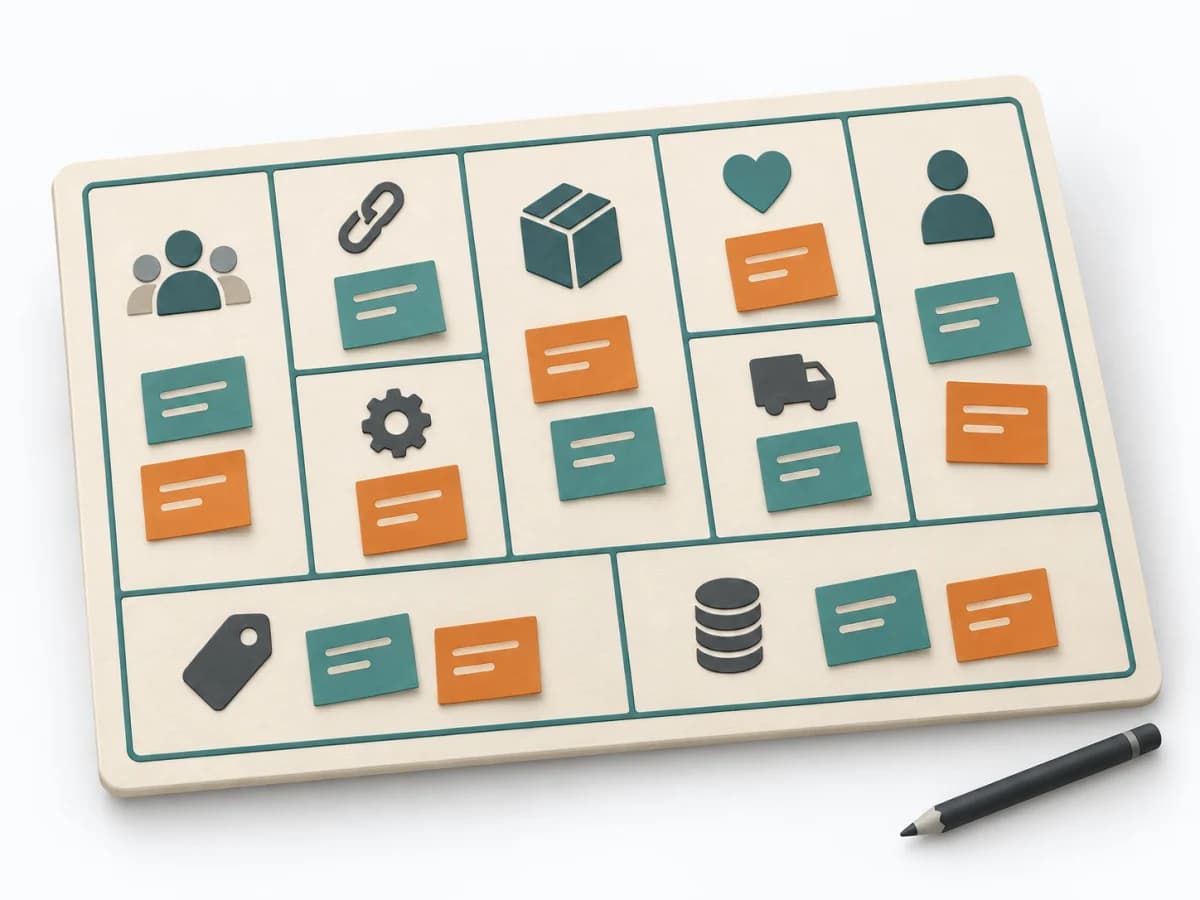 Business Strategy Business Model Canvas | 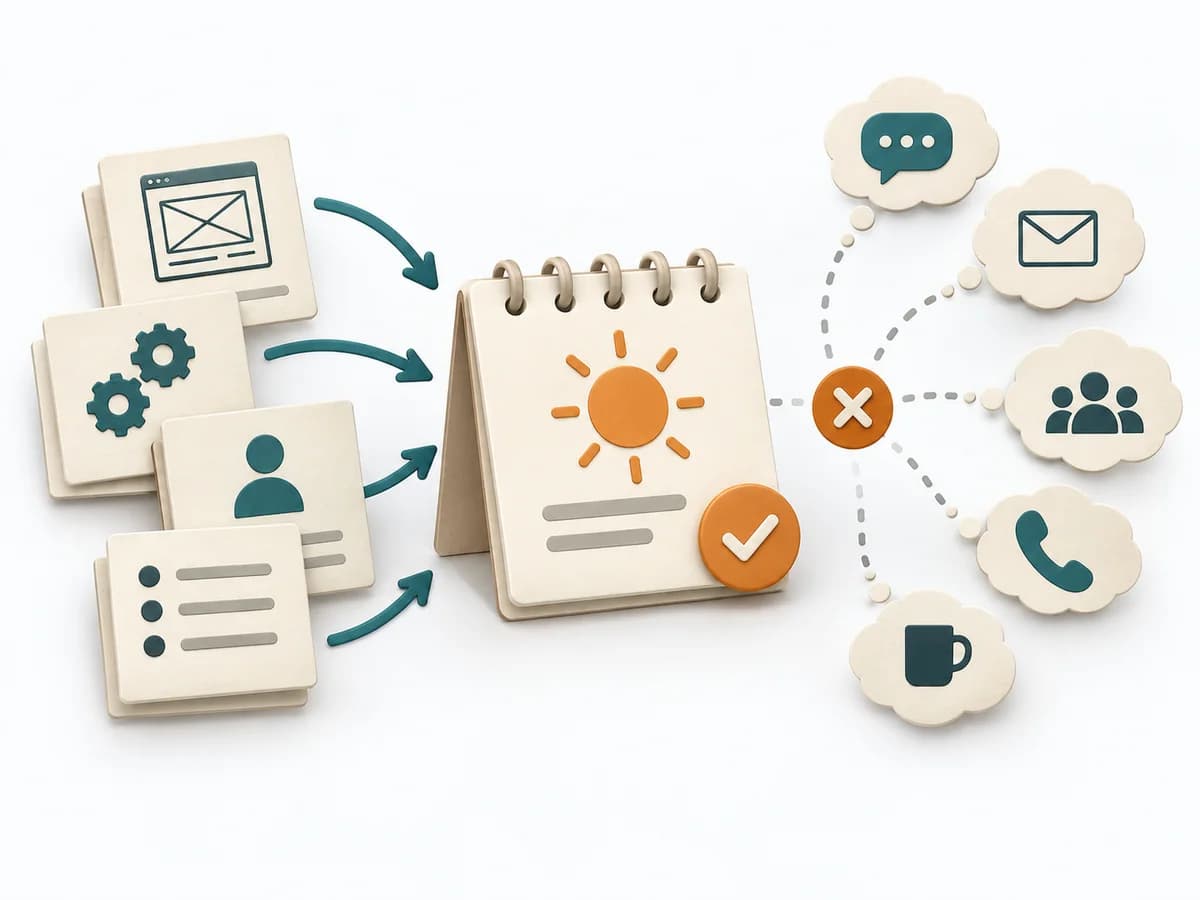 Agile Ideal Days | 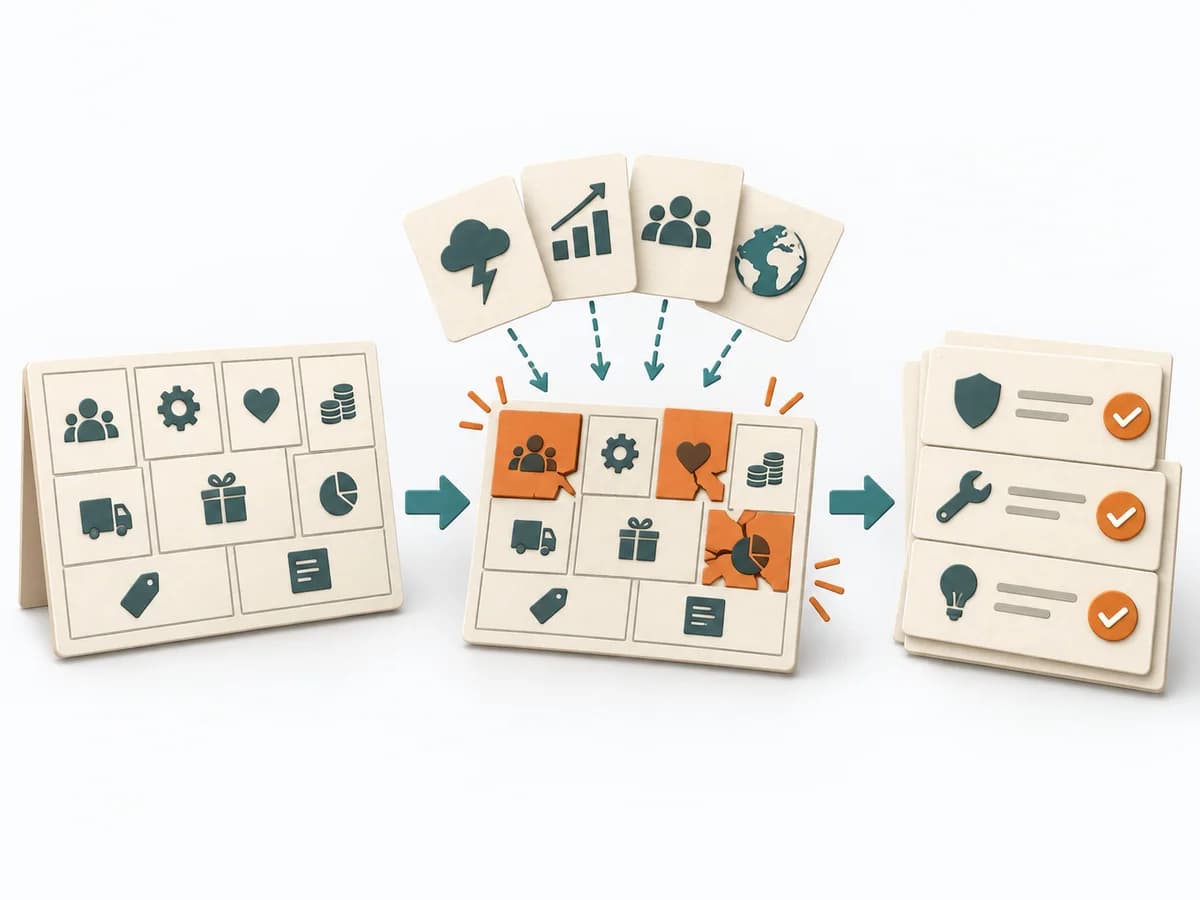 Business Strategy Business Model Stress Test | 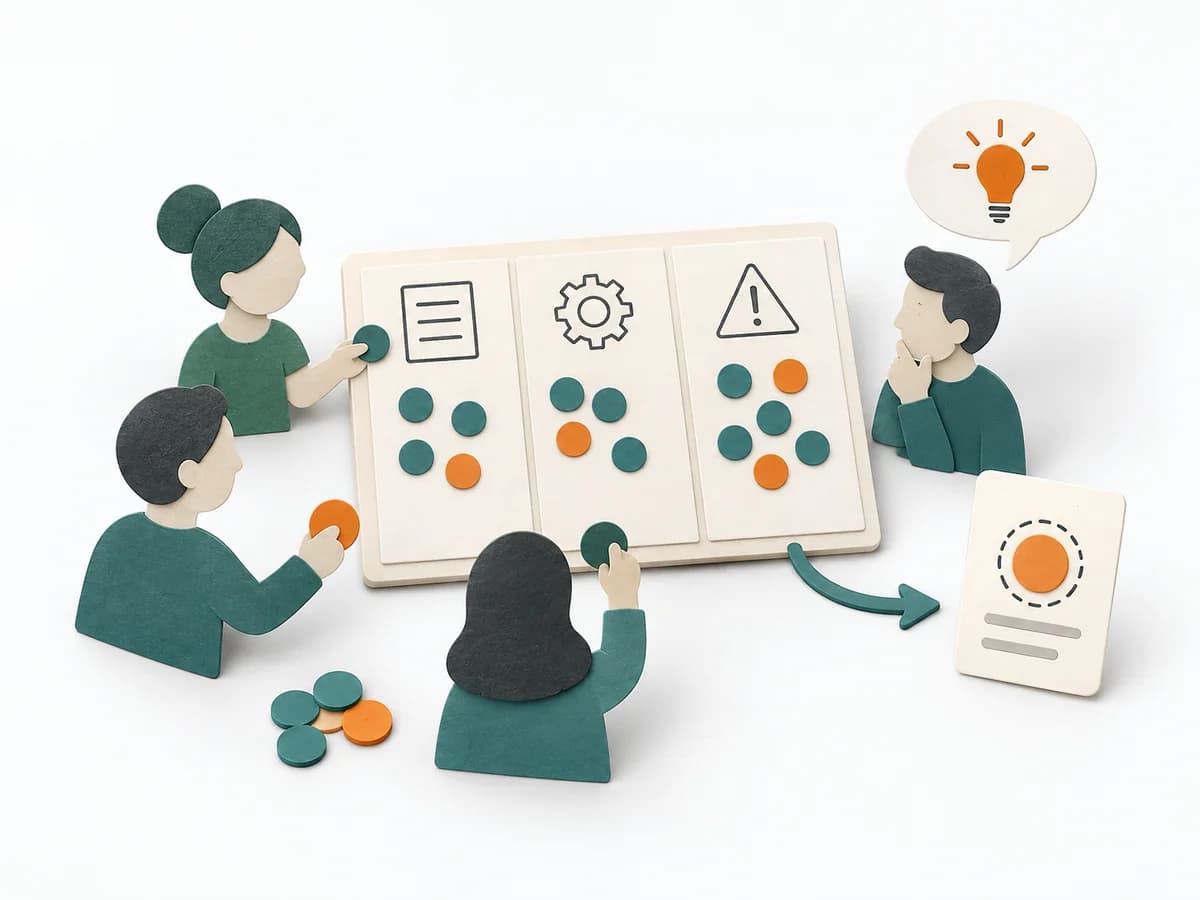 Facilitation Dot Estimation |
|---|---|---|---|---|
Purposedifferent | The Business Model Canvas condenses a business model to its key building blocks and assumptions. It makes variants quickly comparable and reveals gaps before validation or implementation begins. | When effort needs to be thought of as real working time, it offers a simple common denominator for comparison. It sorts work by value, risk, and delivery ability. The result is captured as Ideal Day Estimates, Assumption Notes, and Capacity Caveats. | A Business Model Stress Test checks how well a business model holds up under pressure and headwinds. It compares strengths, risks, market logic, and courses of action. The result is captured as a stress-test report and action plan per scenario. | When size or effort can only be estimated roughly, Dot Estimation condenses the group's experience into a quick range. It turns individual contributions into a visible selection. The result is captured as an Effort Heatmap, Risk Signals, and Discussion Targets. |
Complexitydifferent | Medium | Low | High | Low |
Timedifferent | 1-2 h | 15-60 min | Half day | 5-20 min |
Participantsdifferent | 2-8 | 2-9 | 3-8 | 3-20 |
Formatdifferent | Workshop + async | Workshop + async | Workshop | Workshop |
Outputdifferent | Business Model Canvas, Assumption List, Business Hypotheses | Ideal Day Estimates, Assumption Notes, Capacity Caveats | Stress Test Report, Action Plan per Scenario | Effort Heatmap, Risk Signals, Discussion Targets |
Tagsno overlap | Business modelStrategyValueInnovation | EstimationEffortAgile | StrategyBusiness modelRiskDiagnosis | EstimationEffortRisk |