View methods side by side.
Choose up to four methods. Add them using the search and share the comparison by copying its link.
| Criterion | 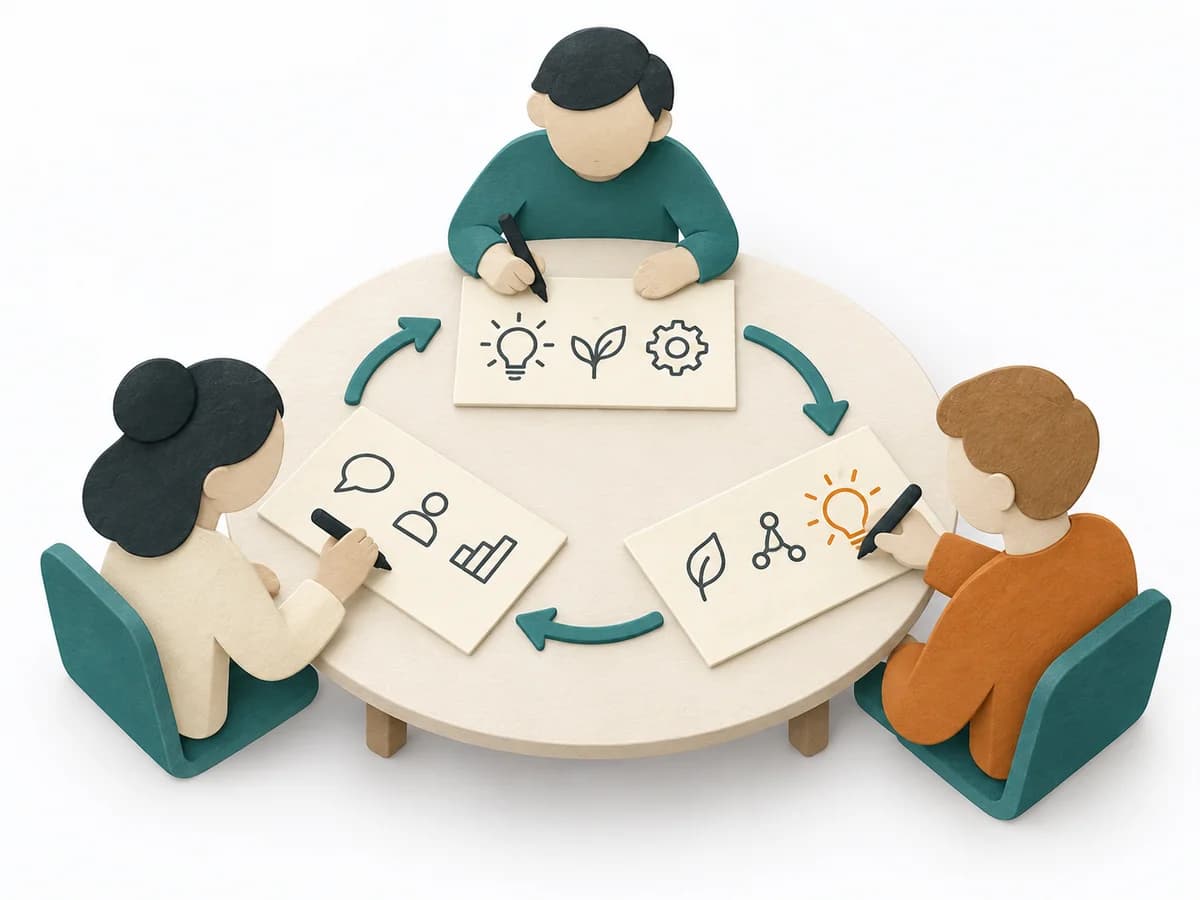 Innovation Brainwriting | 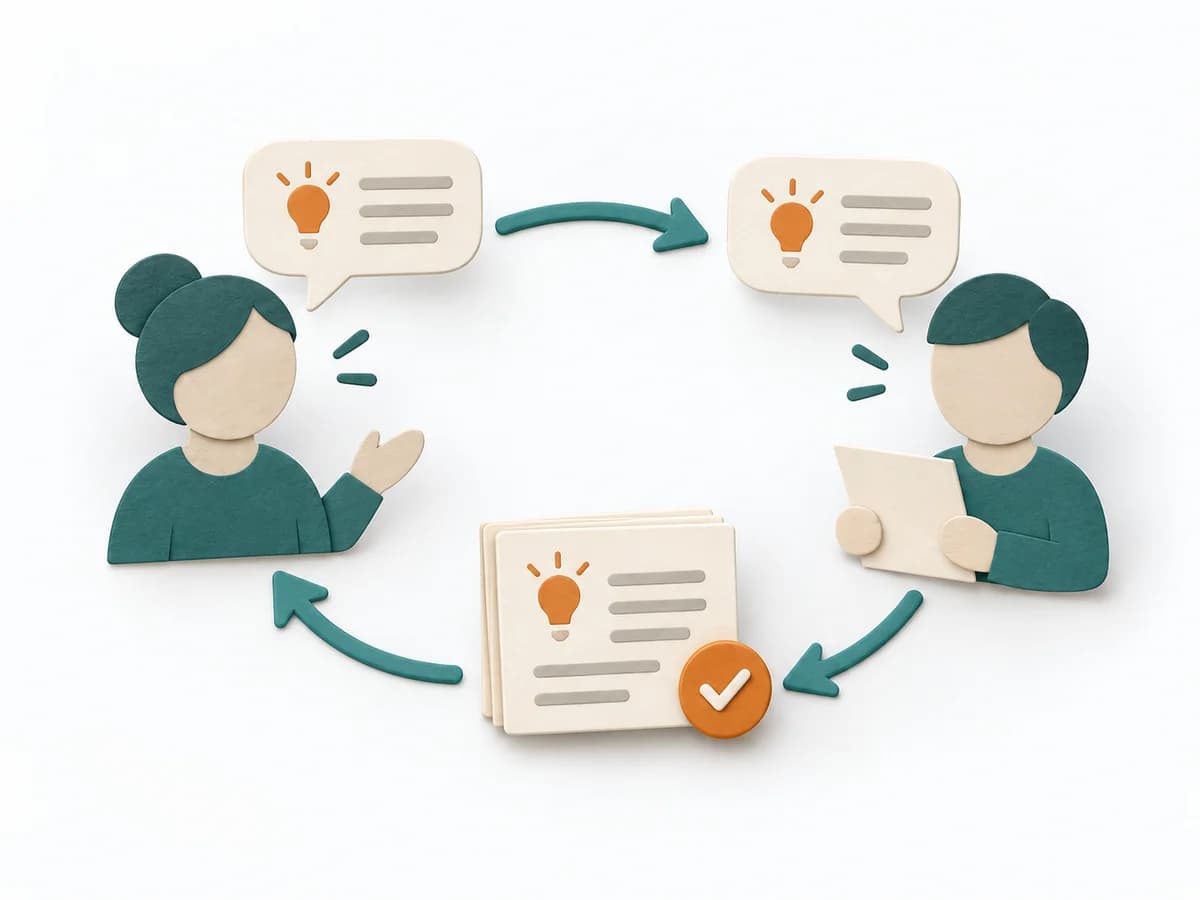 Knowledge Modeling Teach-back |  Knowledge Modeling Feynman Technique | 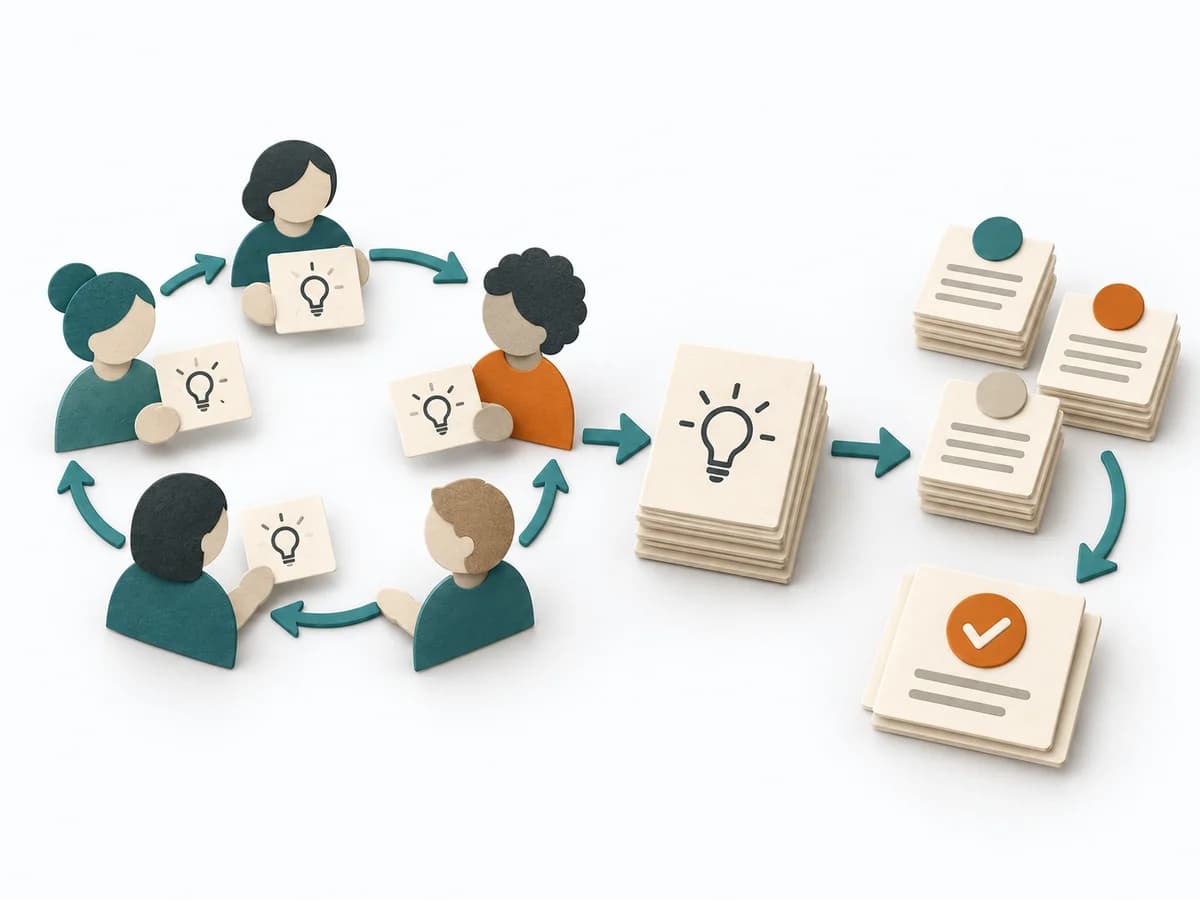 Innovation Round Robin Brainstorming |
|---|---|---|---|---|
Purposedifferent | When loud voices or hierarchy distort the idea search, the method creates a quiet entry into joint development. It gives everyone thinking space and gathers contributions without social brakes, making diversity more visible and easier to build on. | Teach-back checks whether an explanation actually got through to the other person. The method makes misunderstandings visible early and strengthens shared understanding in advisory and learning situations. | The Feynman Technique checks understanding by explaining a topic so that it stays easy for others to understand. It makes knowledge gaps visible before they become costly in everyday work. | With unevenly distributed speaking time, the method brings every person into the contribution one after another. It prevents early voices from setting the direction while still producing a shared idea space. This makes participation plannable and the team's diversity visible. |
Complexitysame | Low | Low | Low | Low |
Timedifferent | 15-30 min | 5-20 min | 20-60 min | 20-45 min |
Participantsdifferent | 3-12 | 2-8 | 1 | 4-10 |
Formatdifferent | Workshop + async | Workshop + async | Async | Workshop |
Outputdifferent | Idea sheets, Expanded concepts, Prioritized list | Understanding Check, Clarification Notes, Learning Gaps | Plain-language Explanation, Knowledge Gaps, Study Notes | Idea List, Cluster, Shortlist |
Tagsno overlap | BrainstormingCollaborationInclusionIdeas | LearningUnderstandingCommunication | LearningKnowledgeUnderstanding | BrainstormingIdeationFacilitationInclusionCreativity |