View methods side by side.
Choose up to four methods. Add them using the search and share the comparison by copying its link.
| Criterion |  Operations Bottleneck Analysis | 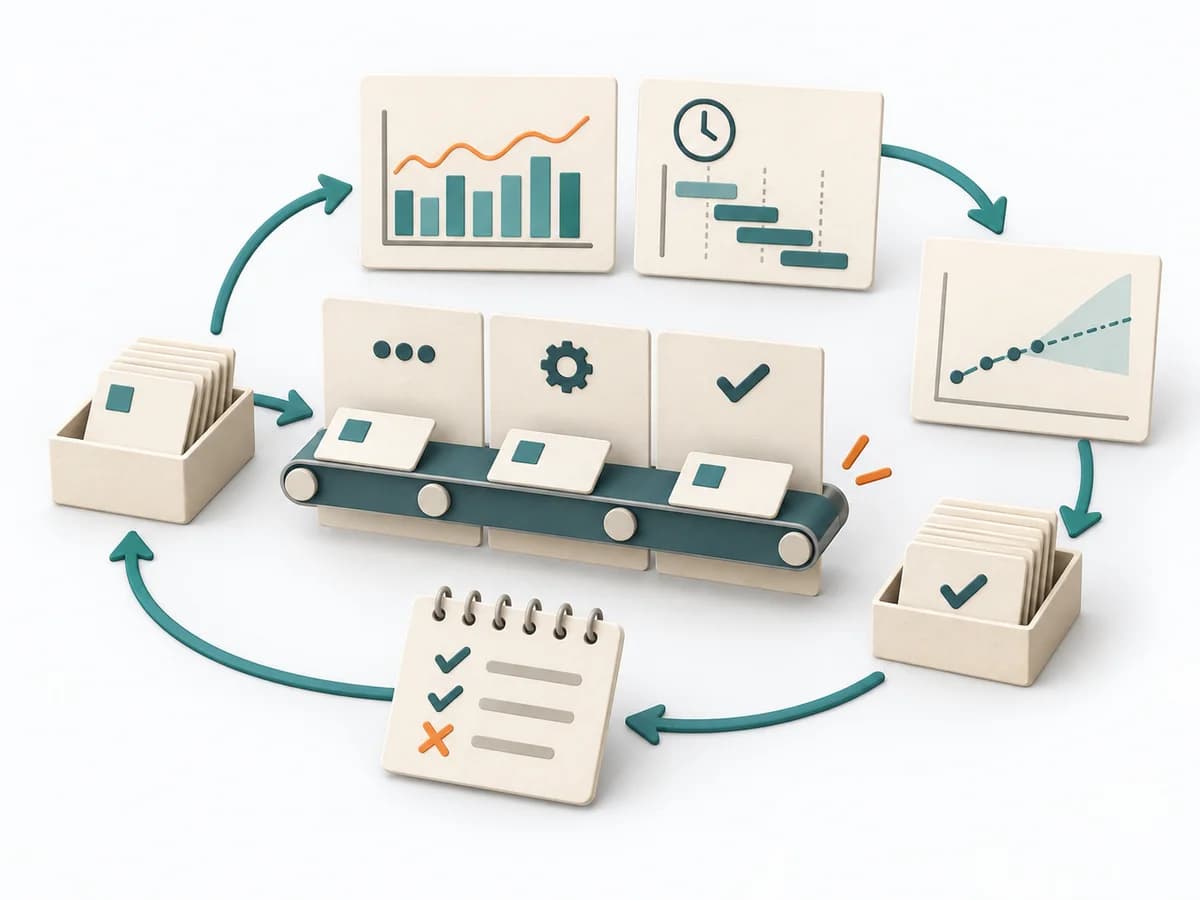 Agile NoEstimates |  DevOps Incident Timeline Analysis | 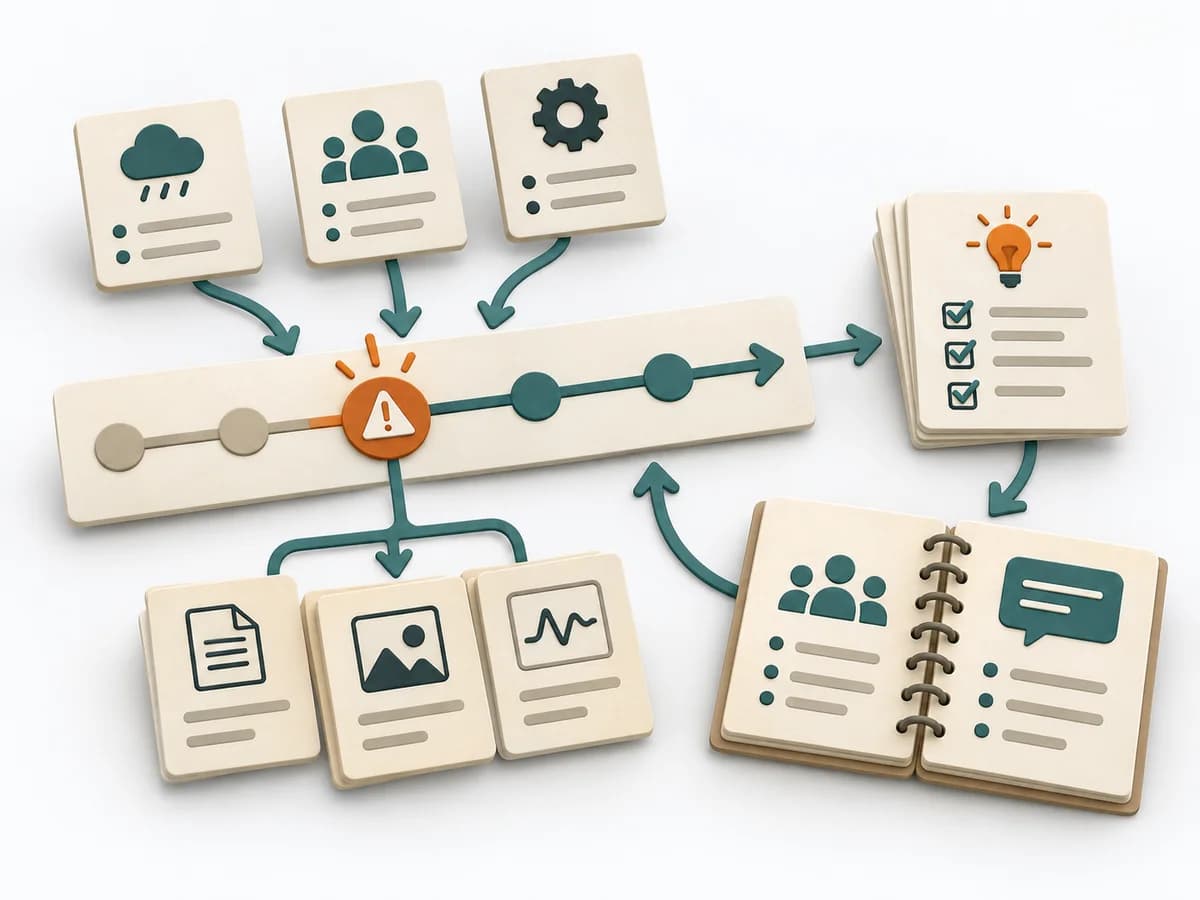 DevOps Blameless Postmortem |
|---|---|---|---|---|
Purposedifferent | For a flow that backs up at one point, the method looks for the capacity limit with the greatest leverage. It explains why extra effort elsewhere barely improves throughput. | When estimating slows a team down more than it helps, it shifts the focus to flow, small slices, and real lead time. It sorts work by value, risk, and delivery ability. The result is captured as Throughput Data, Flow Forecast, and Slicing Rules. | For an incident with an unclear sequence, the method makes the timeline precisely visible. It separates perception, reaction, and delay so cause and effect become more clearly readable. | After an incident with damage or a near miss, the method creates a sober field for learning without assigning blame. It directs attention to the course of events, conditions, and effective countermeasures. |
Complexitysame | Medium | Medium | Medium | Medium |
Timedifferent | 1-3 h | laufend | 60-180 min | 30-90 min |
Participantsdifferent | 3-8 | 2-12 | 3-10 | 3-12 |
Formatsame | Workshop + async | Workshop + async | Workshop + async | Workshop + async |
Outputdifferent | Bottleneck Map, Flow Metrics, Improvement Options, Follow-up Measures | Throughput Data, Flow Forecast, Slicing Rules | Incident Timeline, Evidence Log, Delay Analysis, Improvement Actions | Postmortem Doc, Action Items, Timeline |
Tagsno overlap | FlowMeasurementConstraints | EstimationForecastingFlow | IncidentTimelineSite Reliability Engineering | Site Reliability EngineeringIncidentLearningReliability |