View methods side by side.
Choose up to four methods. Add them using the search and share the comparison by copying its link.
| Criterion |  Operations Bottleneck Analysis | 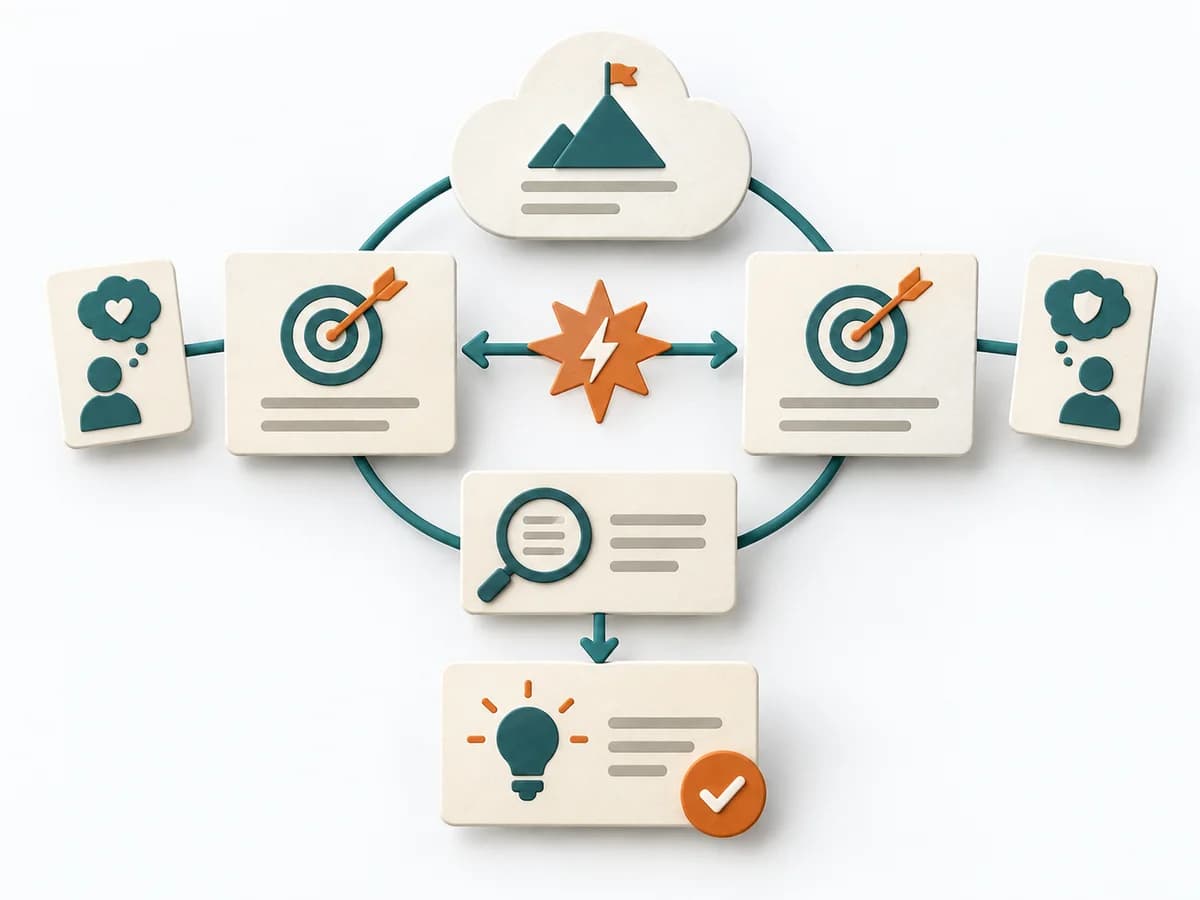 Systems Thinking Evaporating Cloud |  Systems Thinking Iceberg Model |  Operations Family Tree Analysis |
|---|---|---|---|---|
Purposedifferent | For a flow that backs up at one point, the method looks for the capacity limit with the greatest leverage. It explains why extra effort elsewhere barely improves throughput. | The method makes visible why two seemingly incompatible demands arise and which assumption must be tested to resolve the conflict. | The Iceberg Model separates visible events from patterns, structures, and mental models. This turns a single observation into a deeper understanding of why a problem keeps recurring. | For a series of incidents with a similar pattern, the method arranges individual events as branches of a common origin. It makes visible which conditions keep recurring. |
Complexitydifferent | Medium | Medium | Low | Medium |
Timedifferent | 1-3 h | 60-120 min | 30-60 min | 2-4 h |
Participantsdifferent | 3-8 | 2-8 | 2-10 | 2-6 |
Formatdifferent | Workshop + async | Workshop | Workshop + async | Workshop + async |
Outputdifferent | Bottleneck Map, Flow Metrics, Improvement Options, Follow-up Measures | Conflict Cloud, Assumption List, Breakthrough Ideas, Next Experiments | Iceberg Worksheet, Pattern Notes, Intervention Ideas | Family Tree Diagram, Pattern Notes, Systemic Measures |
Tagsno overlap | FlowMeasurementConstraints | Theory of ConstraintsAssumptionsSystems thinking | Systems thinkingRoot causePatterns | Root causePatternsIncidentSystemic |