View methods side by side.
Choose up to four methods. Add them using the search and share the comparison by copying its link.
| Criterion | 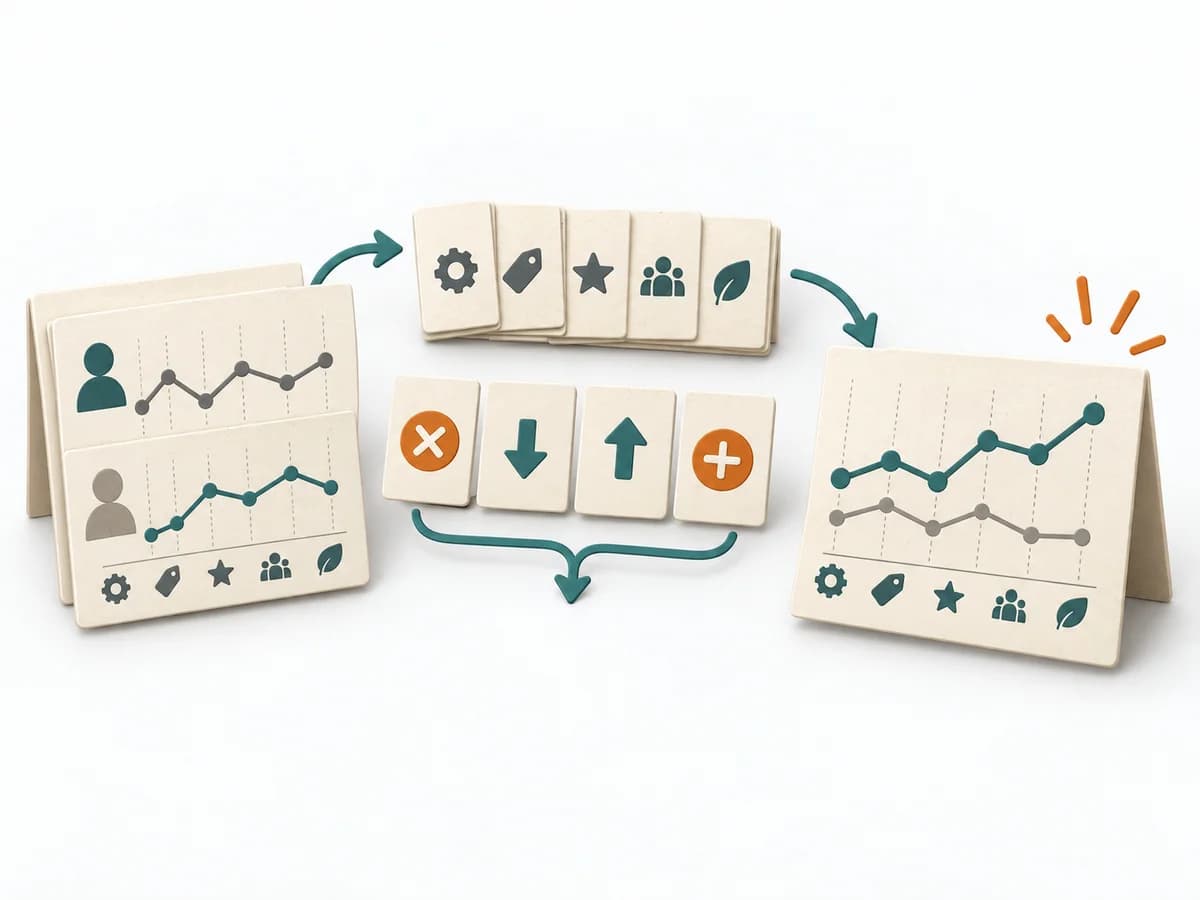 Business Strategy Blue Ocean Strategy Canvas | 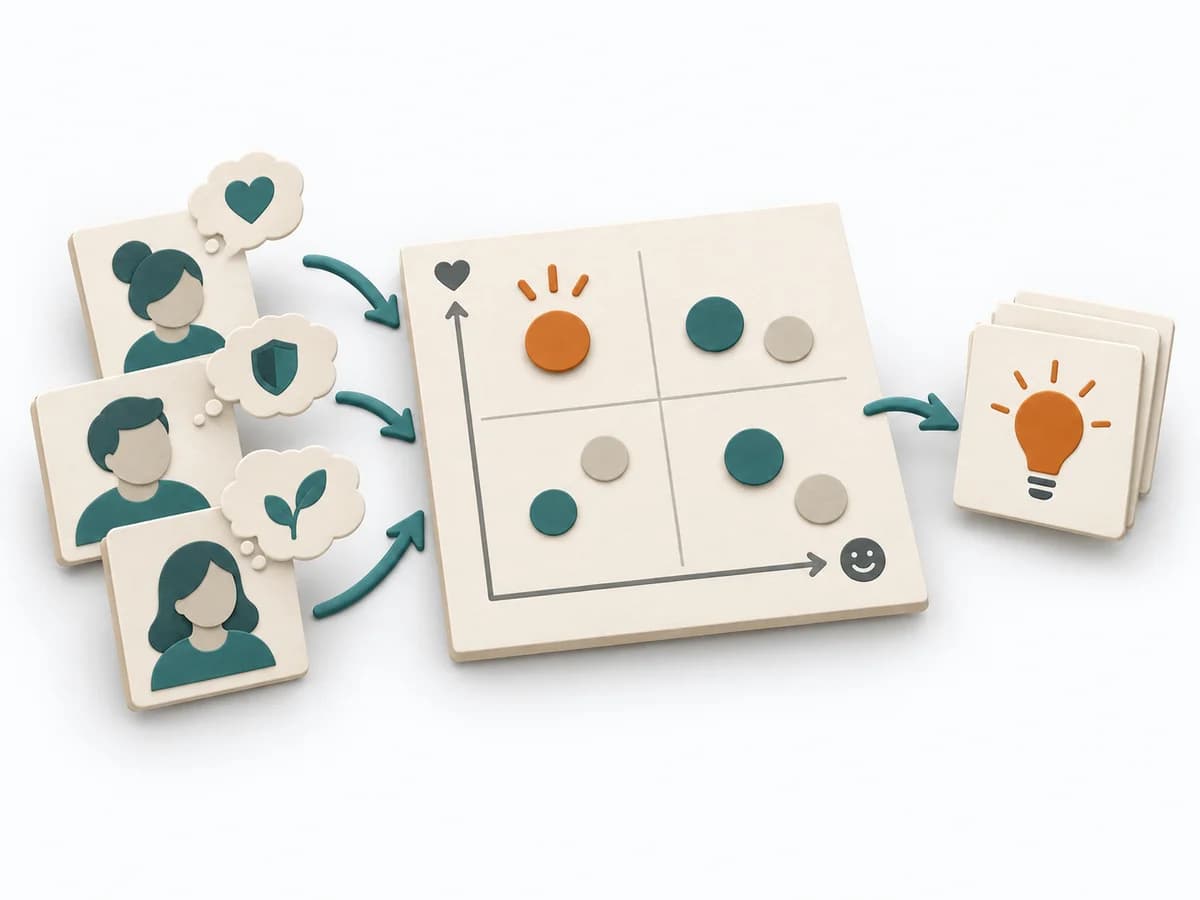 Product Discovery Outcome-Driven Innovation | 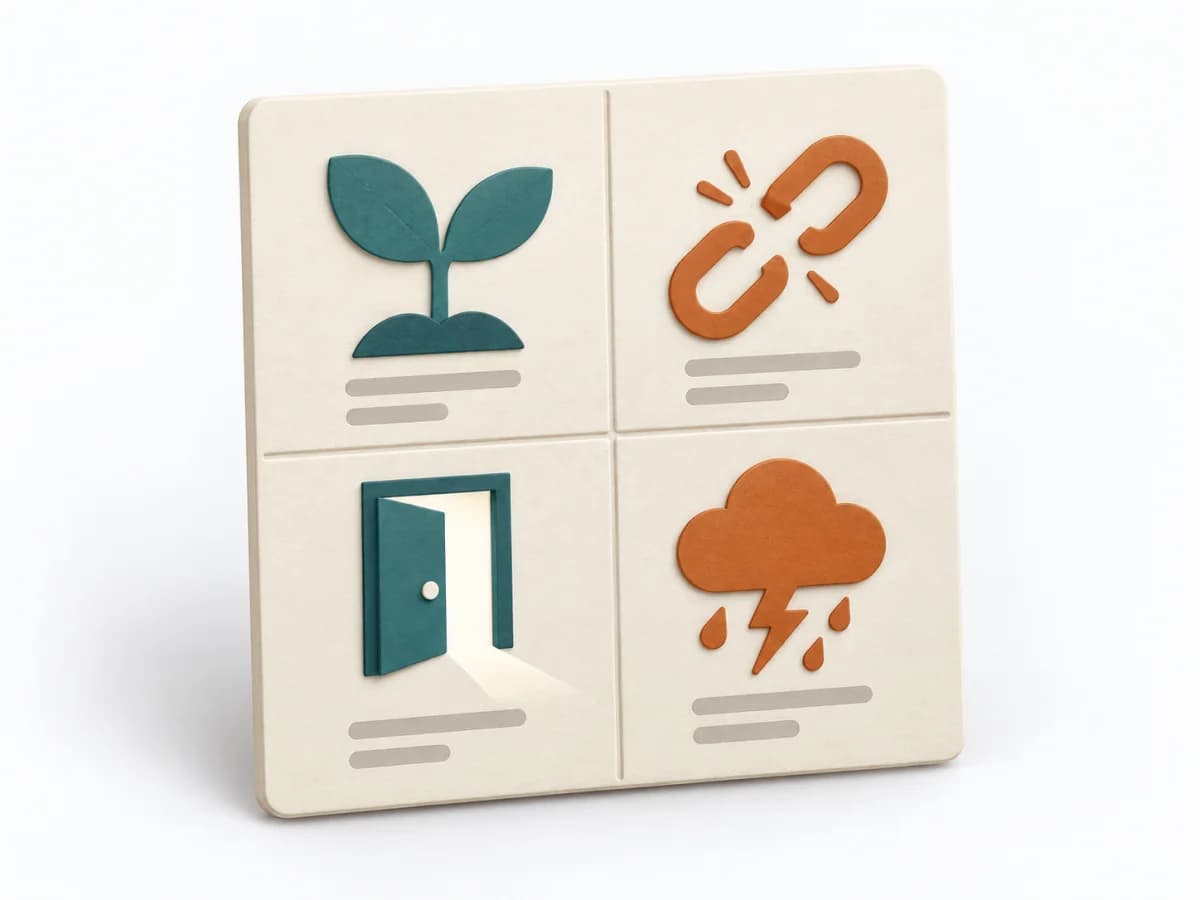 Business Strategy SWOT Analysis | 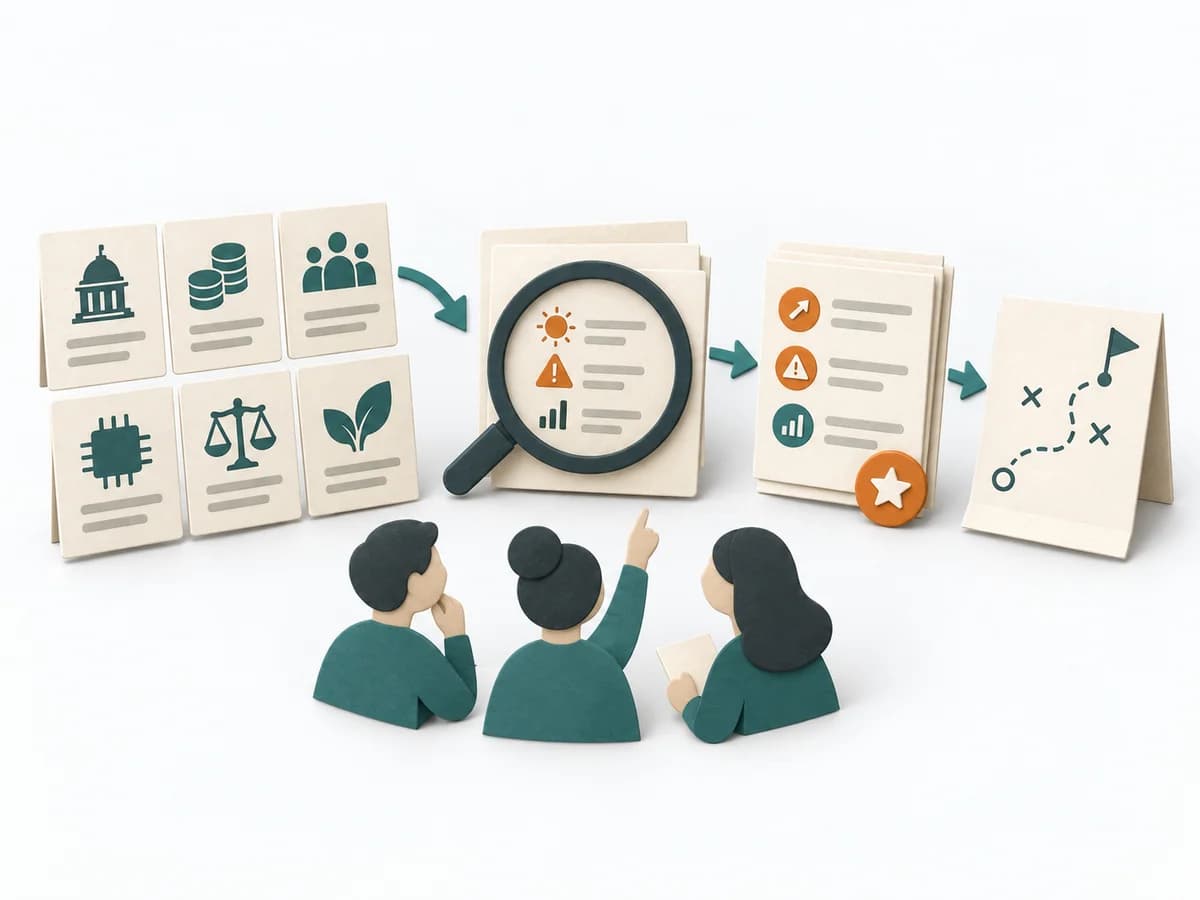 Business Strategy PESTLE Analysis |
|---|---|---|---|---|
Purposedifferent | The Blue Ocean Strategy Canvas shows how an offering is positioned relative to the market. Differentiation thereby becomes tangible in value factors instead of merely being claimed. | Outcome-Driven Innovation clarifies customer problems, solution opportunities, and evidence. It separates jobs, desired outcomes, importance, satisfaction, and opportunity, and captures results as desired outcome statements, an opportunity landscape, and segments by underserved needs. | SWOT Analysis arranges strengths, weaknesses, opportunities, and threats into a compact picture of the situation. It keeps internal capabilities and external influences separate before strategic options emerge from them. | PESTLE Analysis makes political, economic, social, technological, legal, and environmental influences visible. The environment of an initiative is thereby read systematically instead of through isolated trends. |
Complexitydifferent | Medium | High | Low | Medium |
Timedifferent | 2-4 h | Mehrere Wochen | 30-60 min | 1-3 h |
Participantsdifferent | 3-10 | 2-6 researchers plus sample | 3-12 | 2-10 |
Formatdifferent | Workshop | Workshop + async | Workshop | Workshop + async |
Outputdifferent | Strategy Canvas, Value Curve, ERRC Actions | Desired outcome statements, Opportunity landscape, Segmentation by underserved needs, Innovation hypotheses | SWOT matrix, Strategic options, Action list | PESTLE Map, External Risks, Strategic Questions |
Tagsno overlap | StrategyPositioningInnovationValue | OutcomesInnovationResearchQuantitative | StrategyAnalysisMarketPositioning | StrategyMarketAnalysis |