View methods side by side.
Choose up to four methods. Add them using the search and share the comparison by copying its link.
| Criterion | 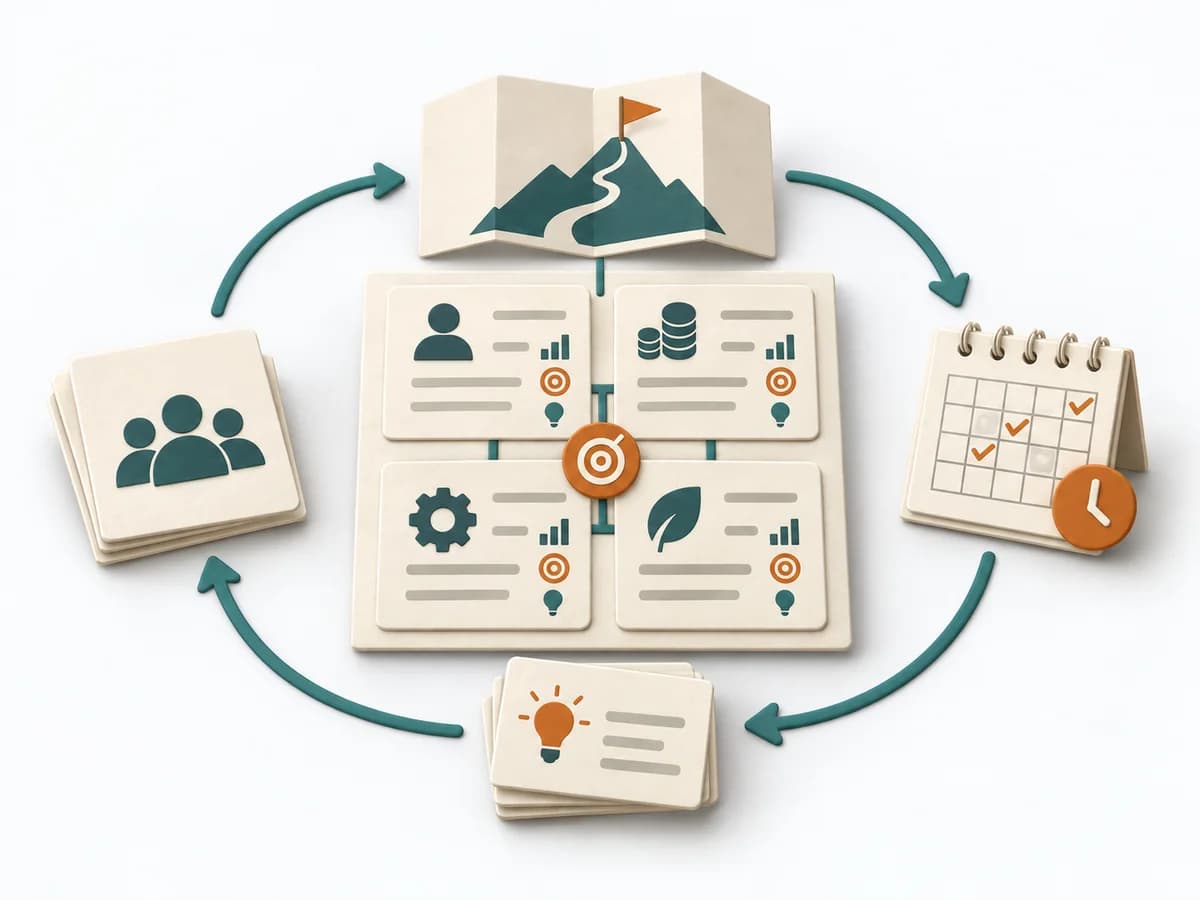 Business Strategy Balanced Scorecard | 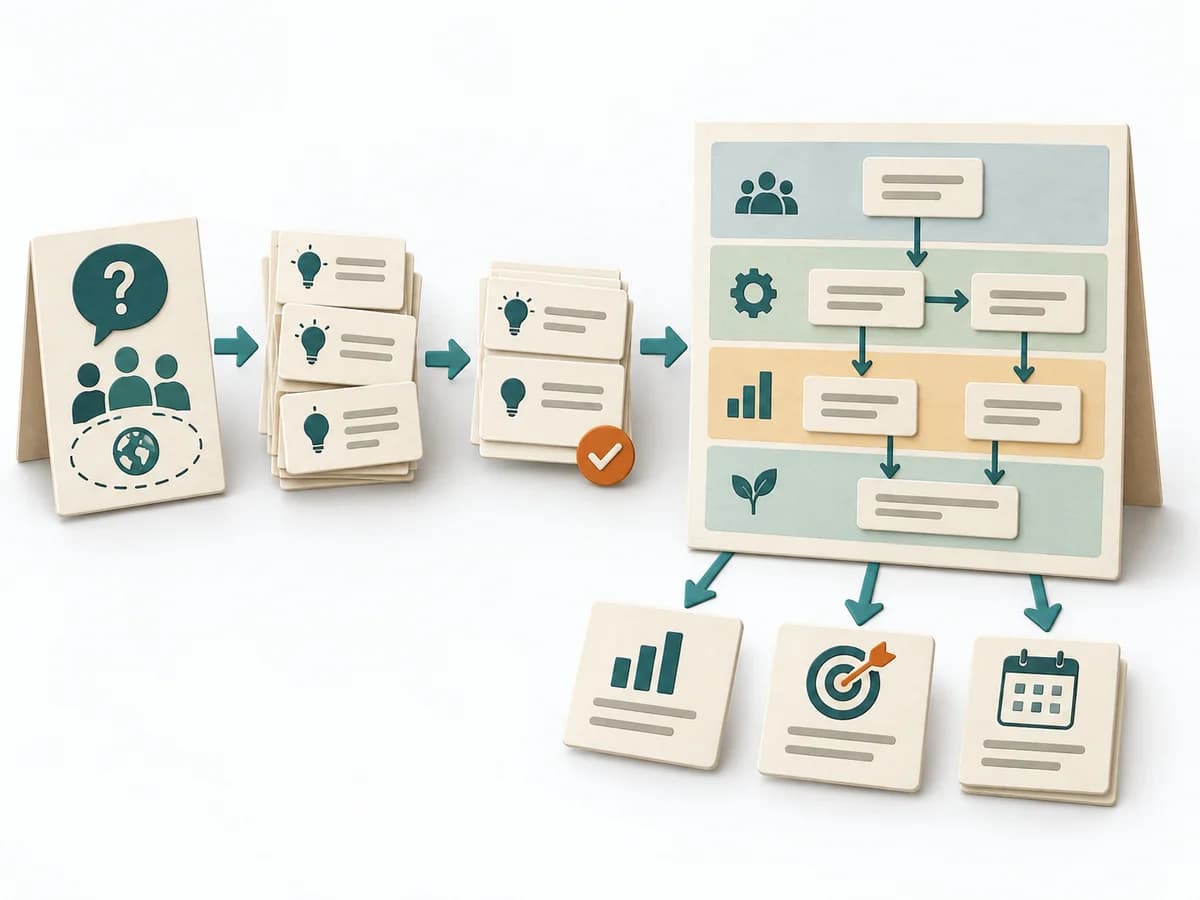 Business Strategy Strategy Map |  Decision Making Force Field Analysis | 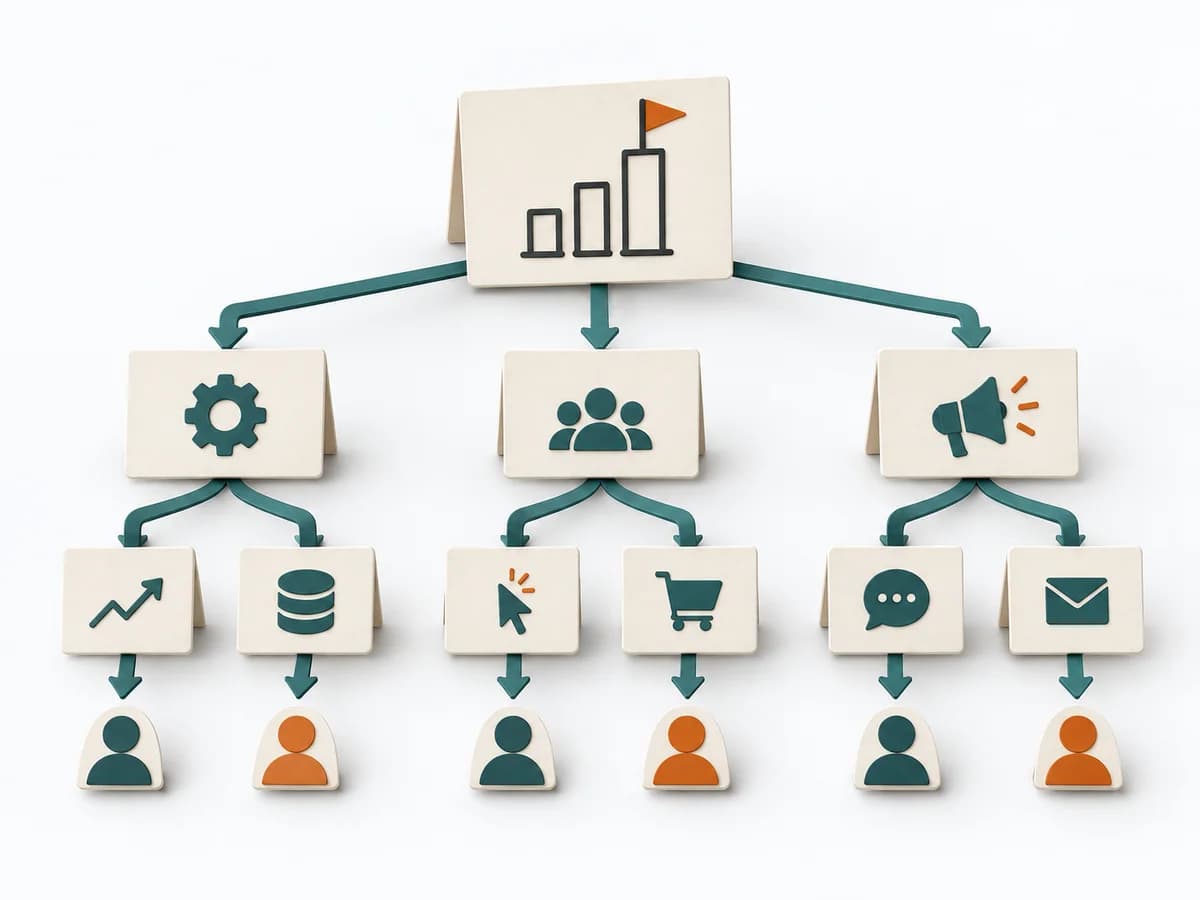 Product Strategy KPI Tree |
|---|---|---|---|---|
Purposedifferent | Balanced Scorecard translates strategy into a few interconnected perspectives and metrics. It holds impact, steering, and learning together in daily work instead of narrowing strategy down to financial figures. | A Strategy Map translates strategy into a few connected objectives across perspectives such as finance, customers, processes, and learning. This makes visible which capabilities and activities are meant to drive which results. | In change initiatives, supporting and restraining forces sit at the table at the same time. Force Field Analysis makes these tensions explicit and shows where change can be pushed forward by strengthening or relieving. | When metrics across the organization drift apart, it arranges drivers and effects under one shared logic. It connects customer value, product logic, and decision priorities. The result is captured as a KPI tree and owner list. |
Complexitydifferent | High | Medium | Low | Medium |
Timedifferent | Halber Tag bis mehrere Wochen | 2-4 h workshop plus review | 45-90 min | 90-180 min initial, dann laufend |
Participantsdifferent | 4-12 | 4-10 | 3-12 | 3-8 |
Formatdifferent | Workshop + async | Workshop | Workshop | Workshop + async |
Outputdifferent | Balanced Scorecard, Strategic Measures, Initiative Map | Strategy Map, Objective Set, Cause-Effect Hypotheses | Force Field Map, Change Levers, Risk Notes | KPI Tree, Owner List |
Tagsno overlap | StrategyMetricsExecution | AlignmentExecutionGoalsCausality | ChangeDecisionStrategy | MetricsStrategyAlignmentMeasurement |