View methods side by side.
Choose up to four methods. Add them using the search and share the comparison by copying its link.
| Criterion |  Decision Making Assumption Surfacing | 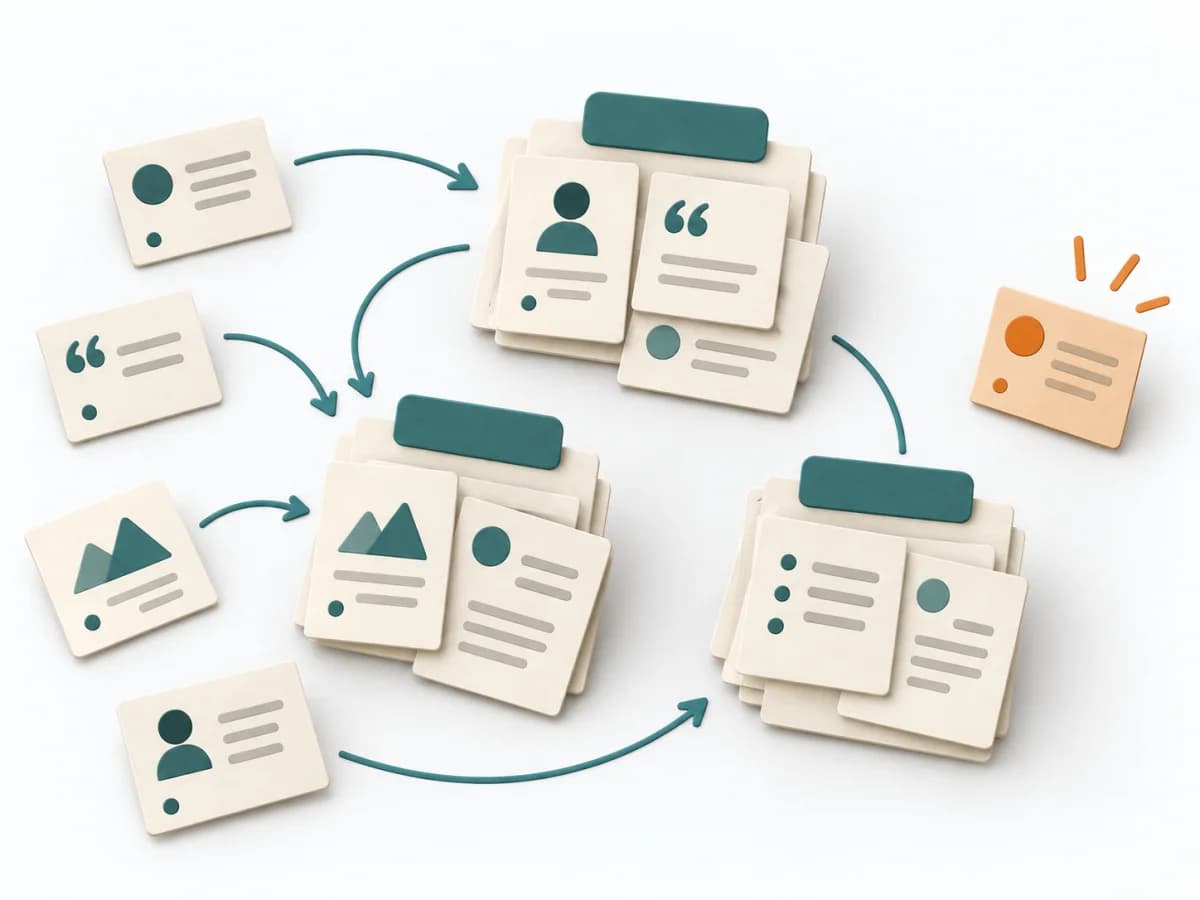 UX Research Affinity Diagramming |  Facilitation Problem Framing Workshop |  Product Discovery Assumption Mapping |
|---|---|---|---|---|
Purposedifferent | Plans often contain assumptions that were never openly stated and remain dangerous precisely because of that. Assumption Surfacing makes these silent premises visible and prioritizes which of them carry the initiative or could sink it. | When research notes, feedback, or observations sit unconnected side by side, affinity diagramming sorts the raw material into solid themes. Many individual points turn into patterns that make decisions and opportunities clearer. | When a team works on symptoms but the real question stays fuzzy, a Problem Framing Workshop sharpens the view of the right problem. It separates observation, interpretation, and target picture from each other. | When assumptions still sit unordered in the room, it weighs uncertainty against leverage. It makes visible which hypotheses should be checked first. |
Complexitydifferent | Low | Low | Low | Medium |
Timedifferent | 45-90 min | 45–90 min | 60-120 min | 45-60 min |
Participantsdifferent | 2-8 | 3-10 | 4-10 | 2-8 |
Formatdifferent | Workshop + async | Workshop | Workshop | Workshop + async |
Outputdifferent | Assumption List, Critical Assumptions, Learning Plan | Theme clusters, Insight statements, Opportunity areas | Problem Statement, Scope Boundaries, Assumption List, Next Analysis Questions | Assumption map, Test backlog, Risk ranking |
Tagsno overlap | AssumptionsRiskDecisionDiscovery | SynthesisQualitativeRoot cause | FacilitationAlignmentDiscovery | AssumptionsRiskExperimentsValidation |