View methods side by side.
Choose up to four methods. Add them using the search and share the comparison by copying its link.
| Criterion |  Architecture ARID (Active Reviews for Intermediate Designs) | 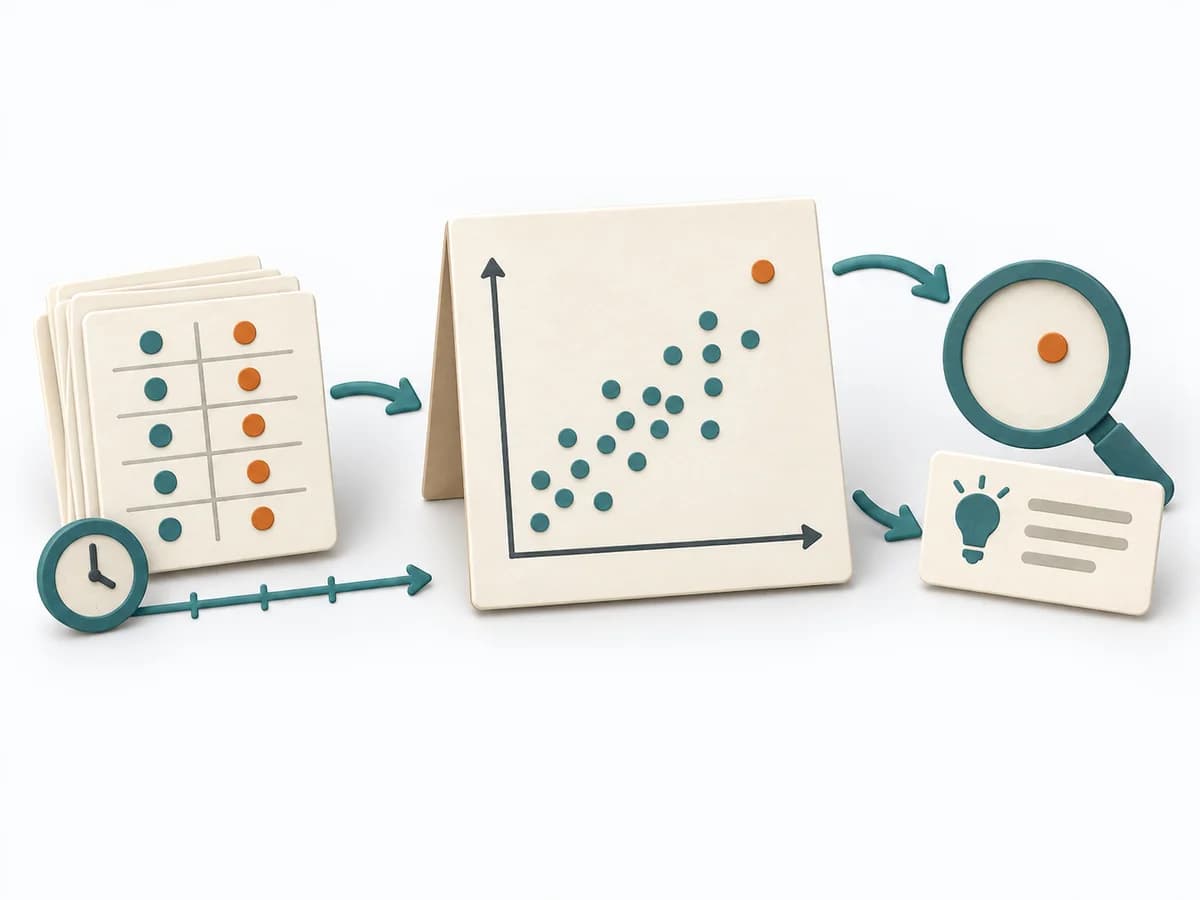 Operations Scatter Diagram |  Operations 8D Problem Solving |  Operations 5 Whys |
|---|---|---|---|---|
Purposedifferent | ARID examines how well developers can work with a technical design. It focuses on a part of the system that can still be revised, between the architecture overview and the detailed specification. | When the question is whether two measures are related, the method makes patterns in the data picture visible. It separates felt correlations from relationships that actually show up in the data. | For an acute quality or delivery problem, the method structures immediate protection and root cause work together. It keeps the situation stable while the actual cause is investigated cleanly. | For a single, hard-to-explain deviation, the method exposes the causal chain behind the visible symptom. It keeps the cause open until a controllable condition emerges instead of a mere description. |
Complexitydifferent | Medium | Low | High | Low |
Timedifferent | 2–4 h review as a planning range; preparation and evaluation additional | 30-90 min | 1-6 Wochen | 15-30 min |
Participantsdifferent | Designers, developers as users, and facilitation | 1-4 | 4-10 | 2-6 |
Formatdifferent | Workshop + async | Workshop + async | Workshop + async | Workshop |
Outputdifferent | Prioritized development tasks, Jointly produced code or pseudocode, Observed difficulties and open design questions, Proposed design revisions | Scatter Plot, Korrelationsnotiz, Hypothesenliste | 8D Report, Containment Plan, Root Cause Evidence, Corrective Action Plan | Root cause notes, Countermeasures |
Tagsno overlap | ArchitectureEngineeringFeedbackValidationTasks | Root causeQualityVisualization | QualityProblem solvingRoot cause | Root causeIncidentLeanProblem solving |