View methods side by side.
Choose up to four methods. Add them using the search and share the comparison by copying its link.
Selected:ARID (Active Reviews for Intermediate Designs)Double DiamondLean StartupLASR (Lightweight Approach for Software Reviews)
| Criterion |  Architecture ARID (Active Reviews for Intermediate Designs) | 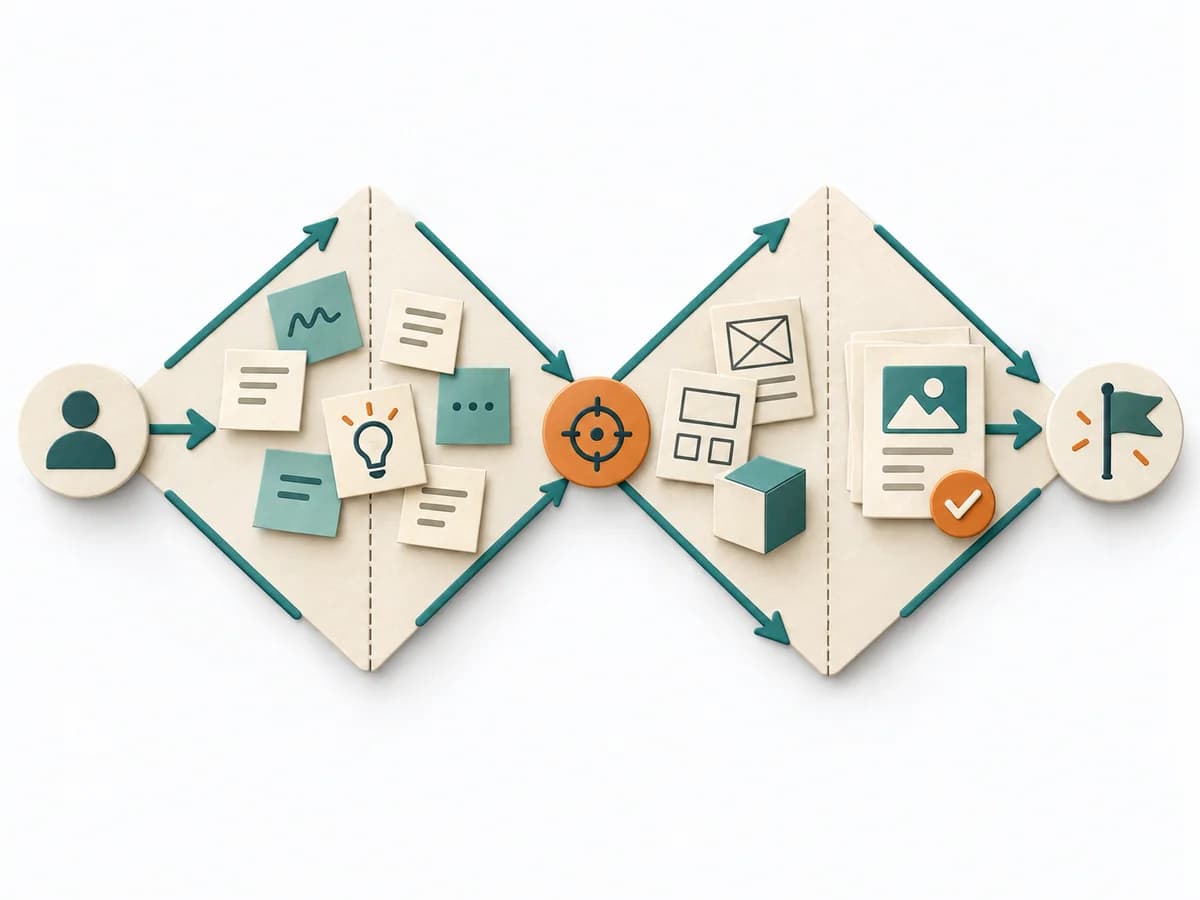 Innovation Double Diamond | 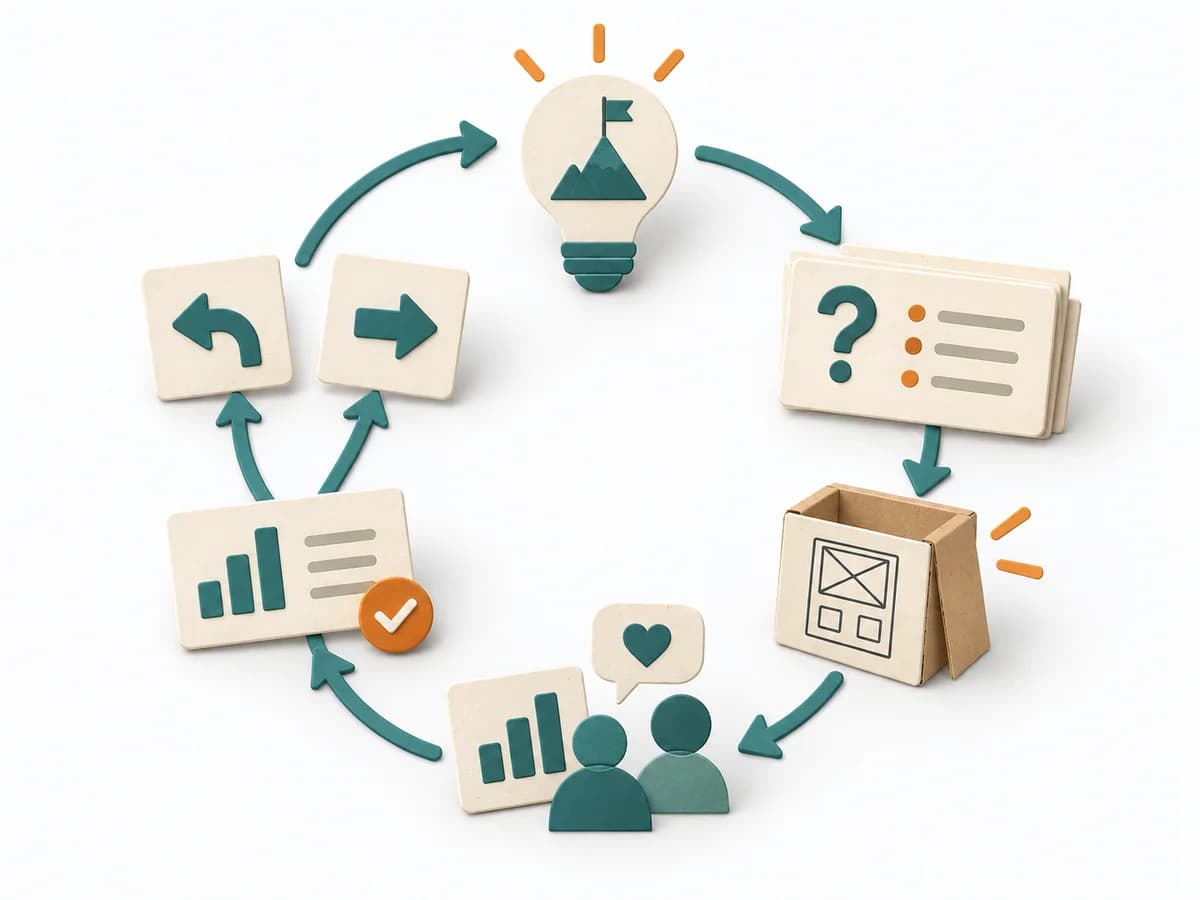 Innovation Lean Startup |  Architecture LASR (Lightweight Approach for Software Reviews) |
|---|---|---|---|---|
Purposedifferent | ARID examines how well developers can work with a technical design. It focuses on a part of the system that can still be revised, between the architecture overview and the detailed specification. | For complex problems with a fuzzy situation, the method cleanly separates search space and decision. It first creates breadth in understanding and then focus in elaboration. This brings open questions, problem definition, and solution path into a traceable movement. | For uncertain business assumptions, the method forces the idea into contact with real market reactions early. It separates wishful picture, assumption, and observable behavior, so that learning becomes faster than planning. This translates uncertainty into measurable insight. | LASR helps development teams identify where their software falls short of important quality goals and which improvements to consider. A small group with existing system knowledge can make an initial assessment and investigate open questions in more detail. |
Complexitysame | Medium | Medium | Medium | Medium |
Timedifferent | 2–4 h review as a planning range; preparation and evaluation additional | Wochen bis Monate | Wochen bis Monate je Lernzyklus | 3–4 h for initial assessment; preparation and deeper analysis additional |
Participantsdifferent | Designers, developers as users, and facilitation | 3-12 | 2-8 | 1 or a small team; particularly suitable for 3–4 people |
Formatsame | Workshop + async | Workshop + async | Workshop + async | Workshop + async |
Outputdifferent | Prioritized development tasks, Jointly produced code or pseudocode, Observed difficulties and open design questions, Proposed design revisions | Problem Statement, Solution Options, Prototypes, Deliverables per Phase | Hypothesis list, MVPs, Learning reports, Pivot or persevere decision | Lean Mission Statement describing the software’s purpose, Prioritized quality goals and evaluation criteria, Risks and estimated gaps against quality goals, More closely examined findings and open checks |
Tagsno overlap | ArchitectureEngineeringFeedbackValidationTasks | ProcessDivergenceInnovation | LeanStartupValidationMVP | ArchitectureQualityRiskAssessmentLean |