View methods side by side.
Choose up to four methods. Add them using the search and share the comparison by copying its link.
| Criterion |  Decision Making Argument Mapping |  Decision Making Assumption Surfacing |  Innovation Brainstorming | 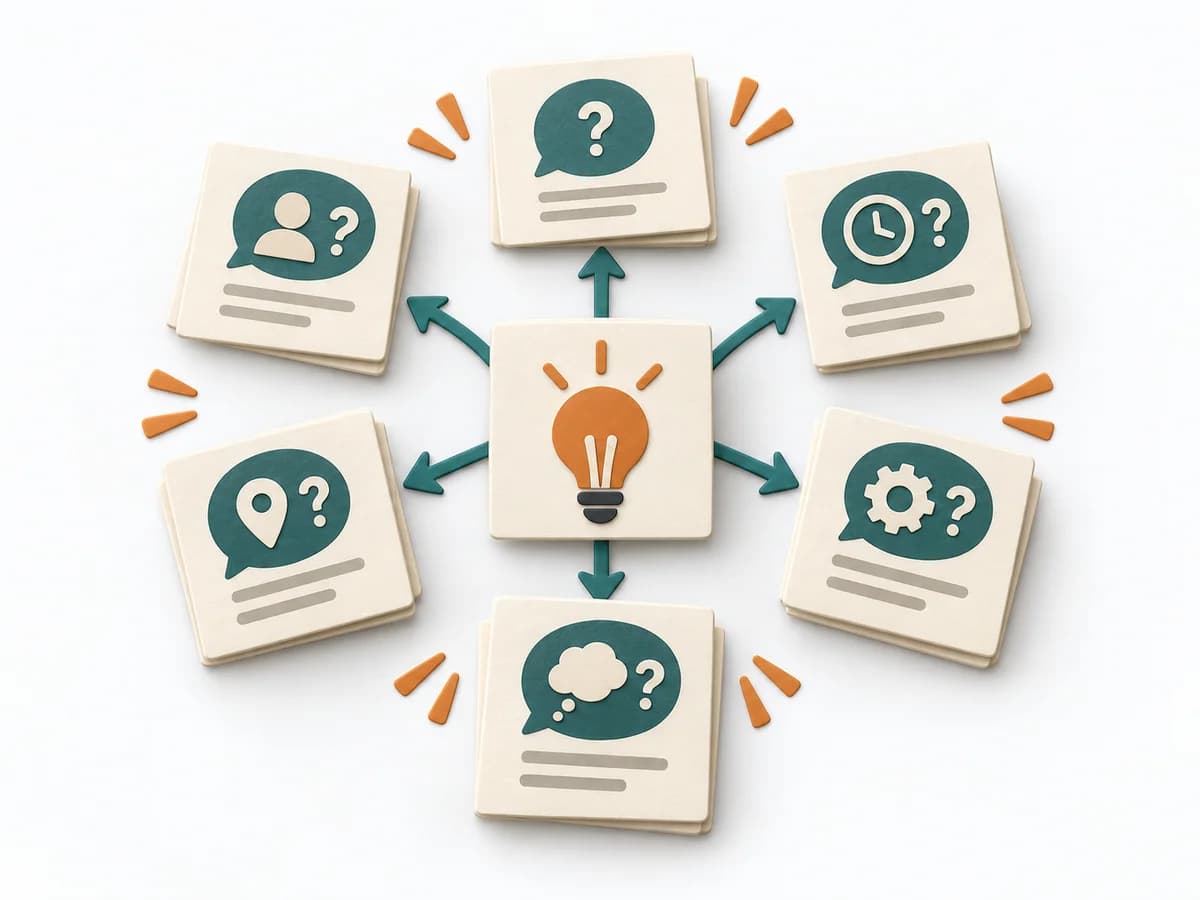 Innovation Starbursting |
|---|---|---|---|---|
Purposedifferent | When statements, evidence, and counterarguments get mixed up, a debate quickly loses its structure. Argument Mapping breaks a thesis down into its reasoning and makes visible what it really rests on. | Plans often contain assumptions that were never openly stated and remain dangerous precisely because of that. Assumption Surfacing makes these silent premises visible and prioritizes which of them carry the initiative or could sink it. | When a team faces an open question with many obvious directions, the method first creates breadth instead of premature commitment. It separates idea flow from evaluation and makes lines of thought visible, creating a pool for selection and further development. | Helps clarify ideas, open questions, and testable next steps in concrete terms. It opens the thinking space, collects ideas, and leads to testable options. The result is captured as a star-shaped question map, question list, and assumption list. |
Complexitydifferent | Medium | Low | Low | Low |
Timedifferent | 1-3 h | 45-90 min | 30-60 min | 30-60 min |
Participantsdifferent | 1-8 | 2-8 | 4-12 | 3-10 |
Formatdifferent | Workshop + async | Workshop + async | Workshop | Workshop + async |
Outputdifferent | Argument Map, Evidence Gaps, Decision Rationale | Assumption List, Critical Assumptions, Learning Plan | Idea pool, Theme clusters, Shortlist | Star-Shaped Question Map, Question List, Assumption List |
Tagsno overlap | SensemakingDecisionRationale | AssumptionsRiskDecisionDiscovery | BrainstormingIdeationCreativityWorkshopDivergence | BrainstormingIdeationWorkshopDiscovery |