View methods side by side.
Choose up to four methods. Add them using the search and share the comparison by copying its link.
Selected:Architecture Inception CanvasLASR (Lightweight Approach for Software Reviews)ARID (Active Reviews for Intermediate Designs)Risk Storming
| Criterion | 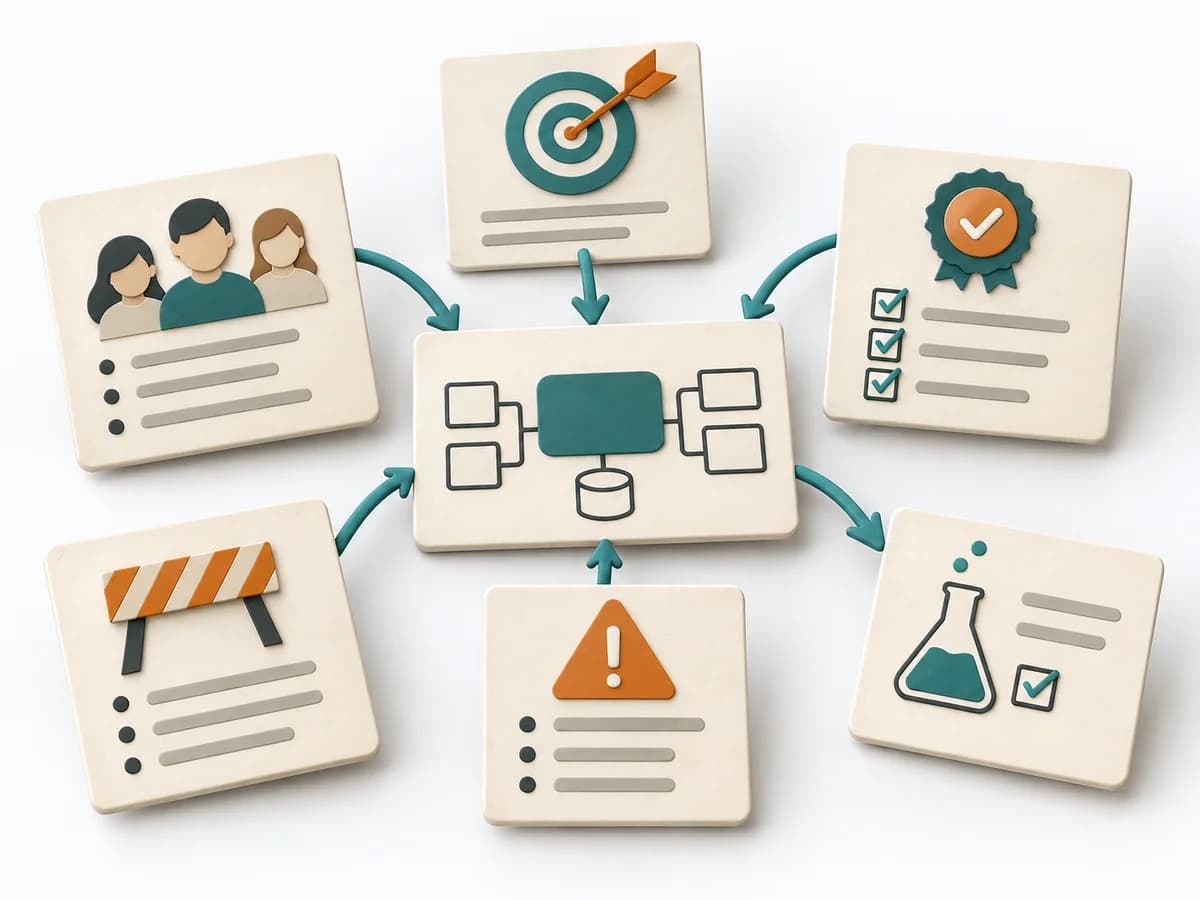 Architecture Architecture Inception Canvas |  Architecture LASR (Lightweight Approach for Software Reviews) |  Architecture ARID (Active Reviews for Intermediate Designs) | 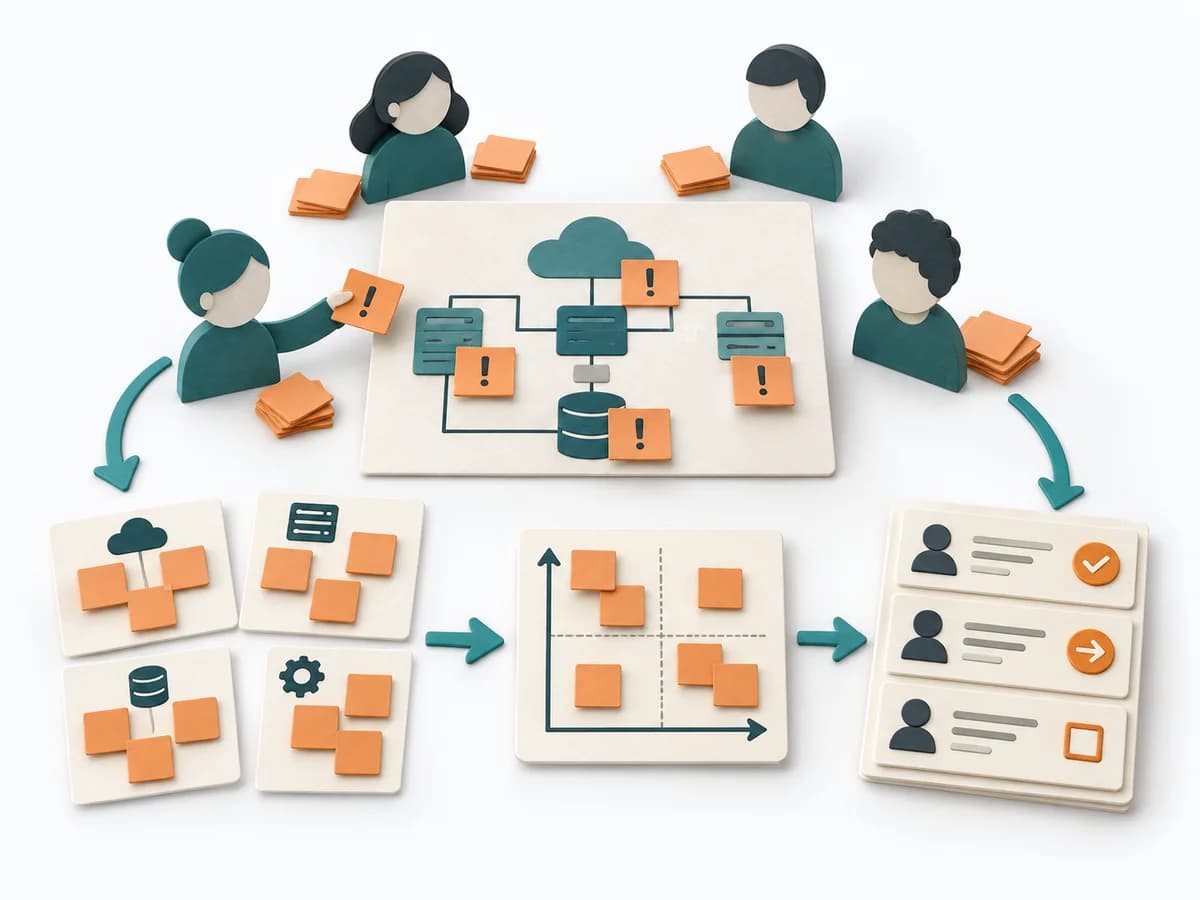 Architecture Risk Storming |
|---|---|---|---|---|
Purposedifferent | The Architecture Inception Canvas bundles the first architecture questions into a compact decision picture. It fits when an initiative is still in motion but still needs clear guardrails. | LASR helps development teams identify where their software falls short of important quality goals and which improvements to consider. A small group with existing system knowledge can make an initial assessment and investigate open questions in more detail. | ARID examines how well developers can work with a technical design. It focuses on a part of the system that can still be revised, between the architecture overview and the detailed specification. | Helps clarify architecture context, options, and consequences in concrete terms. It organizes technical context, alternatives, and consequences. The result is captured as an Annotated Diagram, a Prioritized Risk List, and an Action Backlog. |
Complexitydifferent | Low | Medium | Medium | Low |
Timedifferent | 1-2 h | 3–4 h for initial assessment; preparation and deeper analysis additional | 2–4 h review as a planning range; preparation and evaluation additional | 60-90 min |
Participantsdifferent | 3-8 | 1 or a small team; particularly suitable for 3–4 people | Designers, developers as users, and facilitation | 4-12 |
Formatdifferent | Workshop | Workshop + async | Workshop + async | Workshop |
Outputdifferent | Inception Canvas, Risks, Goal List, Open Questions | Lean Mission Statement describing the software’s purpose, Prioritized quality goals and evaluation criteria, Risks and estimated gaps against quality goals, More closely examined findings and open checks | Prioritized development tasks, Jointly produced code or pseudocode, Observed difficulties and open design questions, Proposed design revisions | Annotated Diagram, Prioritized Risk List, Action Backlog |
Tags1 shared | AlignmentArchitectureCanvas | ArchitectureQualityRiskAssessmentLean | ArchitectureEngineeringFeedbackValidationTasks | RiskArchitectureWorkshopValidation |