View methods side by side.
Choose up to four methods. Add them using the search and share the comparison by copying its link.
| Criterion | 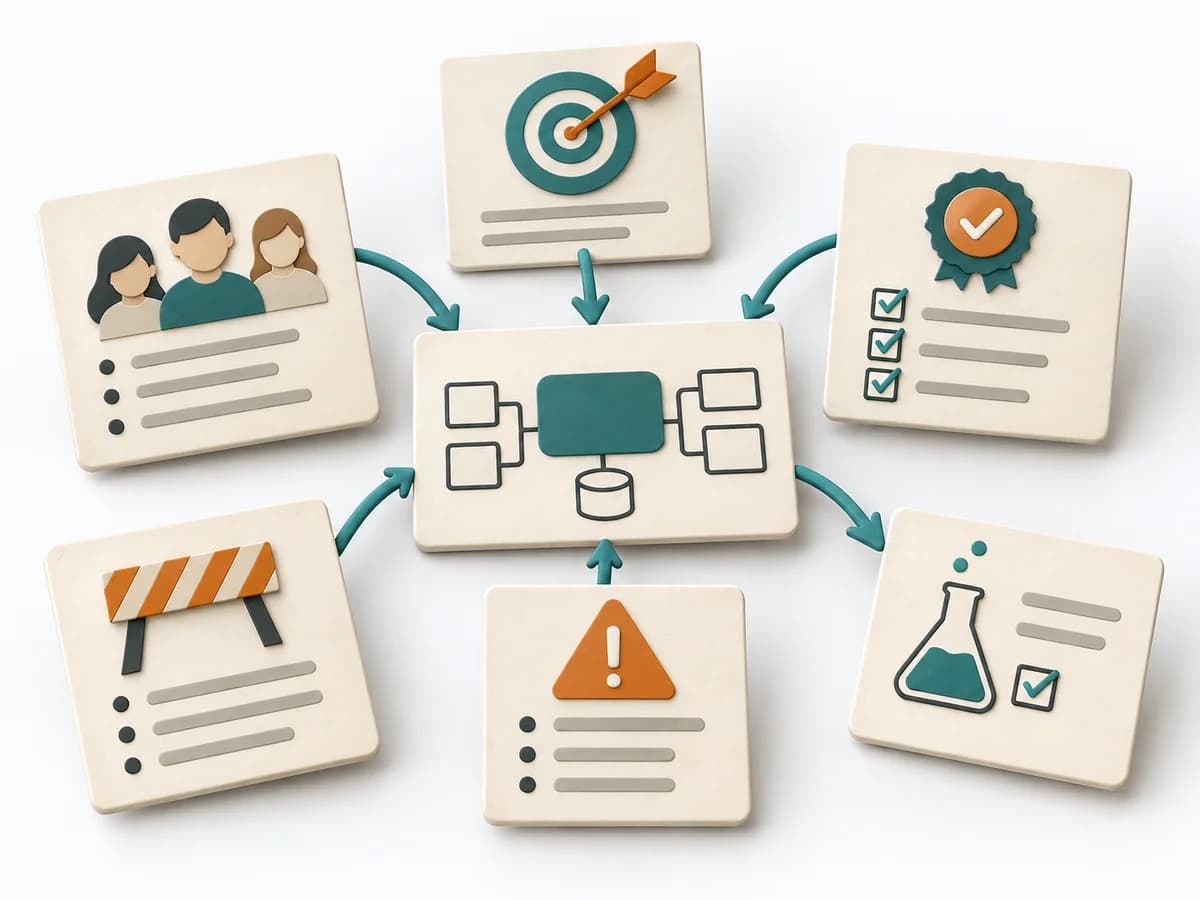 Architecture Architecture Inception Canvas |  Product Discovery Experiment Canvas |  Domain Modeling EventStorming | 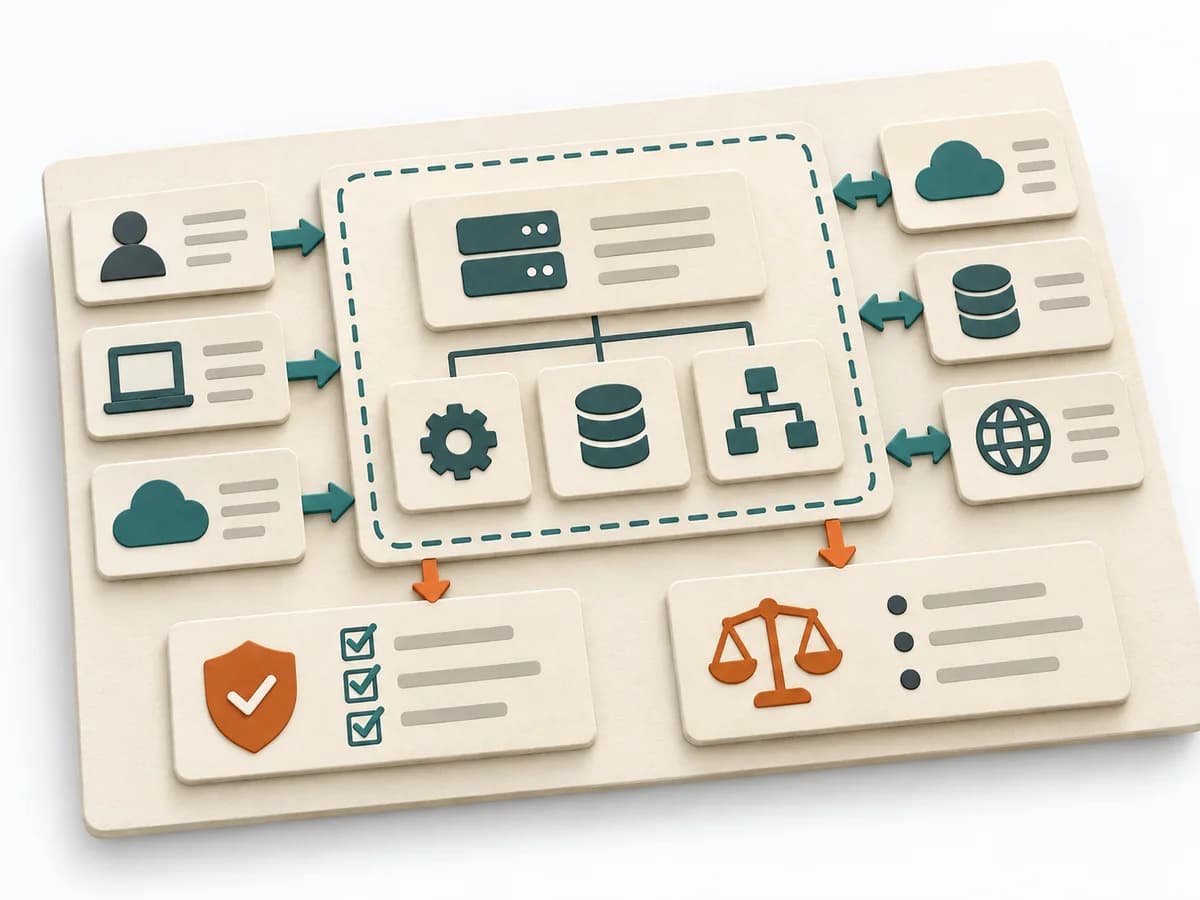 Architecture Software Architecture Canvas |
|---|---|---|---|---|
Purposedifferent | The Architecture Inception Canvas bundles the first architecture questions into a compact decision picture. It fits when an initiative is still in motion but still needs clear guardrails. | When experiments become unreadable after the fact, it arranges hypothesis, signal, and learning goal on a single canvas. It separates problem, assumption, solution, and evidence. The result is captured as a Completed Experiment Canvas and a Success Metric. | When a domain consists of many events, rules, and states, it creates a shared modeling space for the team. It bundles language, flows, and boundaries before domain knowledge fragments into siloed views. | The Software Architecture Canvas reduces a system to the most important architecture decisions, constraints, and interfaces. It is useful when teams need a resilient overall picture quickly. |
Complexitydifferent | Low | Low | Medium | Low |
Timedifferent | 1-2 h | 30-60 min | 2-8 h | 1-2 h |
Participantsdifferent | 3-8 | 1-5 | 5-12 | 3-10 |
Formatdifferent | Workshop | Workshop + async | Workshop | Workshop |
Outputdifferent | Inception Canvas, Risks, Goal List, Open Questions | Completed Experiment Canvas, Success Metric | Event Timeline, Ubiquitous Language, Boundaries, Open Questions | Architecture Canvas, Goals, Constraints, Quality Attributes |
Tagsno overlap | AlignmentArchitectureCanvas | ExperimentsValidationDiscoveryHypothesis | Domain-Driven DesignEventsDiscoveryWorkshop | CanvasArchitectureAlignmentWorkshop |