View methods side by side.
Choose up to four methods. Add them using the search and share the comparison by copying its link.
| Criterion |  Facilitation Alignment Mapping | 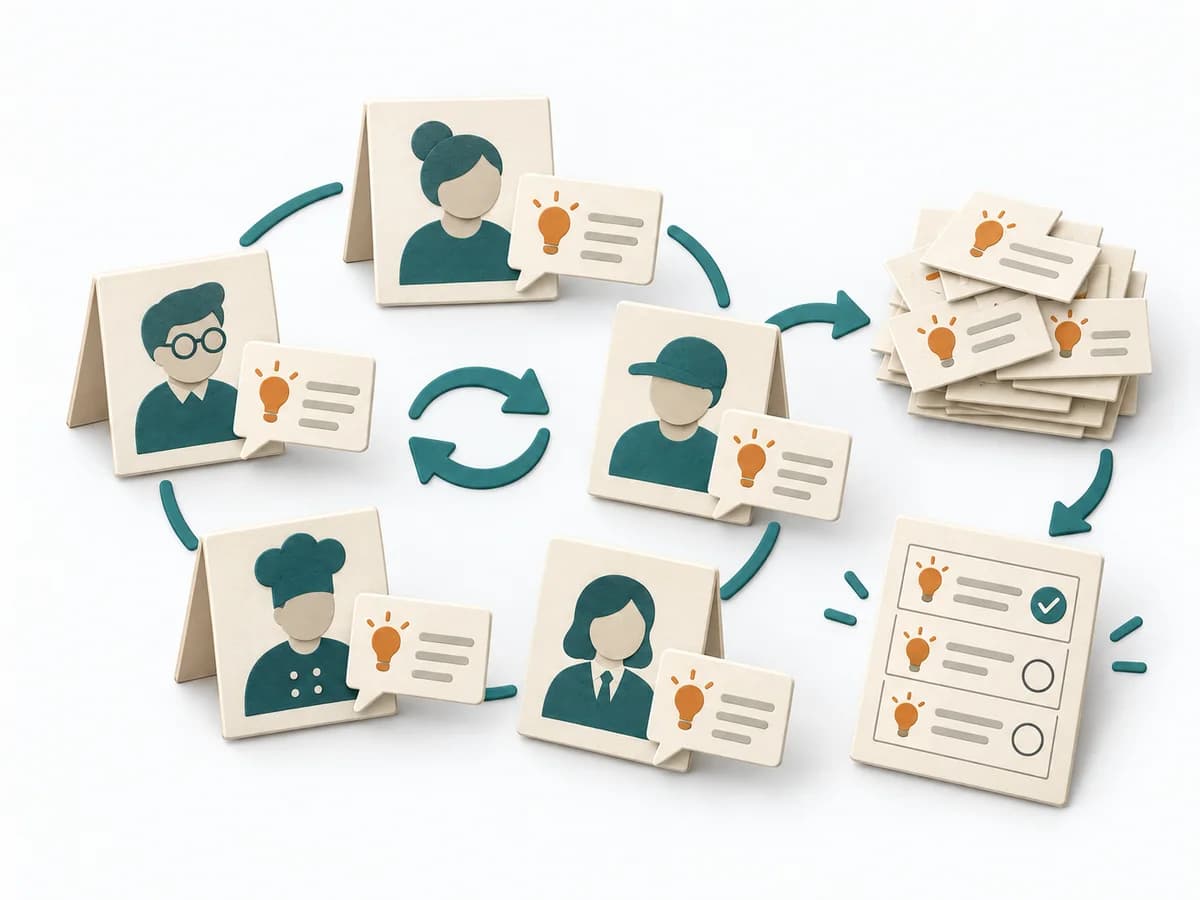 Innovation Rolestorming | 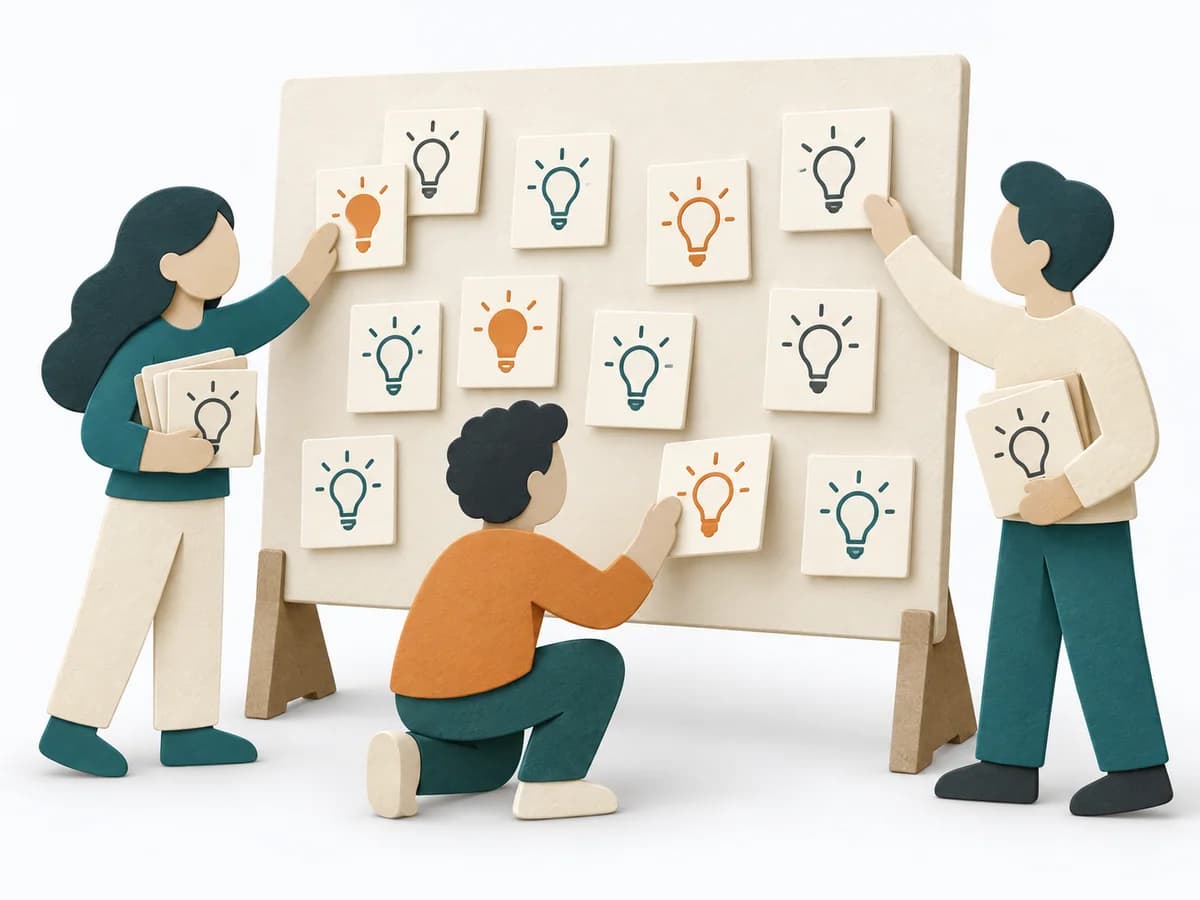 Innovation Brainstorming | 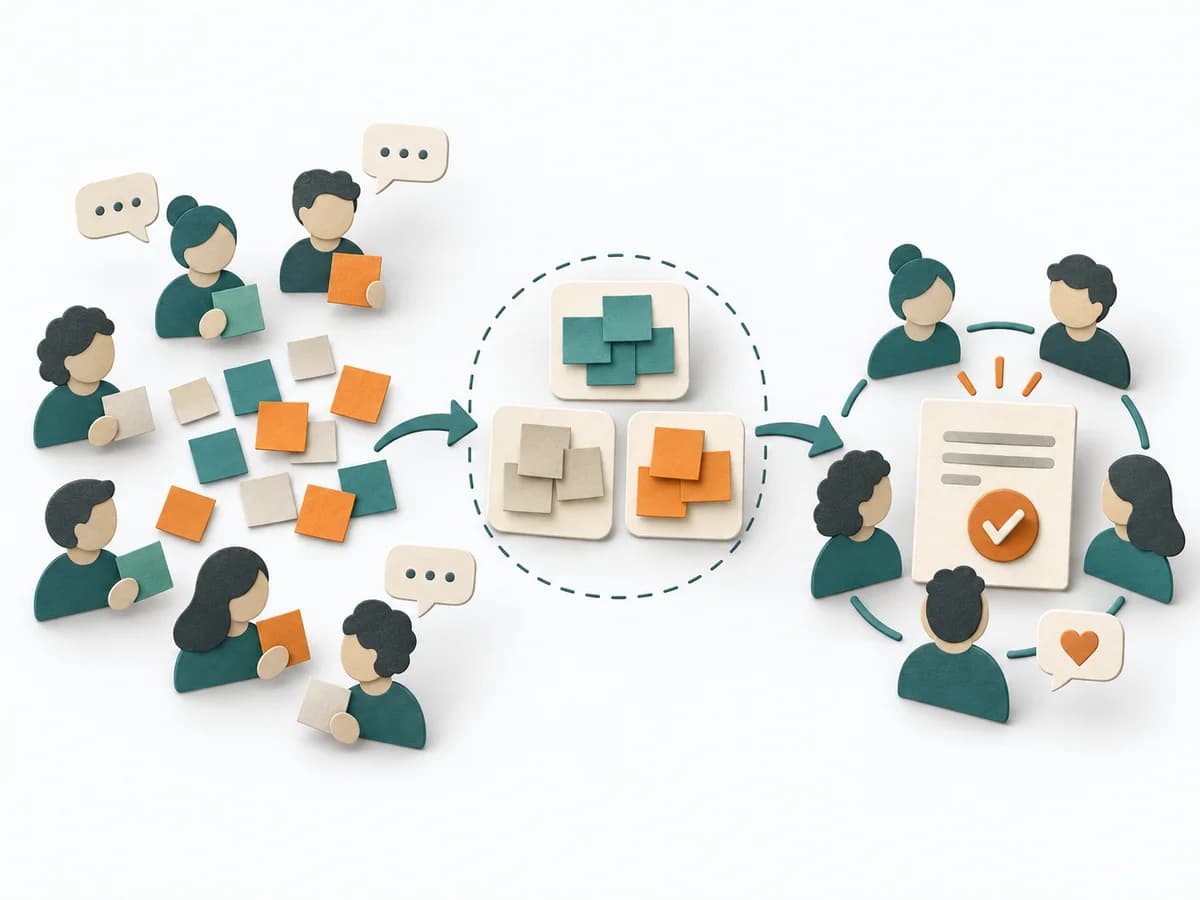 Facilitation Consensus Workshop |
|---|---|---|---|---|
Purposedifferent | When several people work toward one goal but hold different mental maps, Alignment Mapping makes the discrepancies visible. It arranges goals, assumptions, and priorities so shared direction becomes verifiable. | When a search for ideas stalls, switching roles helps people step outside their own perspective and activate new logics of action. The method reduces habit because contributions arise from a different stance. This brings unfamiliar, often fitting solution approaches into play. | When a team faces an open question with many obvious directions, the method first creates breadth instead of premature commitment. It separates idea flow from evaluation and makes lines of thought visible, creating a pool for selection and further development. | When a group needs a solid decision without outvoting individual factions, a Consensus Workshop creates a negotiable common ground. It makes agreement, reservations, and open tensions discussable at the same time. |
Complexitydifferent | Medium | Low | Low | Medium |
Timedifferent | 1-2 h | 30-60 min | 30-60 min | 1-3 h |
Participantsdifferent | 4-12 | 3-12 | 4-12 | 5-30 |
Formatsame | Workshop | Workshop | Workshop | Workshop |
Outputdifferent | Alignment Map, Open Issues, Decision Questions | Rollenkarten, Ideenpool pro Rolle, Konsolidierte Shortlist | Idea pool, Theme clusters, Shortlist | Consensus Clusters, Theme Titles, Priority Areas |
Tagsno overlap | AlignmentStakeholdersStrategyFacilitation | BrainstormingIdeationCreativity | BrainstormingIdeationCreativityWorkshopDivergence | FacilitationConsensusWorkshopAlignment |