View methods side by side.
Choose up to four methods. Add them using the search and share the comparison by copying its link.
| Criterion |  Operations After-Action Review | 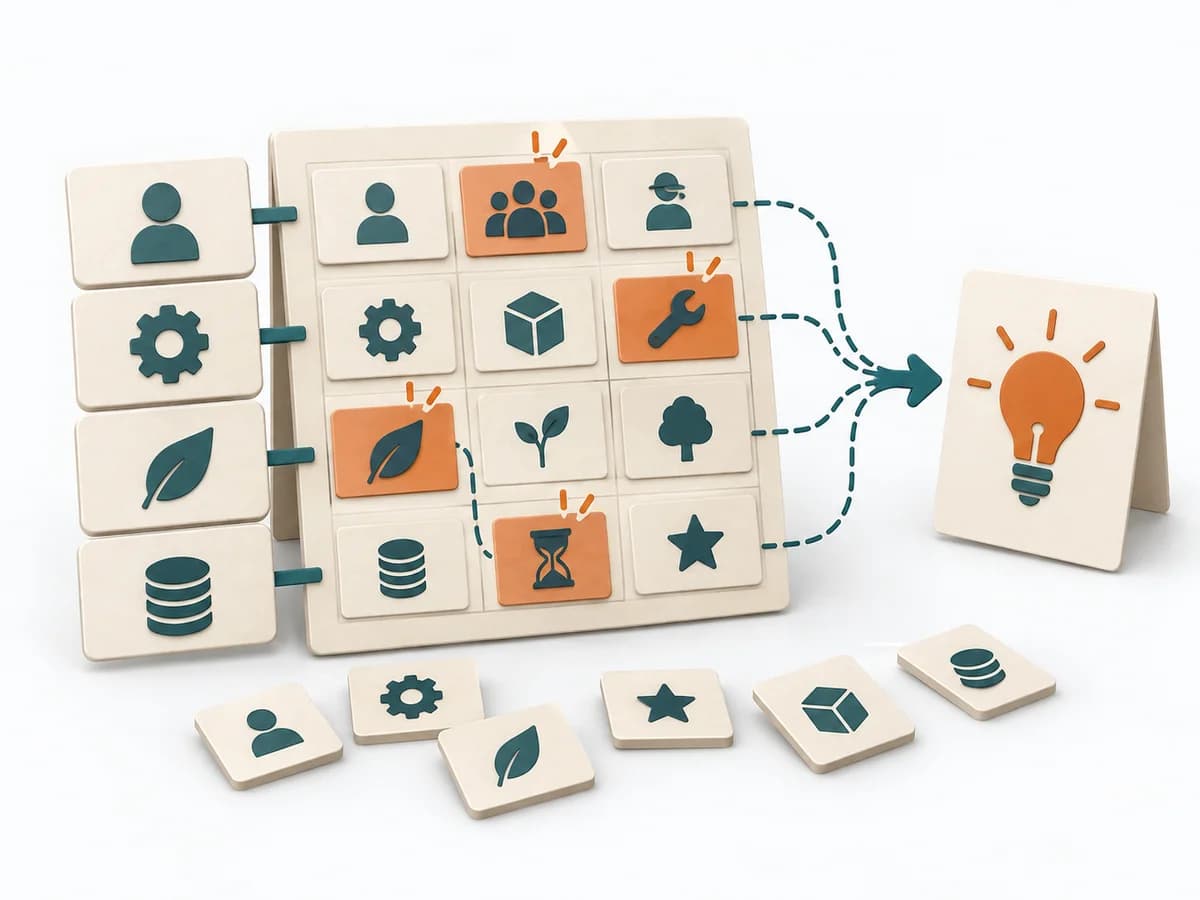 Innovation Morphological Analysis | 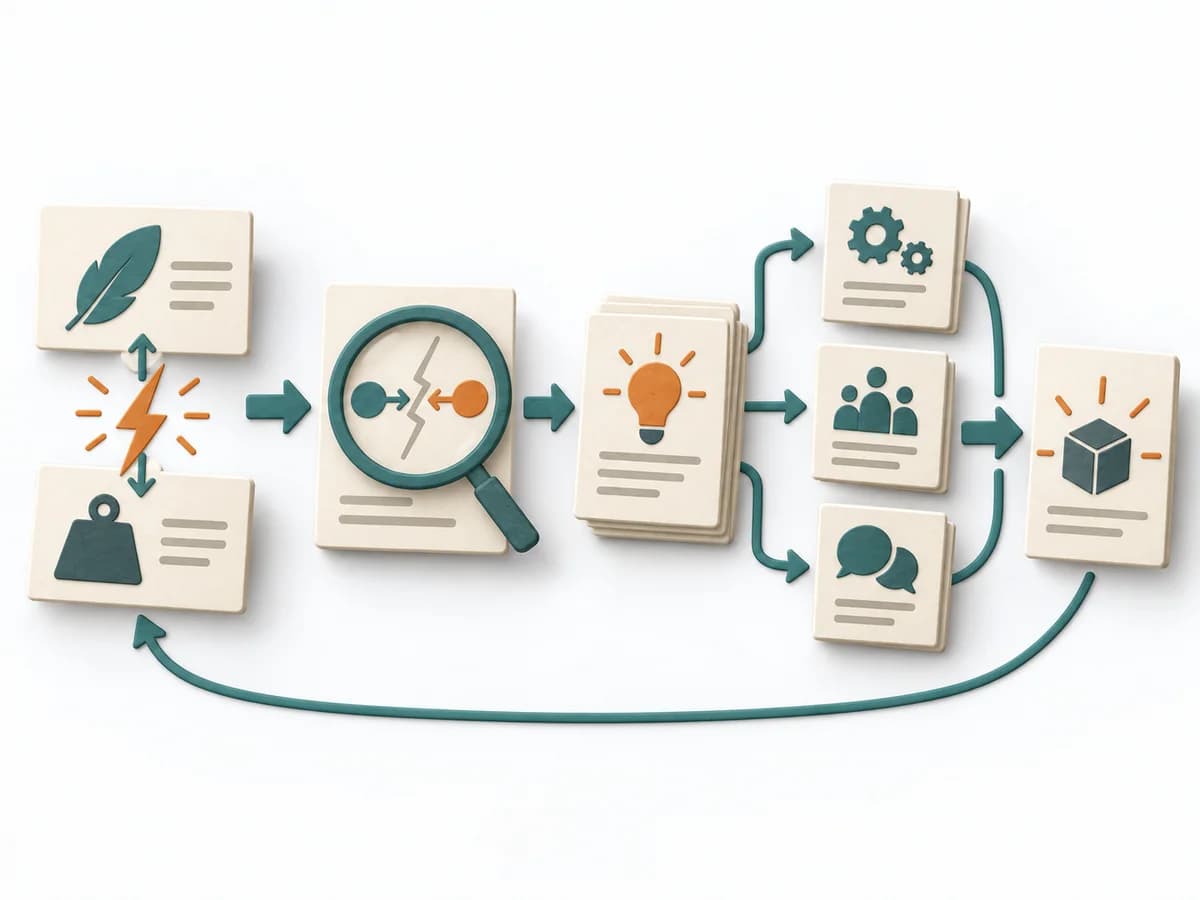 Innovation Contradiction Analysis | 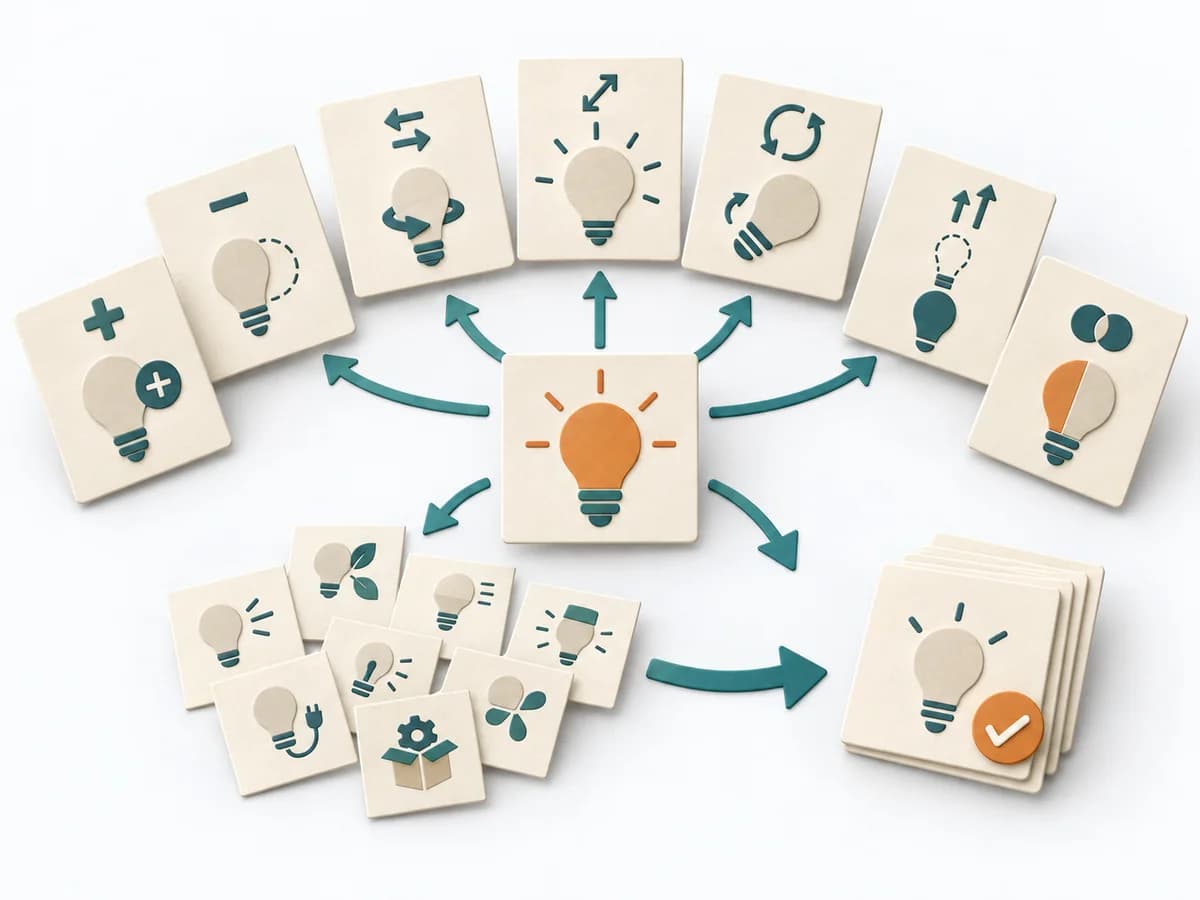 Innovation SCAMPER |
|---|---|---|---|---|
Purposedifferent | After missions or project phases with unclear outcomes, the method makes visible what actually happened and what can be learned from it. It separates course, effect, and causes so experience turns into solid improvement. | For a search for solutions with many degrees of freedom, a grid emerges for systematic combinations. The method separates features, variants, and exclusion criteria, so the space gets explored deliberately. | When a system should improve while another measure suffers as a result, the method makes the underlying conflict precisely formulable. It separates the desired effect from its side effect. This makes solutions possible that address the contradiction deliberately instead of half-heartedly. | For an existing solution under pressure to change, the method deliberately opens space for systematic variants. It directs attention to rebuilding, combining, and repurposing rather than only new basic ideas. This produces concrete evolution paths for products, offerings, or workflows. |
Complexitydifferent | Low | Medium | Medium | Low |
Timedifferent | 20-45 min | 1-3 h | 60-120 min | 30-60 min |
Participantsdifferent | 3-12 | 2-8 | 2-8 | 2-10 |
Formatdifferent | Workshop + async | Workshop + async | Workshop | Workshop |
Outputdifferent | Lessons learned, Action items, Event summary | Morphological Box, Concept Combinations, Idea Shortlist | Contradiction Statement, Abstraction Notes, Solution Principles, Concept Ideas | SCAMPER Idea List, Concept Shortlist, Variation Notes |
Tagsno overlap | LearningOperationsImprovement | IdeationInnovationCreativity | ContradictionsInnovationProblem solving | BrainstormingIdeationCreativityReframingInnovation |