View methods side by side.
Choose up to four methods. Add them using the search and share the comparison by copying its link.
| Criterion | 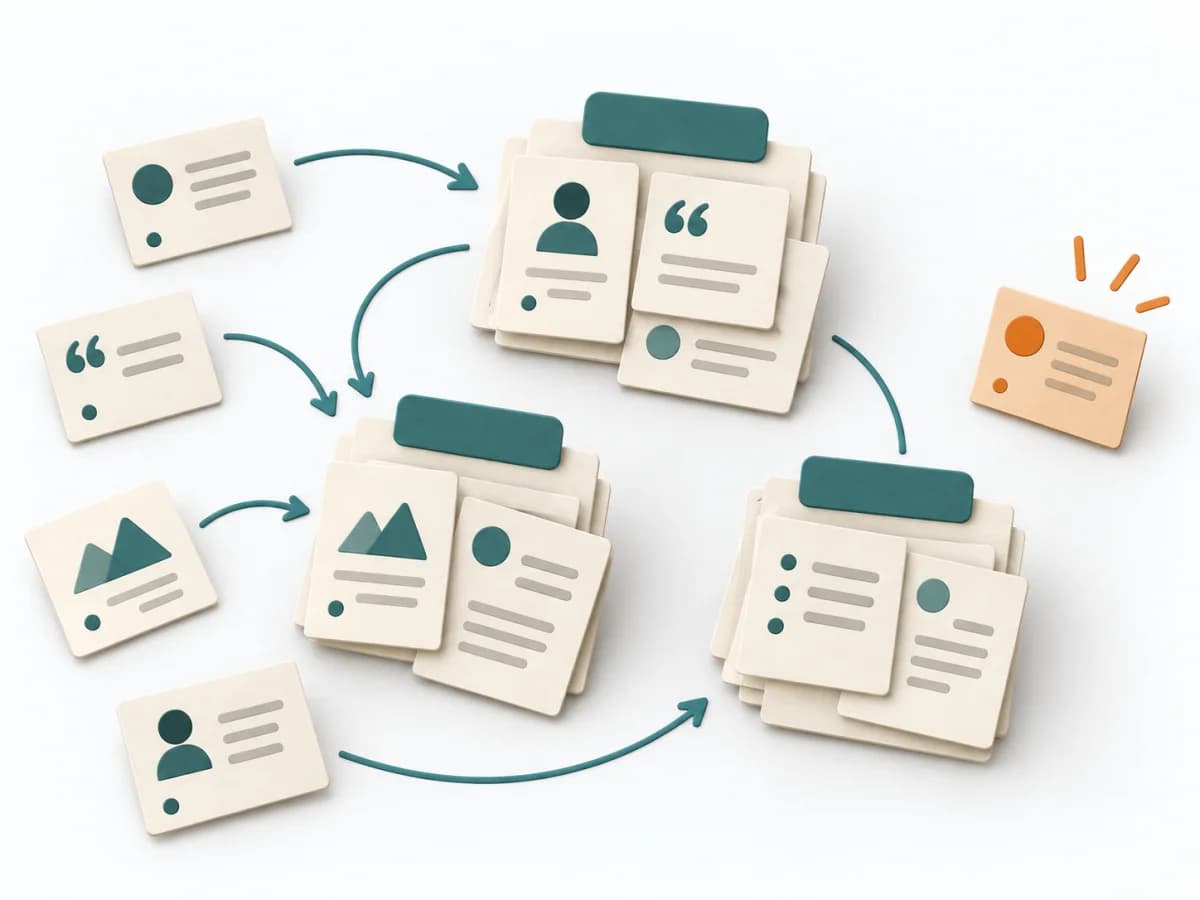 UX Research Affinity Diagramming | 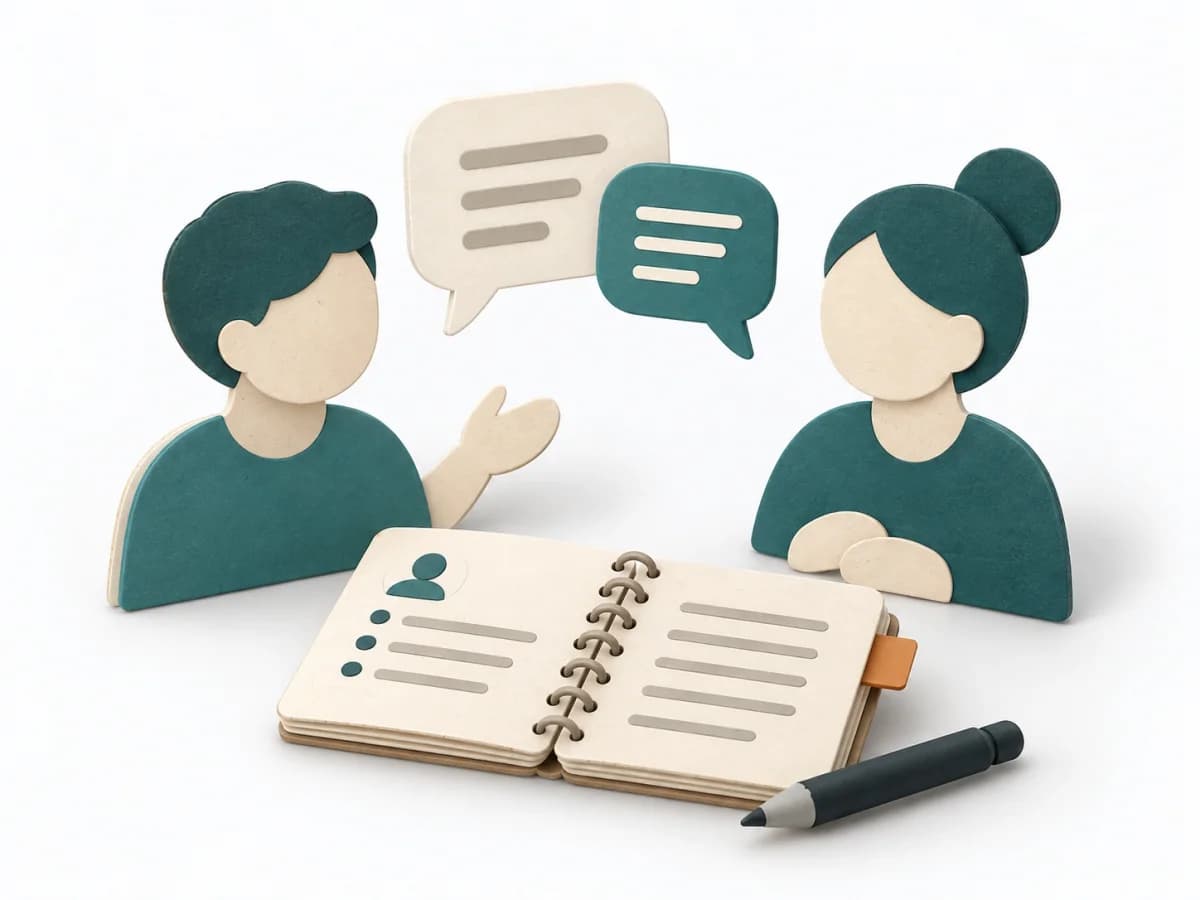 UX Research User Interviews | 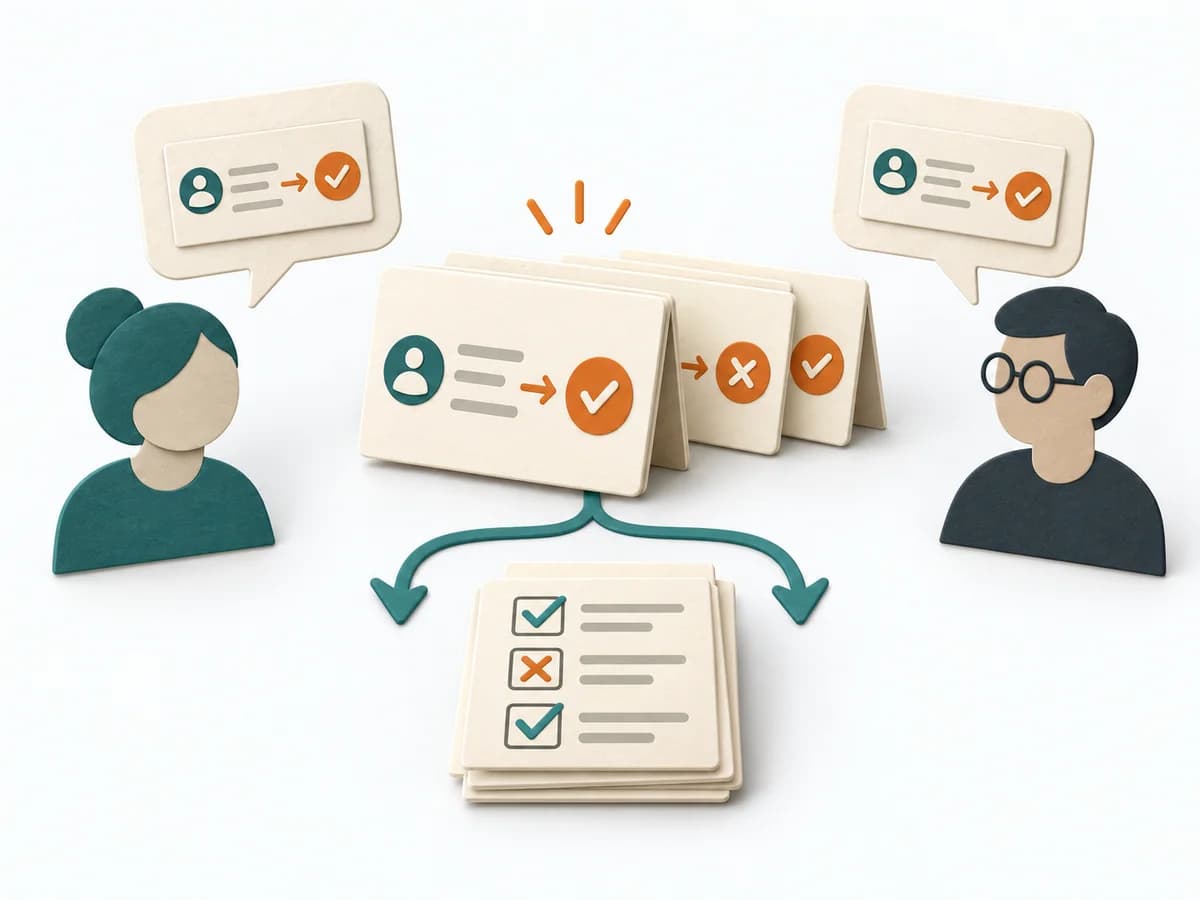 Agile Specification by Example | 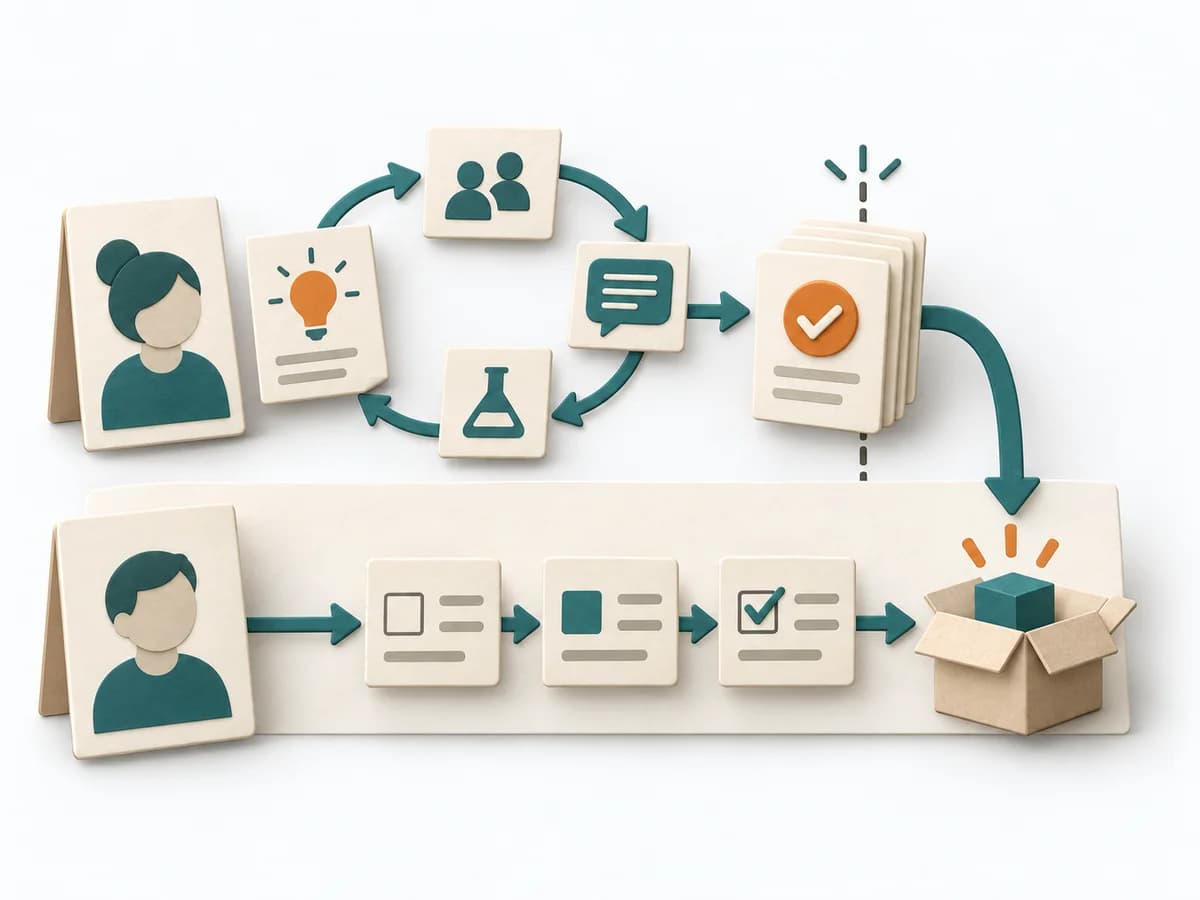 Product Discovery Dual-Track Agile |
|---|---|---|---|---|
Purposedifferent | When research notes, feedback, or observations sit unconnected side by side, affinity diagramming sorts the raw material into solid themes. Many individual points turn into patterns that make decisions and opportunities clearer. | When teams derive needs only from assumptions and real motives are missing, user interviews give direct access to behavior and meaning. Conversations from the target group's everyday life make patterns, tensions, and open questions solidly visible. | When business rules need to become precise, it ties language, example, and test together. It sorts work by value, risk, and delivery ability. The result is captured as an Example Table and Acceptance Tests. | When uncertainty and delivery run in parallel, it separates learning work from implementation while keeping both connected. It prevents unvalidated ideas from falling directly into the delivery stream. |
Complexitydifferent | Low | Low | Medium | Medium |
Timedifferent | 45–90 min | 30–60 min per interview | 60-90 min pro Feature | Laufend, Wochen bis Monate |
Participantsdifferent | 3-10 | 1 participant per interview | 3-6 | 4-10 |
Formatdifferent | Workshop | Workshop + async | Workshop | Workshop + async |
Outputdifferent | Theme clusters, Insight statements, Opportunity areas | Interview Notes, Themes, Insight Summary | Example Table, Acceptance Tests | Discovery Backlog, Delivery Backlog, Experiment-Ergebnisse, Validierte Stories |
Tagsno overlap | SynthesisQualitativeRoot cause | QualitativeResearchCustomerDiscovery | AgileRequirementsExamplesBehavior-Driven Development | AgileDiscoveryDelivery |