View methods side by side.
Choose up to four methods. Add them using the search and share the comparison by copying its link.
| Criterion | 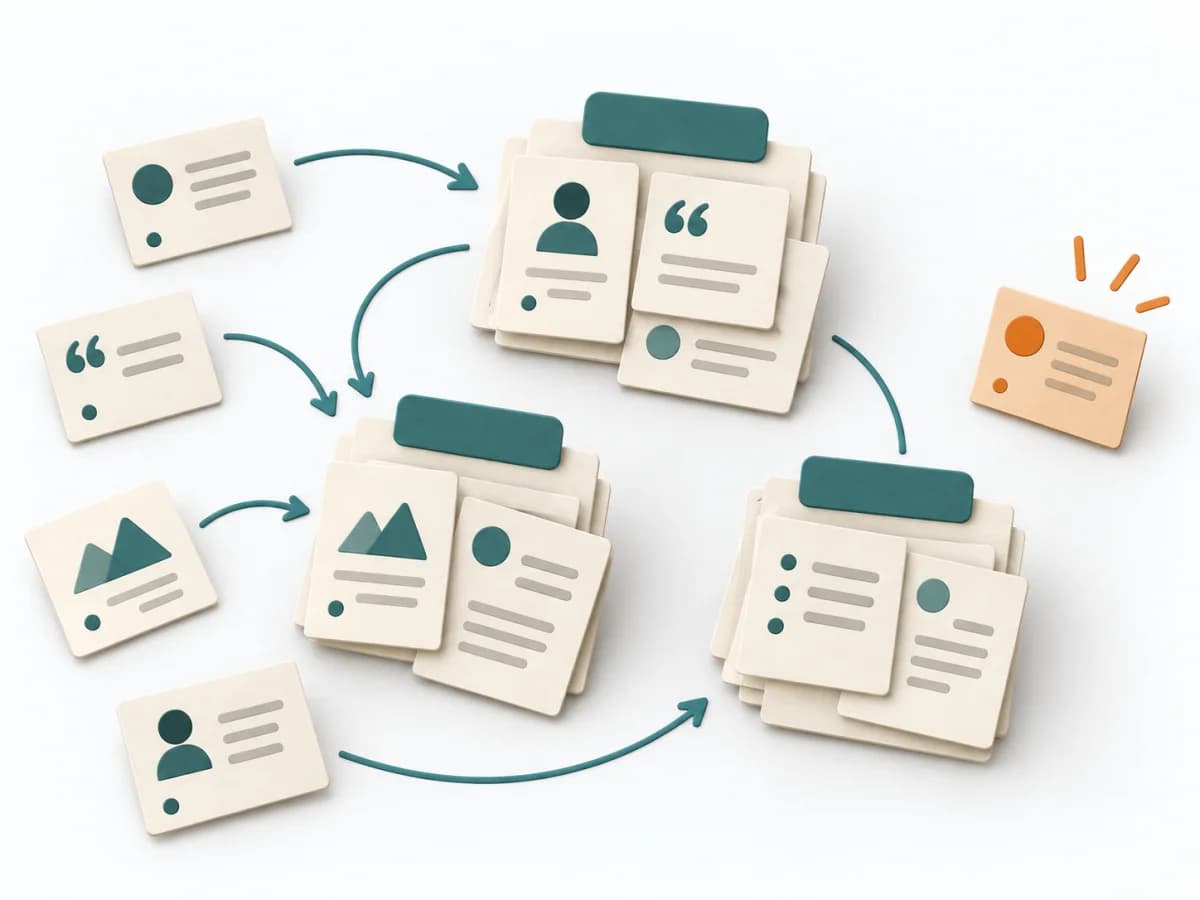 UX Research Affinity Diagramming |  UX Research User Interviews | 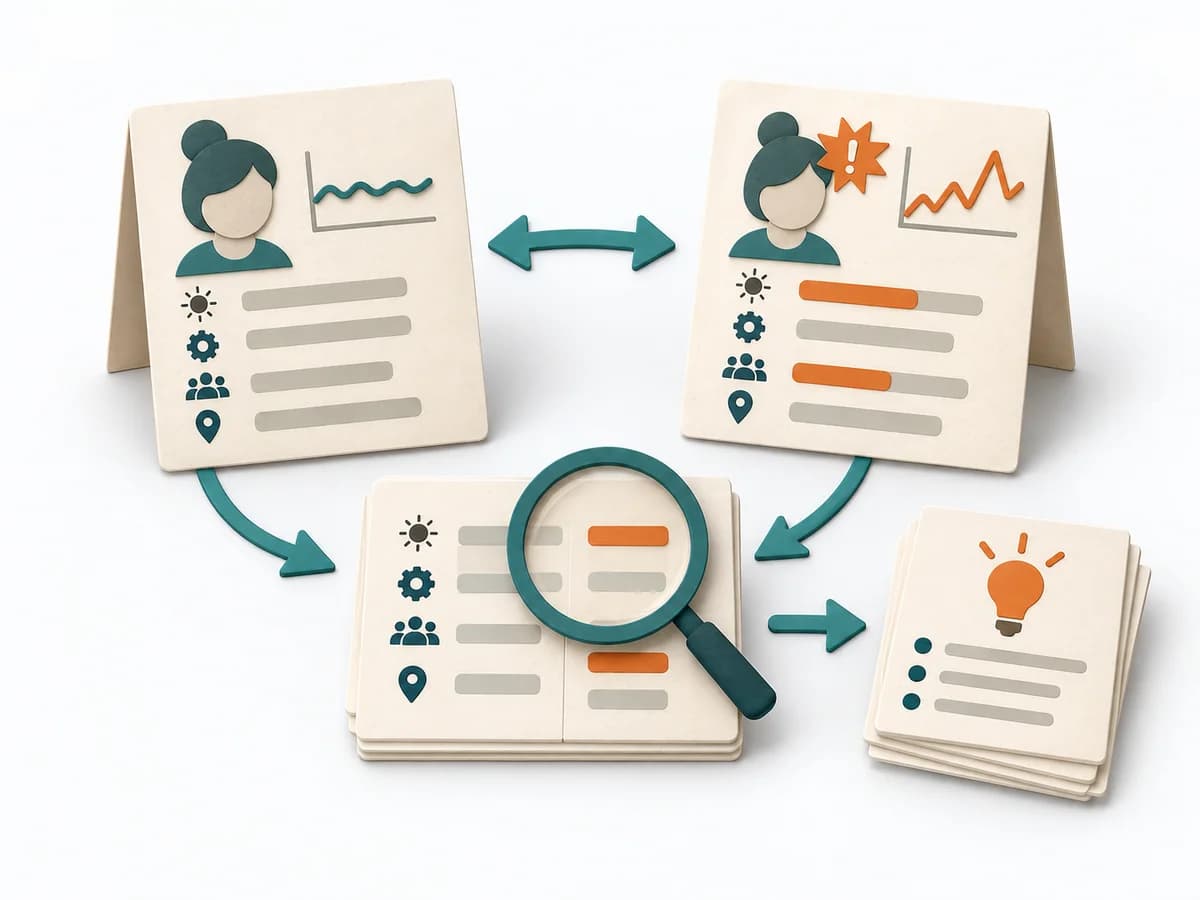 Operations Change Analysis | 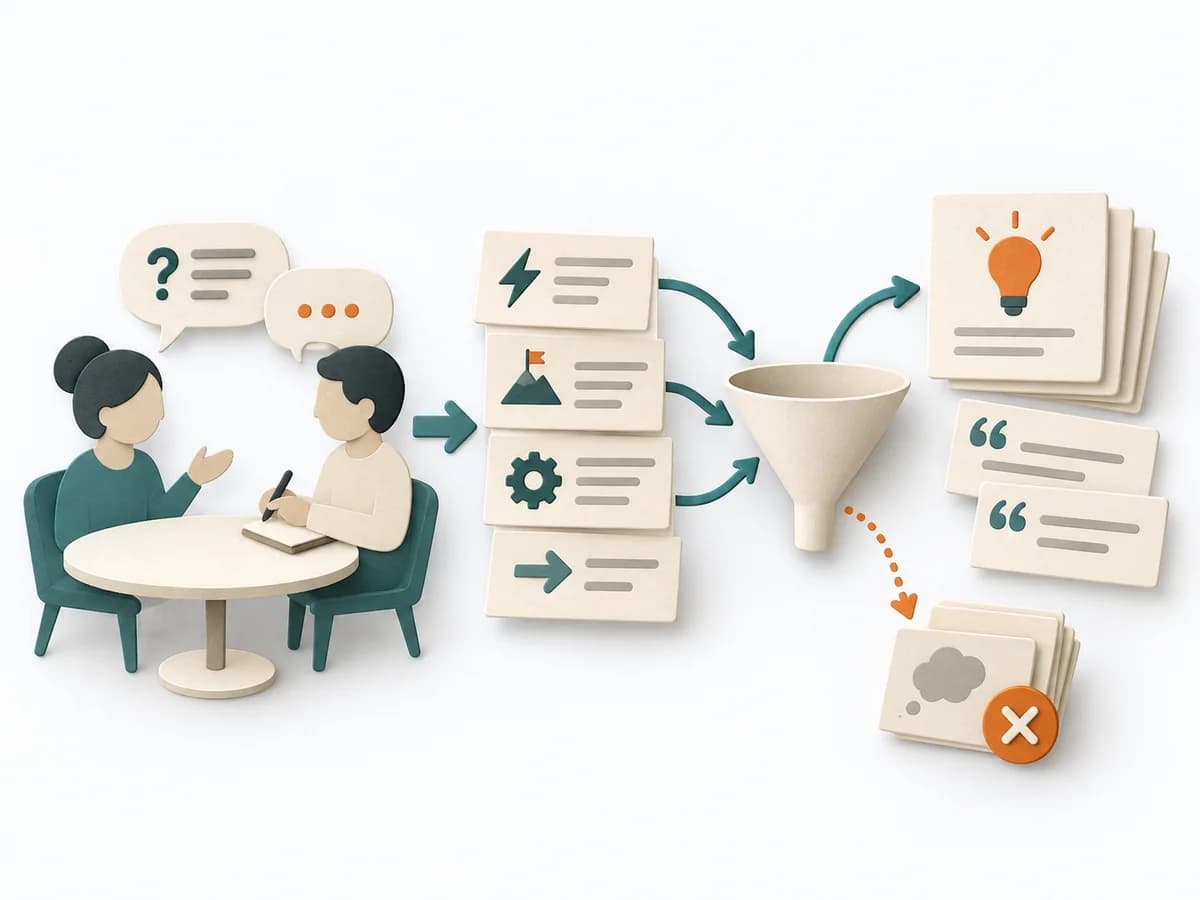 Product Discovery Opportunity Interview |
|---|---|---|---|---|
Purposedifferent | When research notes, feedback, or observations sit unconnected side by side, affinity diagramming sorts the raw material into solid themes. Many individual points turn into patterns that make decisions and opportunities clearer. | When teams derive needs only from assumptions and real motives are missing, user interviews give direct access to behavior and meaning. Conversations from the target group's everyday life make patterns, tensions, and open questions solidly visible. | For a deviation after a change, the method isolates the influence of the altered condition. It narrows down which differences are relevant and which are just accompanying noise. | When opportunities are still hidden behind signals of need, it structures conversations around needs and obstacles. It looks for patterns that lead to new product opportunities. |
Complexitydifferent | Low | Low | Medium | Medium |
Timedifferent | 45–90 min | 30–60 min per interview | 45-120 min | 30-60 min je Interview |
Participantsdifferent | 3-10 | 1 participant per interview | 2-6 | 5-12 Interviews |
Formatdifferent | Workshop | Workshop + async | Workshop + async | Workshop + async |
Outputdifferent | Theme clusters, Insight statements, Opportunity areas | Interview Notes, Themes, Insight Summary | Change Matrix, Cause Hypotheses, Validation Questions, Action List | Interview Notes, Opportunity Themes, Customer Quotes |
Tagsno overlap | SynthesisQualitativeRoot cause | QualitativeResearchCustomerDiscovery | ChangeRoot causeTroubleshootingComparison | DiscoveryInterviewsOpportunityCustomer |