View methods side by side.
Choose up to four methods. Add them using the search and share the comparison by copying its link.
| Criterion |  UX Research Affinity Diagramming | 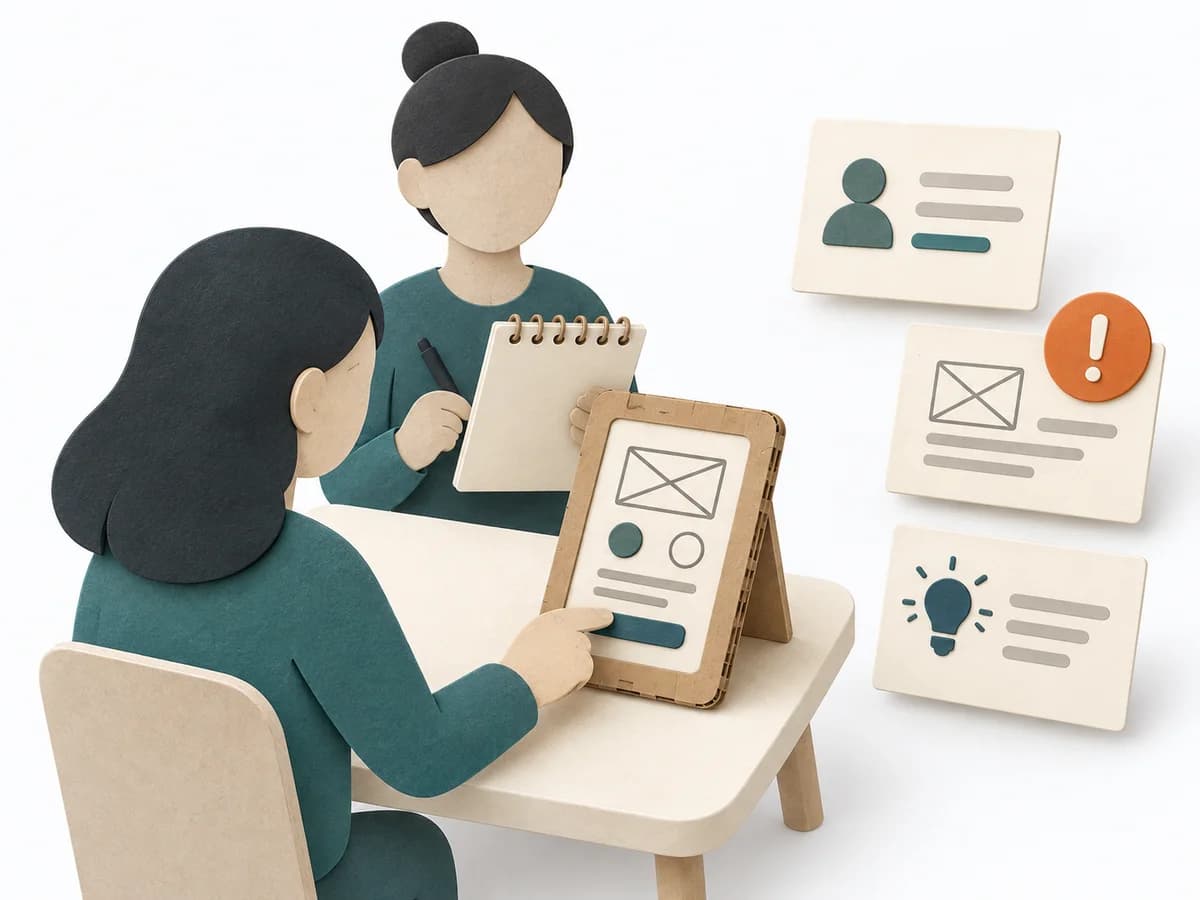 UX Research Usability Testing | 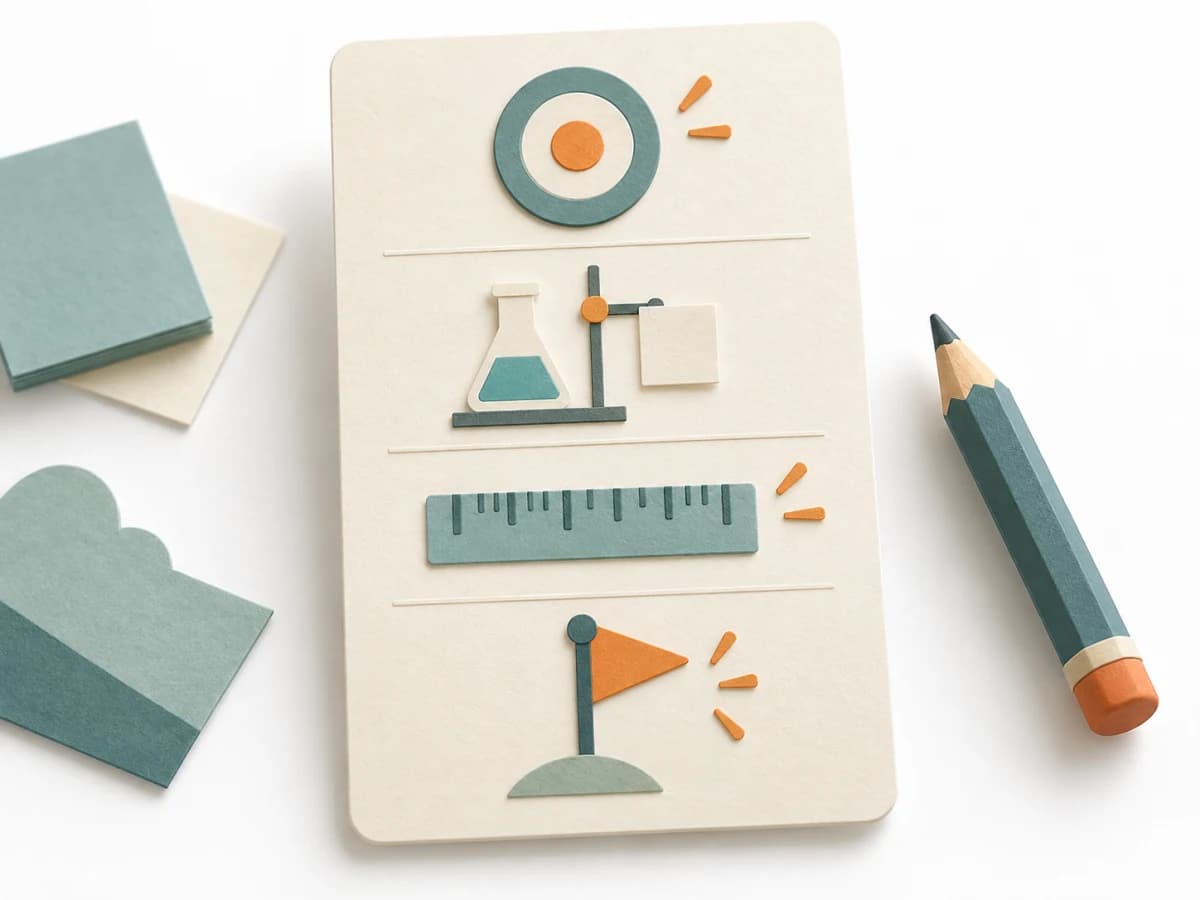 Product Discovery Test Card |  Product Discovery Learning Card |
|---|---|---|---|---|
Purposedifferent | When research notes, feedback, or observations sit unconnected side by side, affinity diagramming sorts the raw material into solid themes. Many individual points turn into patterns that make decisions and opportunities clearer. | When a product is built but people get stuck on tasks, usability testing shows the friction at concrete points. Observed use instead of self-report makes visible where orientation, understanding, or interaction breaks down. | The Test Card turns a critical assumption into a testable claim and specifies in advance which result counts as success. | The Learning Card connects traceable test results to a reasoned next action while keeping the limits of the insight visible. |
Complexitydifferent | Low | Medium | Low | Low |
Timedifferent | 45–90 min | 1-2 h je Session | 20-35 min | 25-40 min |
Participantsdifferent | 3-10 | Based on research question | 1-5 | 1-5 |
Formatdifferent | Workshop | Workshop + async | Workshop + async | Workshop + async |
Outputdifferent | Theme clusters, Insight statements, Opportunity areas | Usability Issues, Severity List, Recommendations | Test Card with a pre-set threshold | Learning Card with evidence and next action |
Tagsno overlap | SynthesisQualitativeRoot cause | ValidationUXPrototype | ExperimentsValidationDiscoveryHypothesis | ExperimentsValidationDiscoveryLearning |