View methods side by side.
Choose up to four methods. Add them using the search and share the comparison by copying its link.
| Criterion |  UX Research Affinity Diagramming | 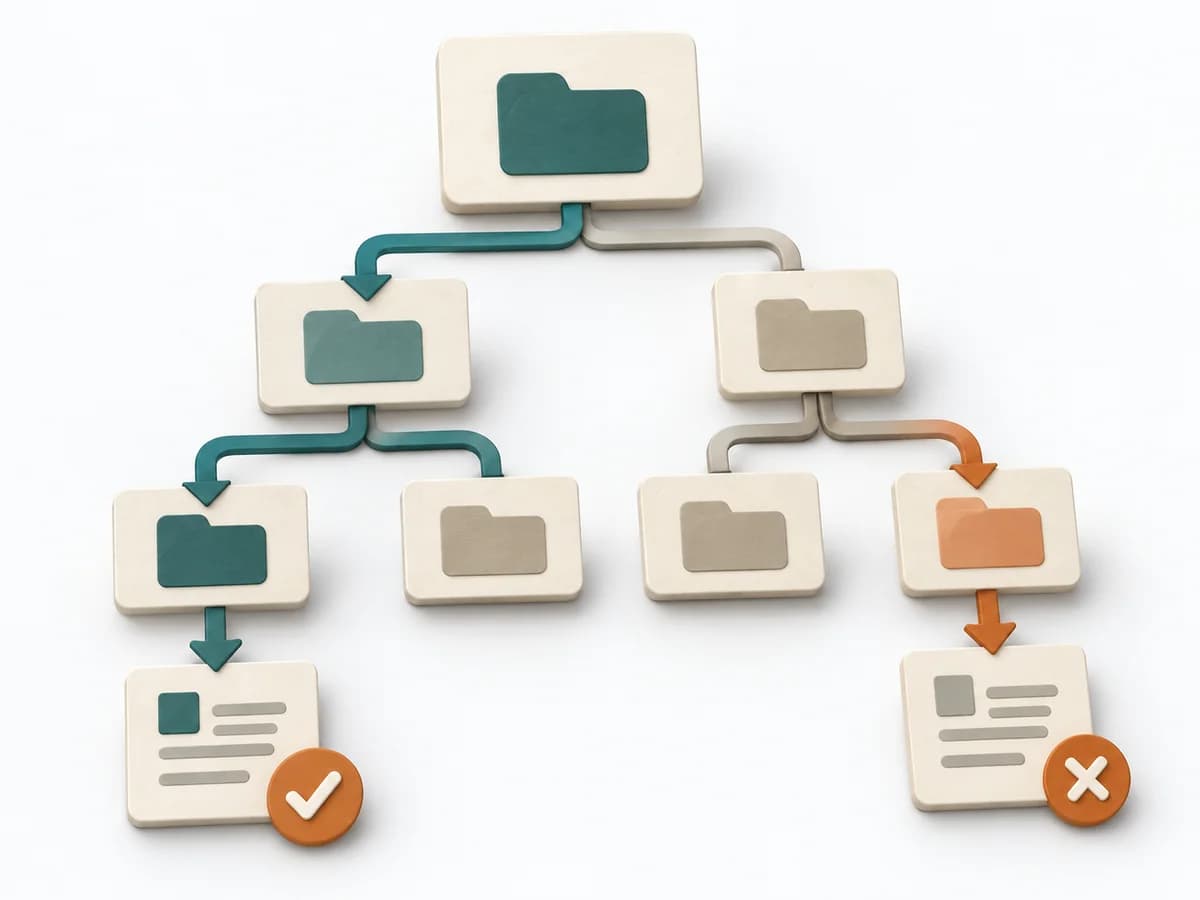 UX Research Tree Testing |  Operations A3 Problem Solving |  Operations Kepner-Tregoe |
|---|---|---|---|---|
Purposedifferent | When research notes, feedback, or observations sit unconnected side by side, affinity diagramming sorts the raw material into solid themes. Many individual points turn into patterns that make decisions and opportunities clearer. | When a navigation exists but search paths still fail, tree testing checks findability without visual distraction. The method shows whether labels, levels, and paths really lead to the intended destination. | For a complex deviation with several people involved, the method bundles problem, analysis, and decision onto one page. It creates a shared working space where causes, countermeasures, and follow-up fit together. | For a disturbance that's hard to pin down, the method cleanly separates problem, cause, and decision. It reduces mixing when symptoms allow several interpretations. |
Complexitydifferent | Low | Medium | Medium | High |
Timedifferent | 45–90 min | 1-2 Tage | 45-90 min | 2-8 h |
Participantsdifferent | 3-10 | Based on research question | 2-5 | 2-8 |
Formatdifferent | Workshop | Async | Workshop + async | Workshop + async |
Outputdifferent | Theme clusters, Insight statements, Opportunity areas | Findability Metrics, Path Analysis, Revised IA | A3 Report, Action Plan, Root Cause Analysis | Problem Analysis, Decision Analysis, Risk Plan |
Tagsno overlap | SynthesisQualitativeRoot cause | Information architectureNavigationFindability | LeanProblem solvingCoachingOperations | Problem solvingRoot causeDecisionOperations |