View methods side by side.
Choose up to four methods. Add them using the search and share the comparison by copying its link.
| Criterion |  UX Research Affinity Diagramming | 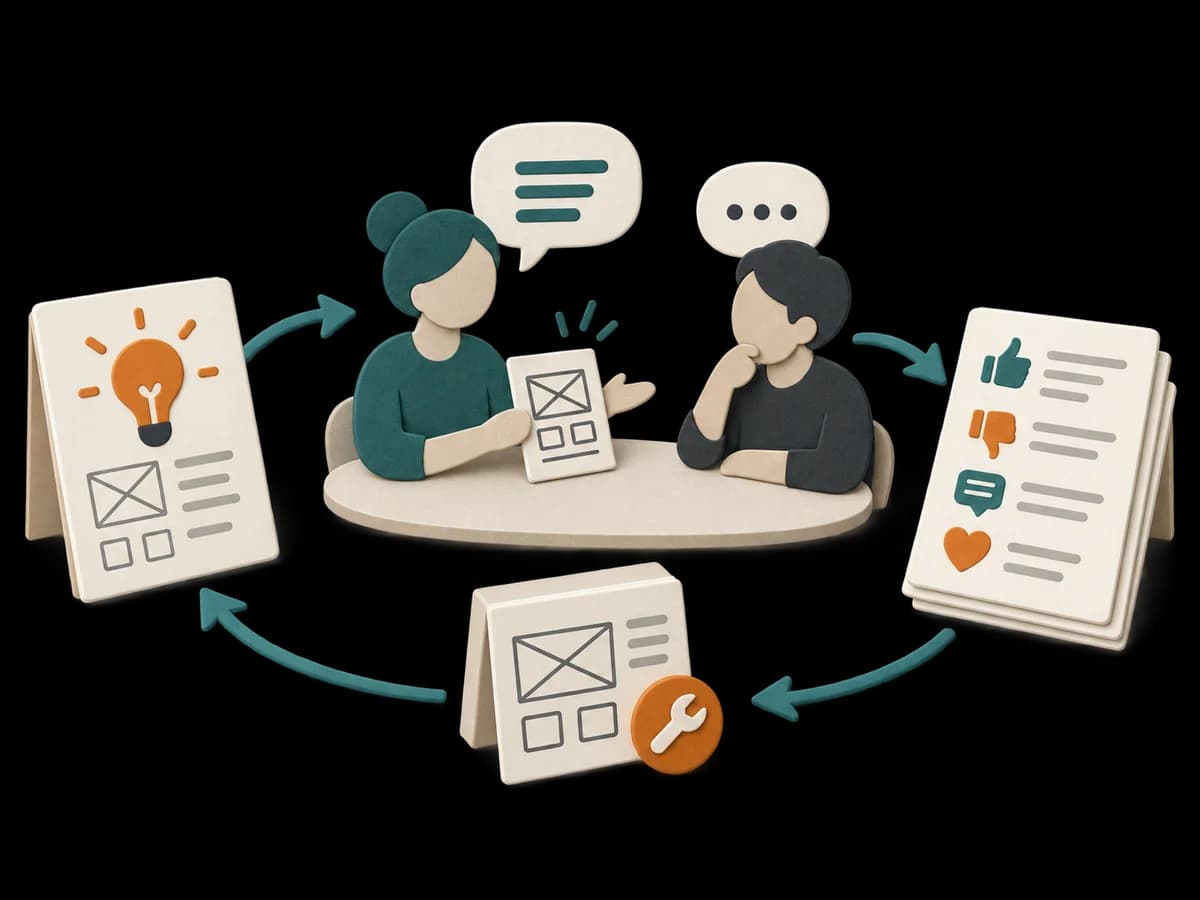 Product Discovery Solution Interview | 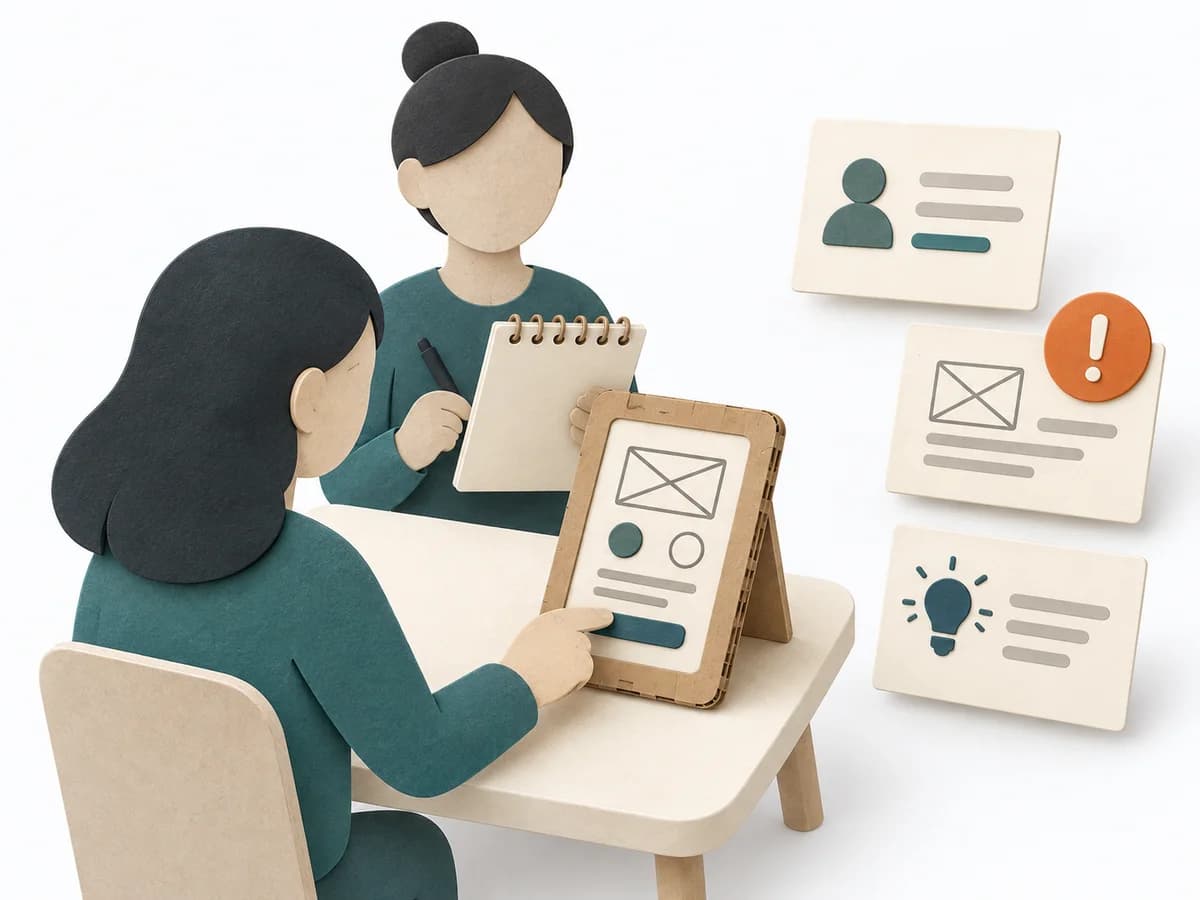 UX Research Usability Testing | 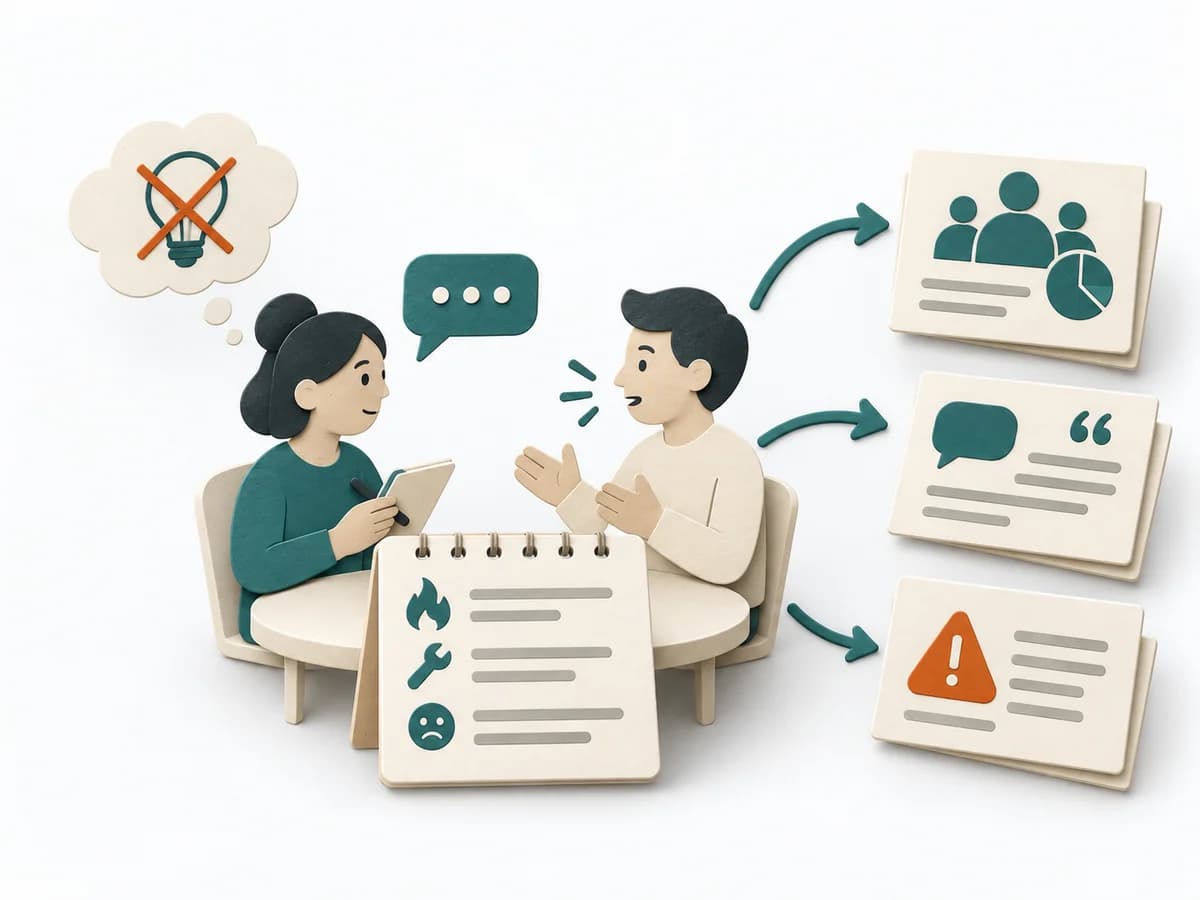 Product Discovery Problem Interview |
|---|---|---|---|---|
Purposedifferent | When research notes, feedback, or observations sit unconnected side by side, affinity diagramming sorts the raw material into solid themes. Many individual points turn into patterns that make decisions and opportunities clearer. | When a solution idea is already on the table, it checks how it is understood and evaluated. It looks for resonance, objections, and missing fit early in the conversation. | When a product is built but people get stuck on tasks, usability testing shows the friction at concrete points. Observed use instead of self-report makes visible where orientation, understanding, or interaction breaks down. | When the picture of the problem still needs to become solid, it asks about real situations and consequences. It separates genuine suffering from mere interest in a solution. |
Complexitydifferent | Low | Medium | Medium | Medium |
Timedifferent | 45–90 min | 30-60 min je Interview | 1-2 h je Session | 30-60 min je Interview |
Participantsdifferent | 3-10 | 5-10 Interviews | Based on research question | 5-12 Interviews |
Formatdifferent | Workshop | Workshop + async | Workshop + async | Workshop + async |
Outputdifferent | Theme clusters, Insight statements, Opportunity areas | Solution Feedback, Objection List, Validation Notes | Usability Issues, Severity List, Recommendations | Problem Evidence, Risk Notes, Customer Segments |
Tagsno overlap | SynthesisQualitativeRoot cause | ValidationInterviewsPrototype | ValidationUXPrototype | DiscoveryInterviewsValidation |