View methods side by side.
Choose up to four methods. Add them using the search and share the comparison by copying its link.
| Criterion | 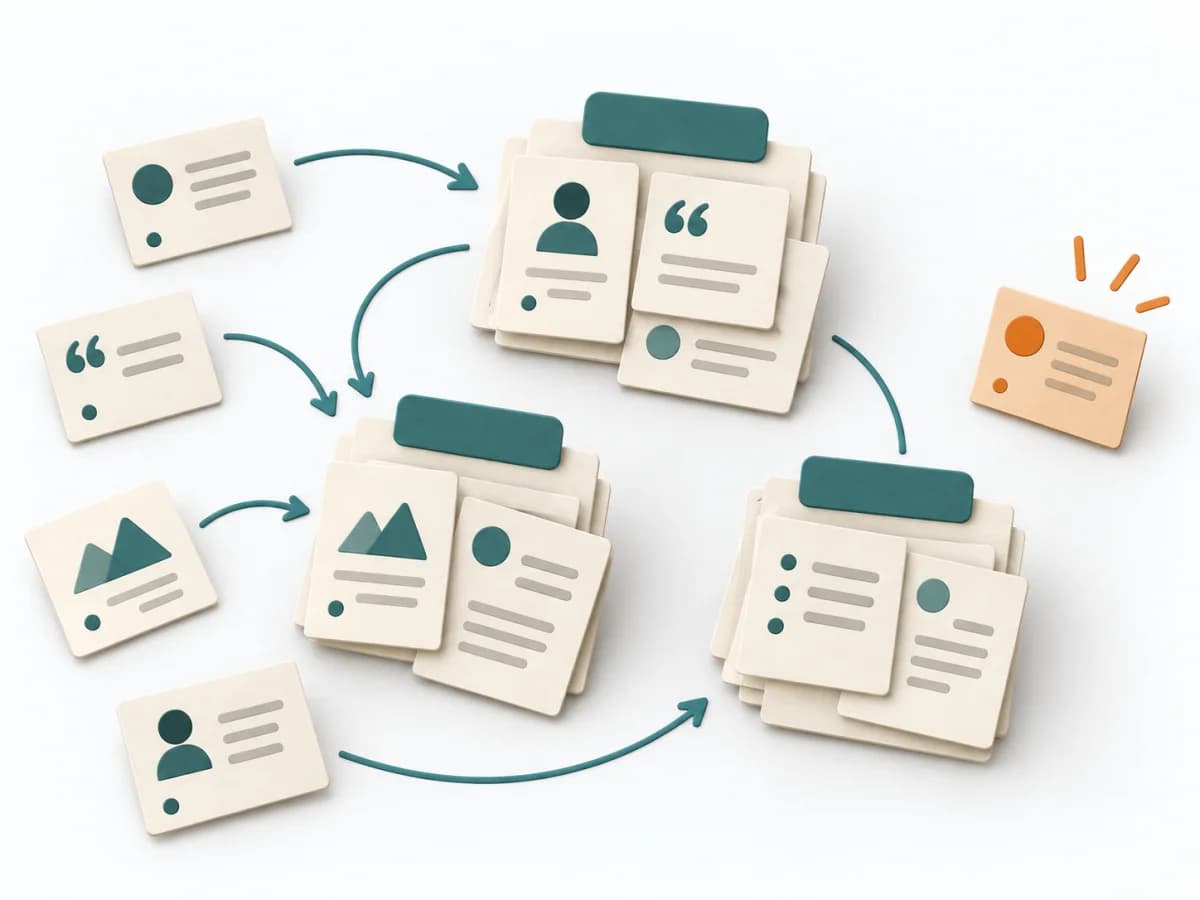 UX Research Affinity Diagramming | 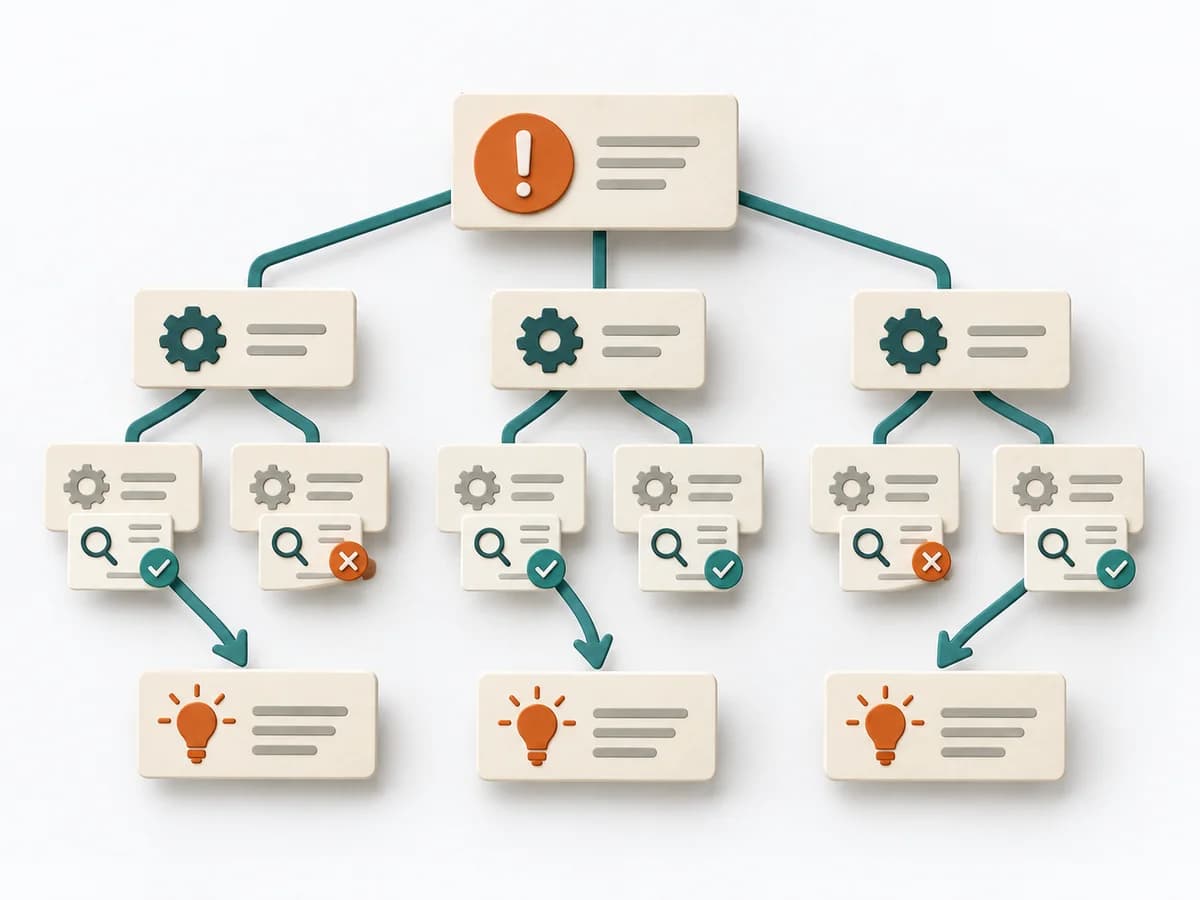 Operations Root Cause Tree Analysis | 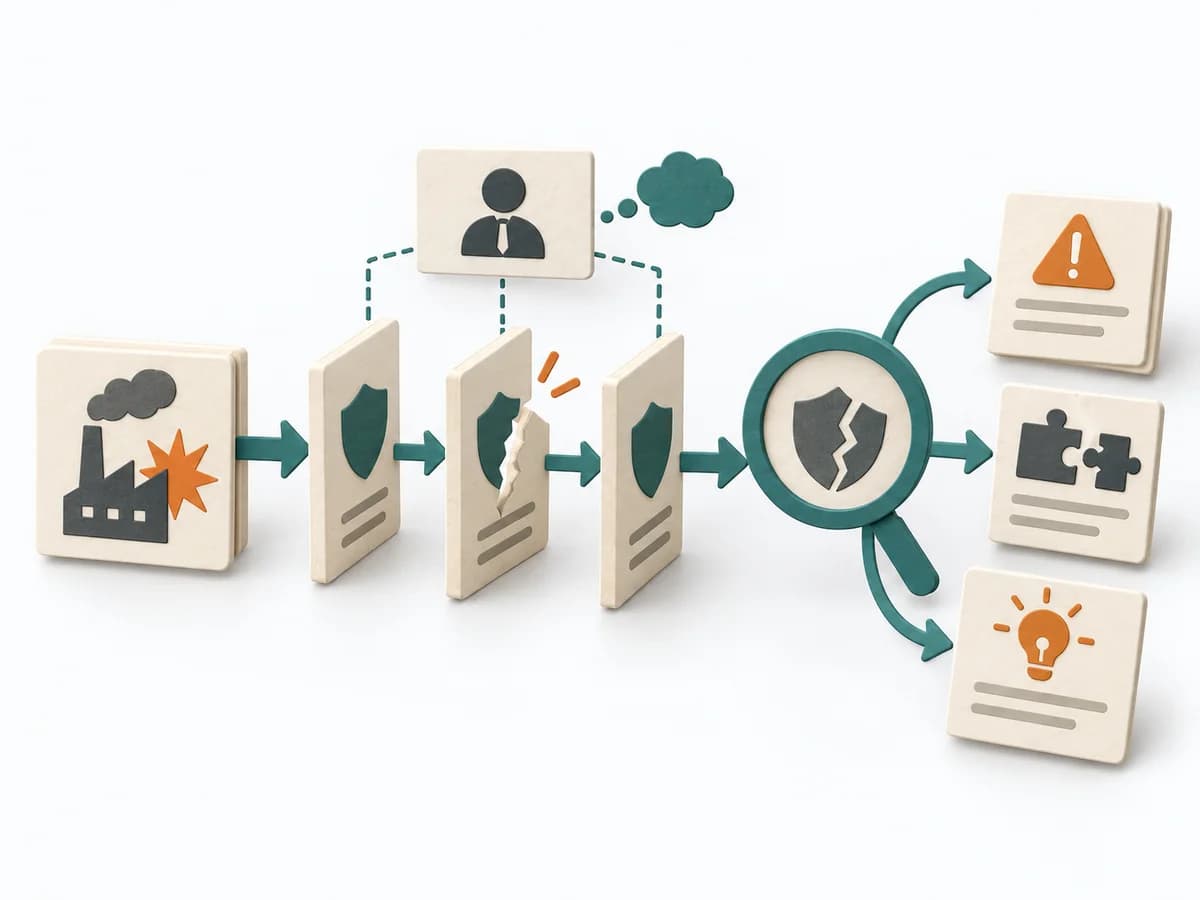 Operations MORT Analysis |  Operations Root Cause Analysis |
|---|---|---|---|---|
Purposedifferent | When research notes, feedback, or observations sit unconnected side by side, affinity diagramming sorts the raw material into solid themes. Many individual points turn into patterns that make decisions and opportunities clearer. | For a problem with several suspected causes, the method builds a causal structure instead of a mere list. It makes visible how causes connect and where the strongest points of leverage lie. | For a safety-relevant event or a system with high protection requirements, the method examines where controls failed. It exposes both technical and organizational gaps. | When a problem keeps recurring and the cause stays unclear, the method exposes the underlying mechanism. It separates symptom, guess, and robust explanation from one another. |
Complexitydifferent | Low | Medium | High | Medium |
Timedifferent | 45–90 min | 1-3 h | Mehrere Tage bis Wochen | 1-4 h |
Participantsdifferent | 3-10 | 2-8 | 2-6 | 3-8 |
Formatdifferent | Workshop | Workshop | Workshop + async | Workshop + async |
Outputdifferent | Theme clusters, Insight statements, Opportunity areas | Cause Tree, Evidence Notes, Countermeasures | MORT Worksheets, Findings per Branch, Corrective Actions, Systemic Recommendations | Problem Statement, Cause Hypotheses, Confirmed Causes, Action Plan |
Tags1 shared | SynthesisQualitativeRoot cause | Root causeTreeIncidentQuality | Root causeSafetySystemicIncident | Root causeProblem solvingQualityIncident |