View methods side by side.
Choose up to four methods. Add them using the search and share the comparison by copying its link.
| Criterion | 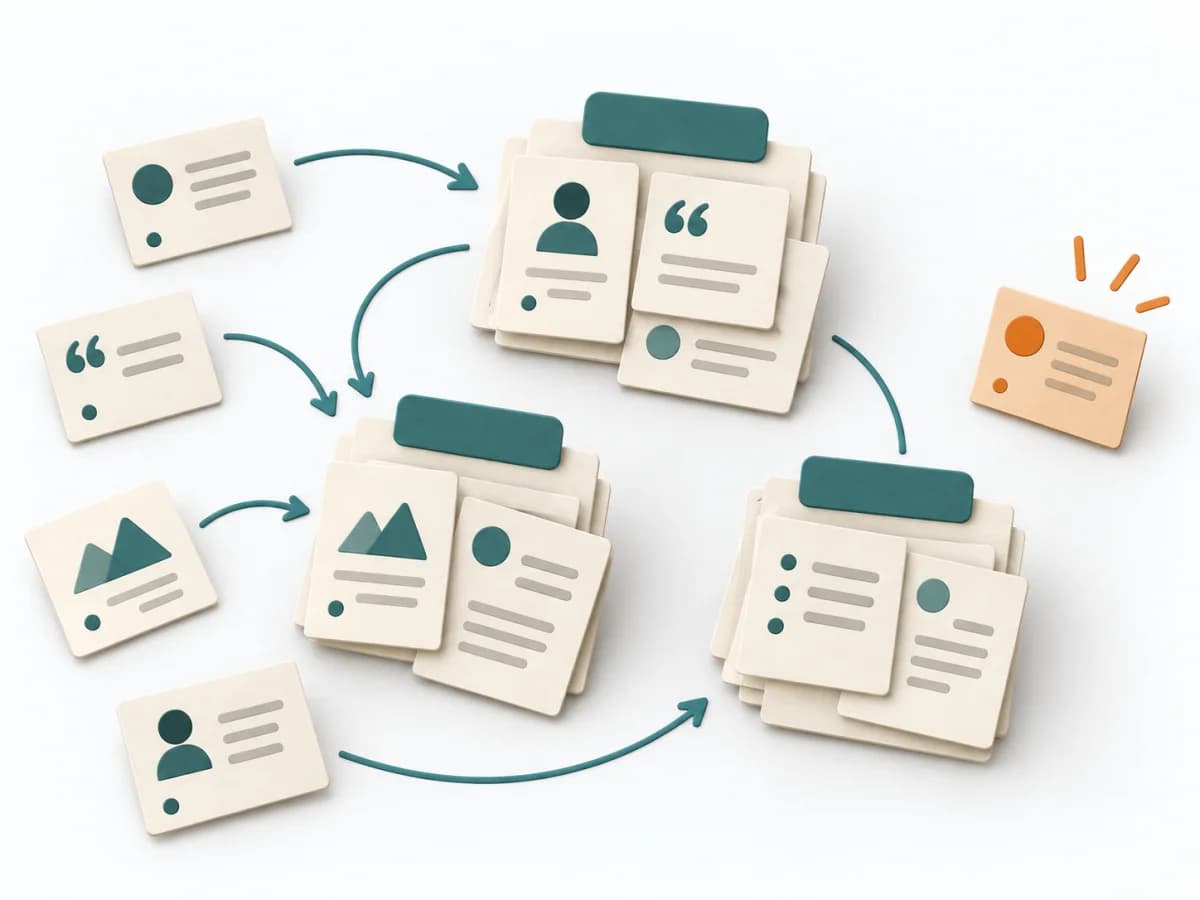 UX Research Affinity Diagramming | 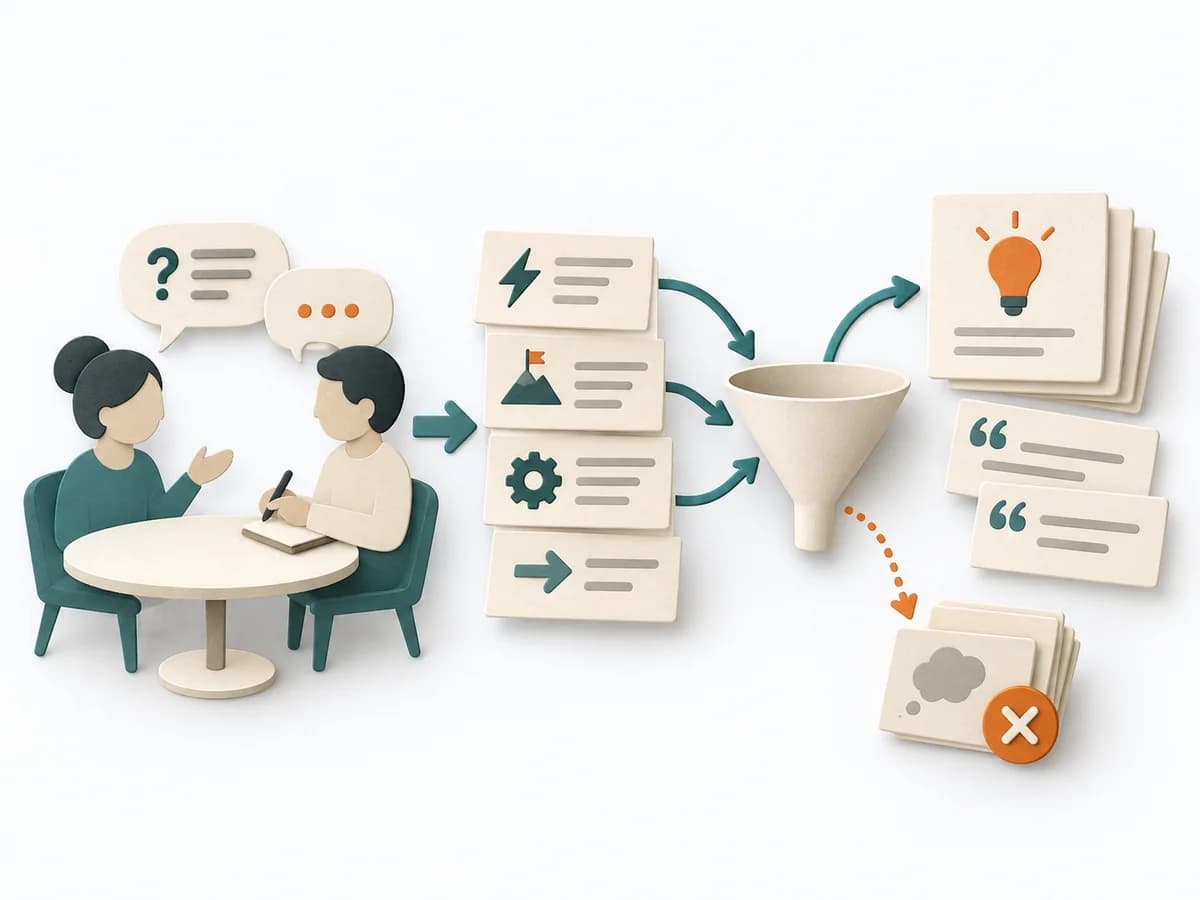 Product Discovery Opportunity Interview | 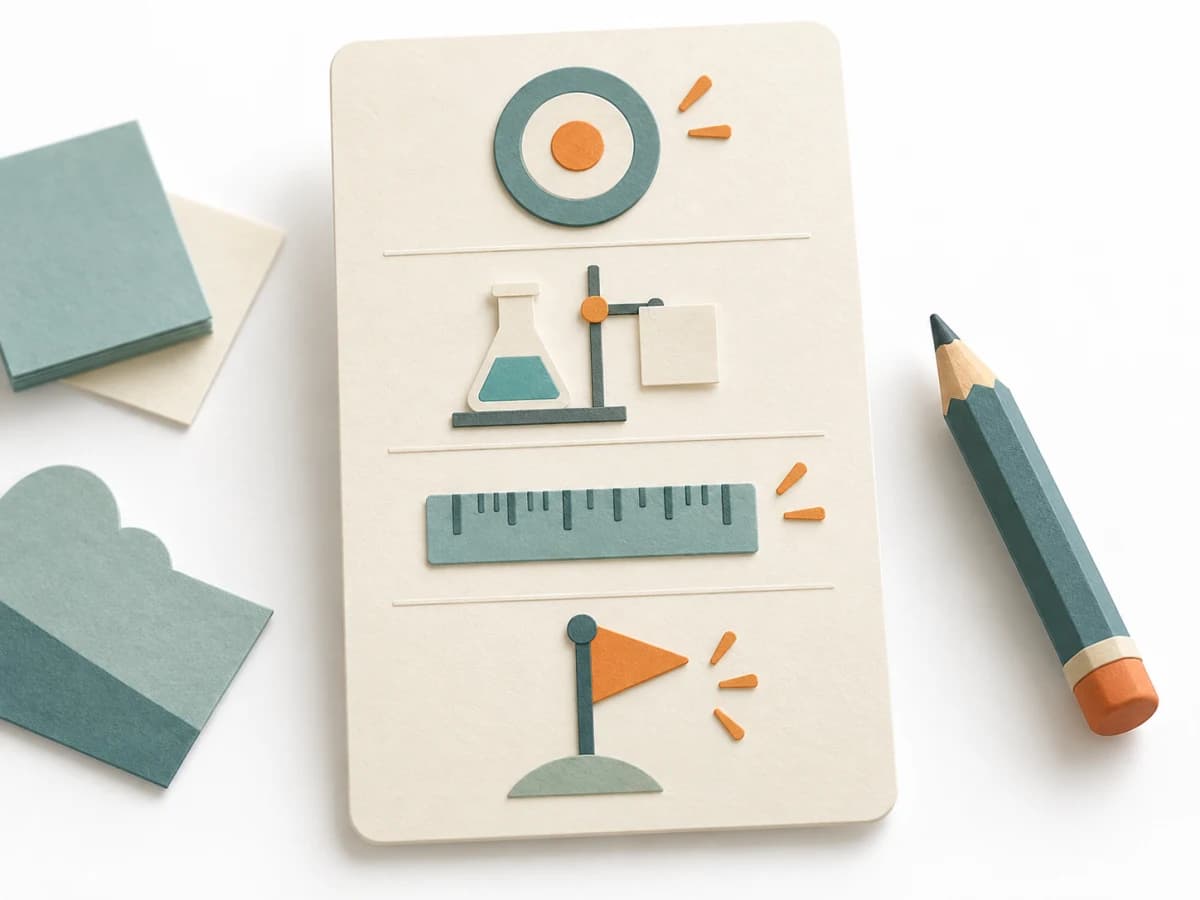 Product Discovery Test Card | 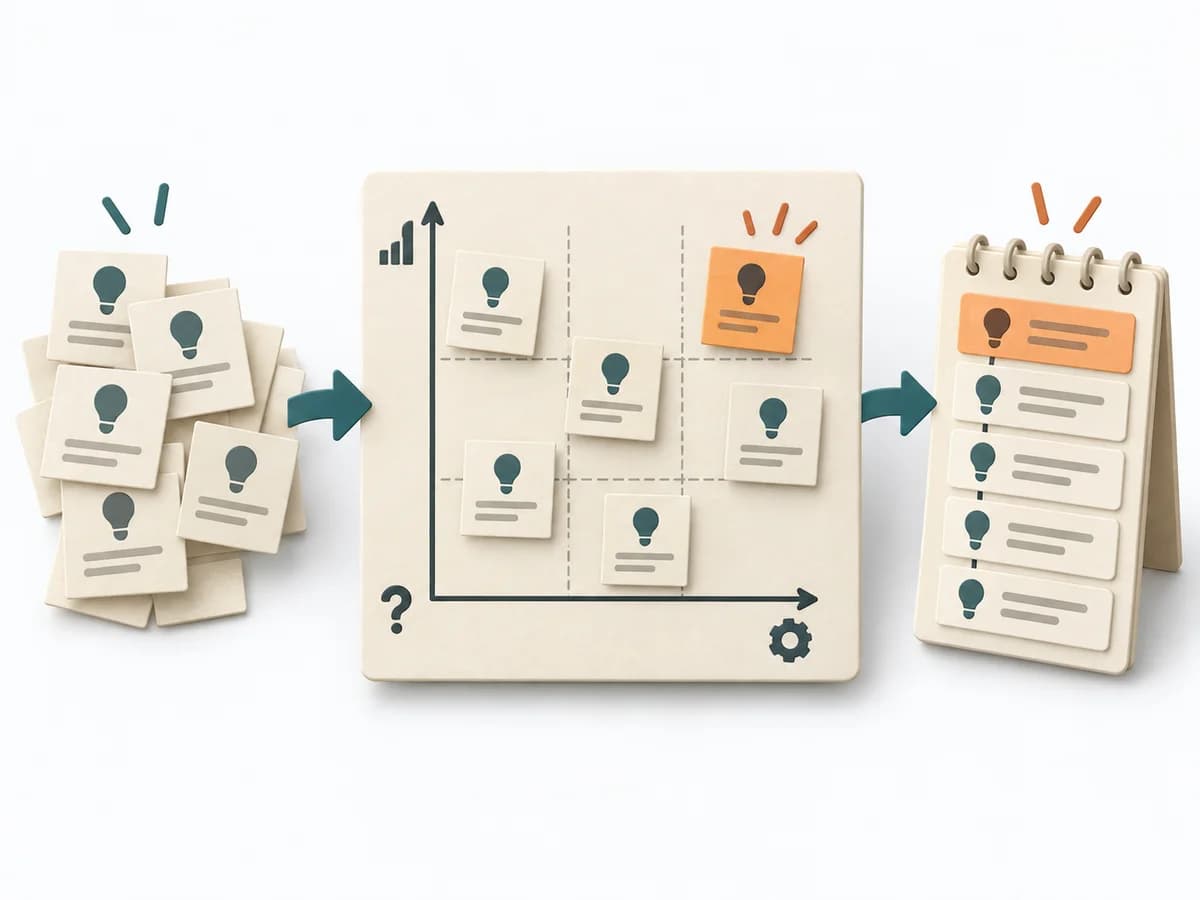 Product Discovery Hypothesis Prioritization Canvas |
|---|---|---|---|---|
Purposedifferent | When research notes, feedback, or observations sit unconnected side by side, affinity diagramming sorts the raw material into solid themes. Many individual points turn into patterns that make decisions and opportunities clearer. | When opportunities are still hidden behind signals of need, it structures conversations around needs and obstacles. It looks for patterns that lead to new product opportunities. | The Test Card turns a critical assumption into a testable claim and specifies in advance which result counts as success. | When many hypotheses compete for attention, it brings order to their learning sequence and importance. It separates problem, assumption, solution, and evidence. The result is captured as a prioritization canvas and a hypothesis backlog. |
Complexitydifferent | Low | Medium | Low | Medium |
Timedifferent | 45–90 min | 30-60 min je Interview | 20-35 min | 60-90 min |
Participantsdifferent | 3-10 | 5-12 Interviews | 1-5 | 3-8 |
Formatdifferent | Workshop | Workshop + async | Workshop + async | Workshop |
Outputdifferent | Theme clusters, Insight statements, Opportunity areas | Interview Notes, Opportunity Themes, Customer Quotes | Test Card with a pre-set threshold | Prioritization Canvas, Hypothesis Backlog |
Tagsno overlap | SynthesisQualitativeRoot cause | DiscoveryInterviewsOpportunityCustomer | ExperimentsValidationDiscoveryHypothesis | ExperimentsPrioritizationDiscoveryHypothesis |