View methods side by side.
Choose up to four methods. Add them using the search and share the comparison by copying its link.
| Criterion | 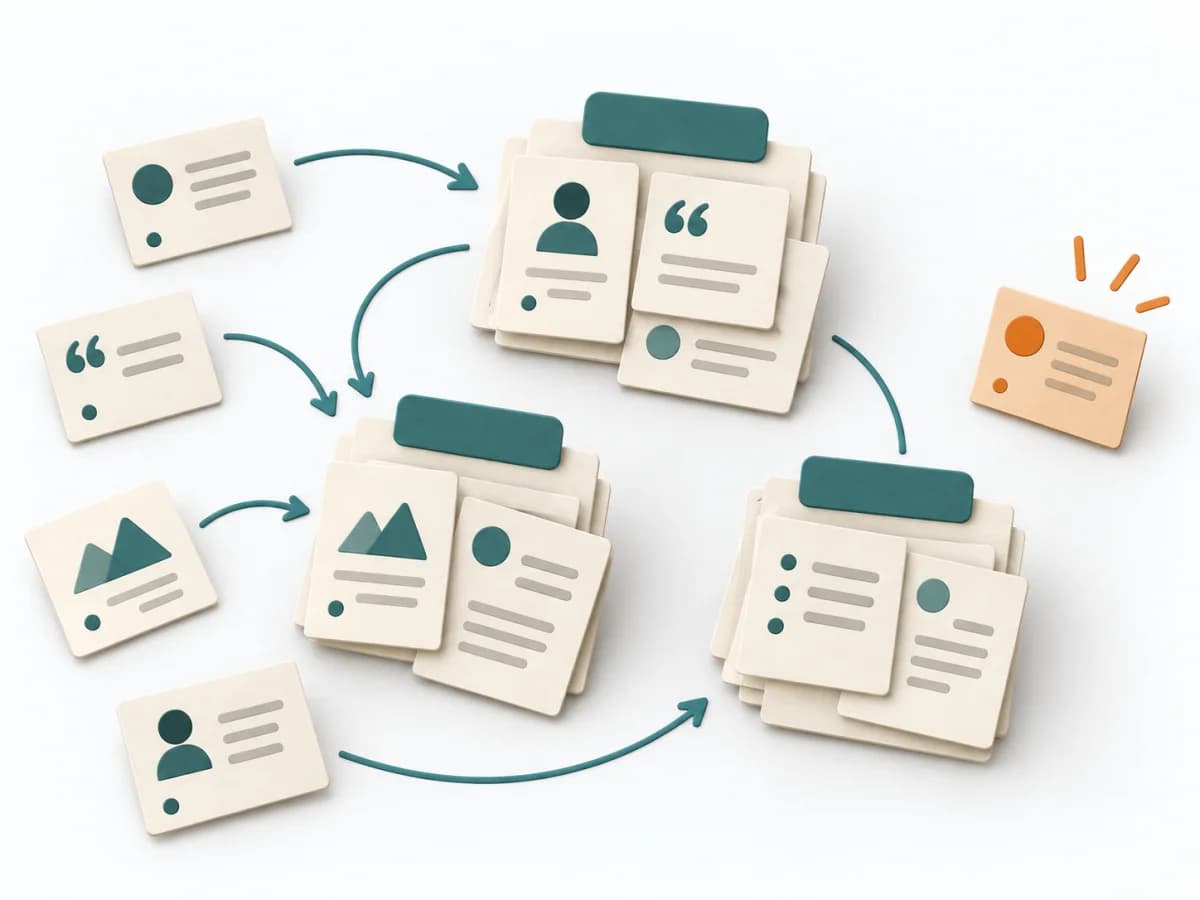 UX Research Affinity Diagramming |  Decision Making Delphi Method | 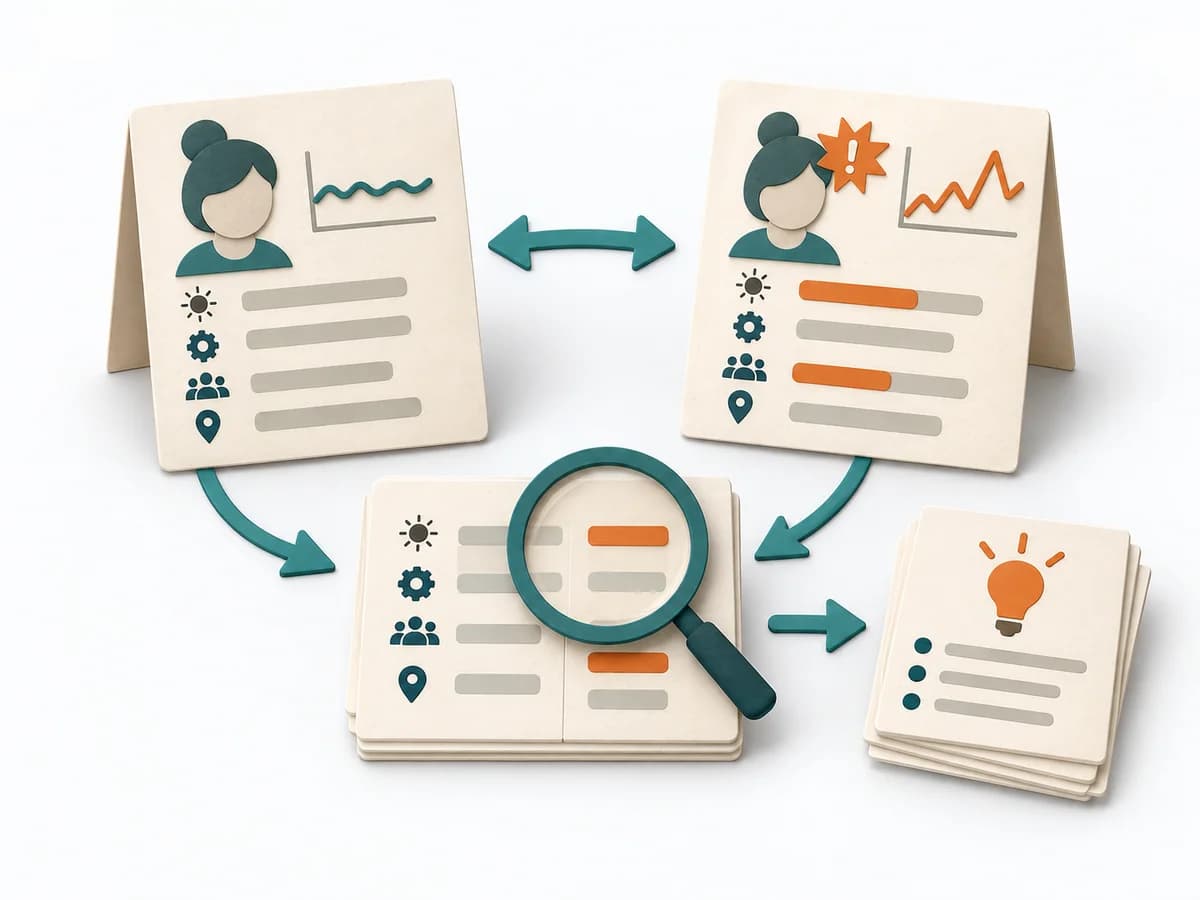 Operations Change Analysis |  Product Strategy DIBB |
|---|---|---|---|---|
Purposedifferent | When research notes, feedback, or observations sit unconnected side by side, affinity diagramming sorts the raw material into solid themes. Many individual points turn into patterns that make decisions and opportunities clearer. | When knowledge is distributed and direct dominance should be avoided, groups quickly fall under the sway of their opinion leaders. The Delphi Method gathers assessments iteratively and gradually brings expert judgments closer together. | For a deviation after a change, the method isolates the influence of the altered condition. It narrows down which differences are relevant and which are just accompanying noise. | DIBB helps clarify target groups, value, goals, and priorities by making the logic behind a decision explicit. It captures results as a DIBB document, belief list, bet list, and learning report. |
Complexitydifferent | Low | High | Medium | Low |
Timedifferent | 45–90 min | 1-4 Wochen | 45-120 min | 1-2 h |
Participantsdifferent | 3-10 | 6-30 Experten | 2-6 | 2-8 |
Formatdifferent | Workshop | Async | Workshop + async | Workshop + async |
Outputdifferent | Theme clusters, Insight statements, Opportunity areas | Expert Forecast, Consensus Range, Assumption Notes | Change Matrix, Cause Hypotheses, Validation Questions, Action List | DIBB document, Belief list, Bet list, Learning report |
Tagsno overlap | SynthesisQualitativeRoot cause | ForecastingExpertsDecisionStrategy | ChangeRoot causeTroubleshootingComparison | StrategyDecisionAssumptionsHypothesis |