View methods side by side.
Choose up to four methods. Add them using the search and share the comparison by copying its link.
Selected:Affinity DiagrammingDecision Rights MappingArchitecture Decision RecordArchitecture Inception Canvas
| Criterion |  UX Research Affinity Diagramming |  Decision Making Decision Rights Mapping |  Architecture Architecture Decision Record | 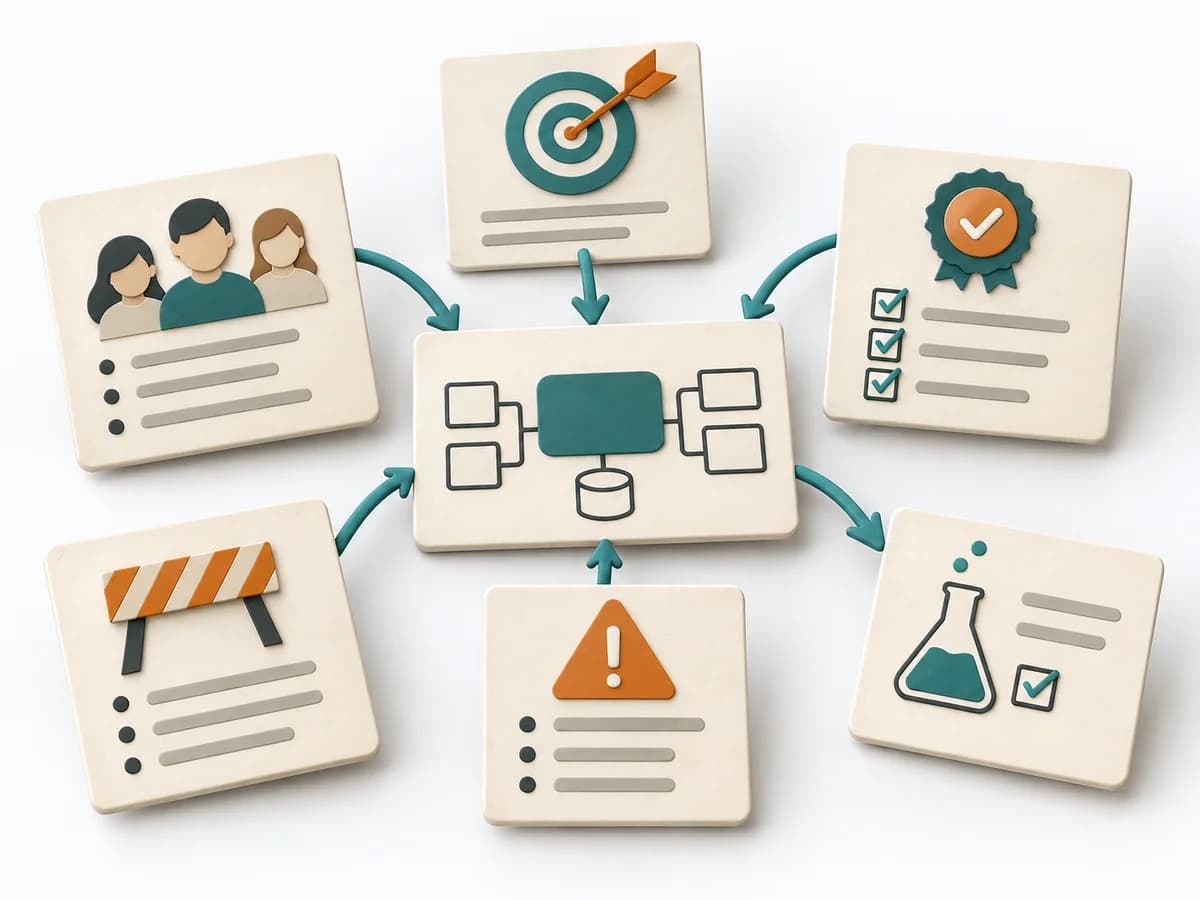 Architecture Architecture Inception Canvas |
|---|---|---|---|---|
Purposedifferent | When research notes, feedback, or observations sit unconnected side by side, affinity diagramming sorts the raw material into solid themes. Many individual points turn into patterns that make decisions and opportunities clearer. | In organizations with many stakeholders, it often blurs who actually decides and who is merely consulted. It separates options, evaluation criteria, and open risks. The result is captured as a Decision Rights matrix and an agreement. | An ADR permanently records an architecture decision with context, trade-offs, and consequence. It creates continuity for later changes because the decision path stays traceable. | The Architecture Inception Canvas bundles the first architecture questions into a compact decision picture. It fits when an initiative is still in motion but still needs clear guardrails. |
Complexitydifferent | Low | Medium | Low | Low |
Timedifferent | 45–90 min | 90-180 min | 15-45 min | 1-2 h |
Participantsdifferent | 3-10 | 4-12 | 1-3 | 3-8 |
Formatdifferent | Workshop | Workshop | Async | Workshop |
Outputdifferent | Theme clusters, Insight statements, Opportunity areas | Decision Rights Matrix, Agreement | ADR File, Decision Log, Rationale | Inception Canvas, Risks, Goal List, Open Questions |
Tagsno overlap | SynthesisQualitativeRoot cause | DecisionGovernanceAlignmentResponsibility | ArchitectureRationaleDocumentationGovernance | AlignmentArchitectureCanvas |