View methods side by side.
Choose up to four methods. Add them using the search and share the comparison by copying its link.
| Criterion |  UX Research Affinity Diagramming |  Operations ALPEN Method | 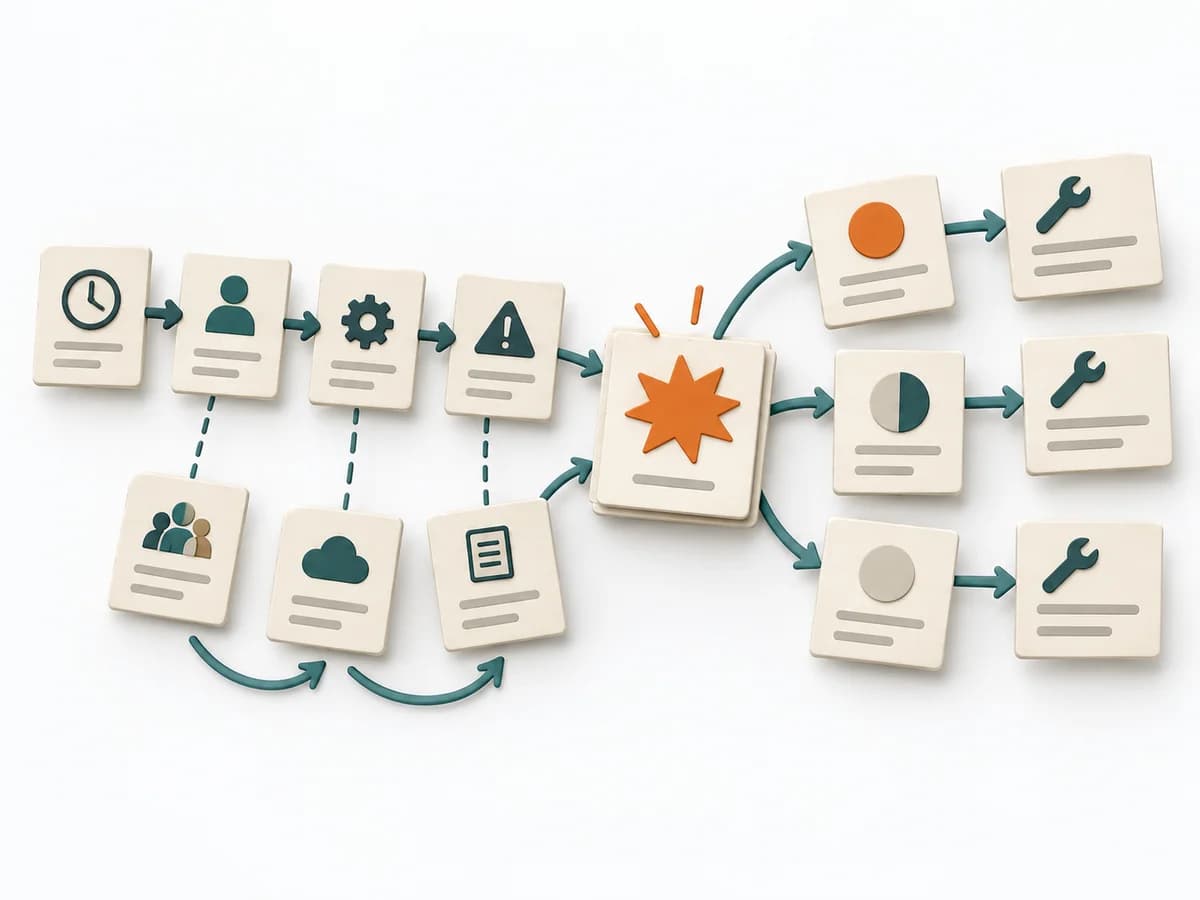 Operations Causal Factor Analysis |  Systems Thinking Current Reality Tree |
|---|---|---|---|---|
Purposedifferent | When research notes, feedback, or observations sit unconnected side by side, affinity diagramming sorts the raw material into solid themes. Many individual points turn into patterns that make decisions and opportunities clearer. | With an overloaded day full of too many tasks, a realistic picture of the day emerges. The method connects estimating, deciding, and buffer thinking so planning fits available energy and time. | For an event with a complicated course, the method breaks down the contributing factors along the timeline. It shows how conditions, decisions, and reactions together produce a course of events. | A Current Reality Tree condenses many symptoms into a few causal chains. The method makes visible which core problems drive several negative effects at once. |
Complexitydifferent | Low | Low | High | High |
Timedifferent | 45–90 min | 10-20 min daily | 2-6 h | 2-6 h |
Participantsdifferent | 3-10 | 1 | 3-10 | 3-8 |
Formatdifferent | Workshop | Async | Workshop + async | Workshop |
Outputdifferent | Theme clusters, Insight statements, Opportunity areas | Daily Plan, Time Estimates, Review Notes | Event Timeline, Causal Factor Chart, Cause List, Corrective Actions | Current Reality Tree, Core Problems, Intervention Ideas |
Tagsno overlap | SynthesisQualitativeRoot cause | PlanningTime managementProductivityOperations | CausalityIncidentRoot causeTimeline | Systems thinkingRoot causeConstraintsCausality |