View methods side by side.
Choose up to four methods. Add them using the search and share the comparison by copying its link.
| Criterion | 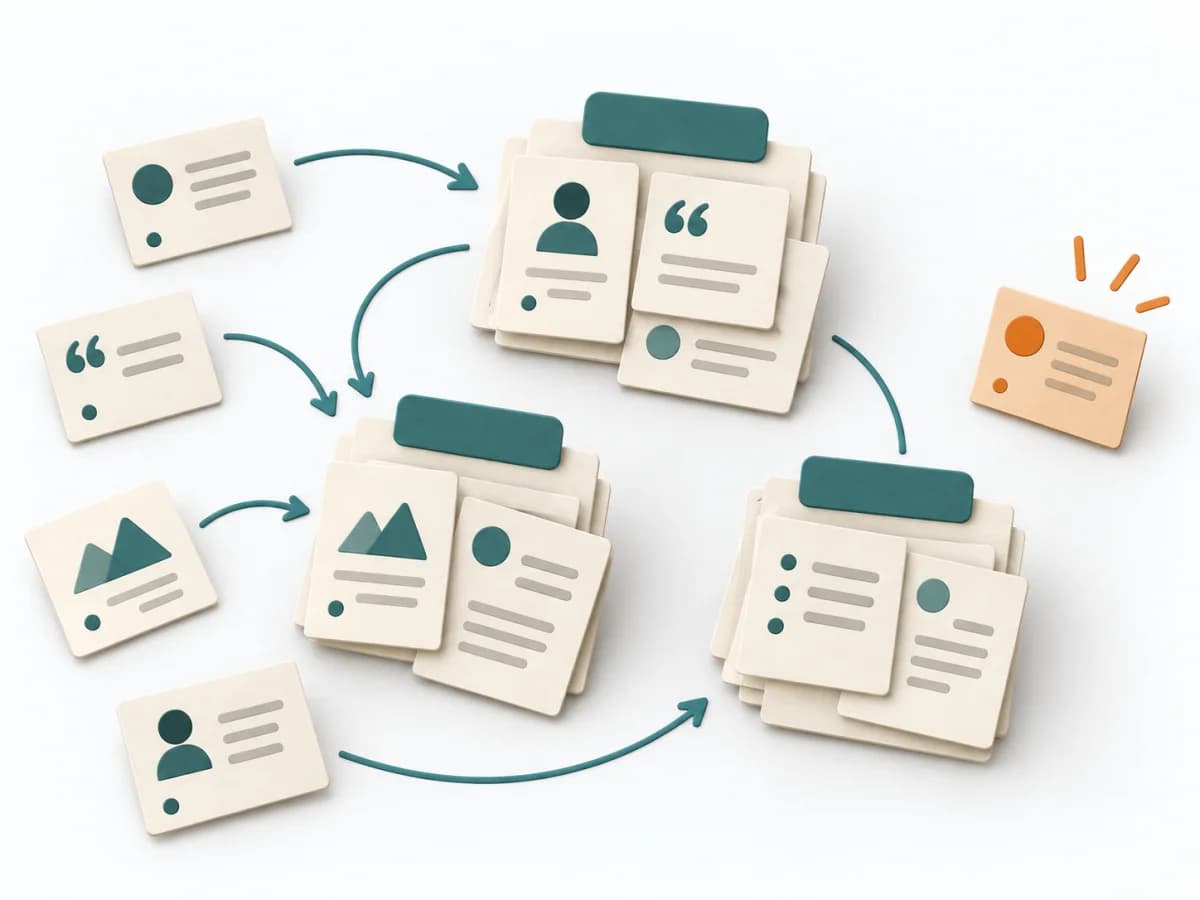 UX Research Affinity Diagramming |  Facilitation Alignment Mapping | 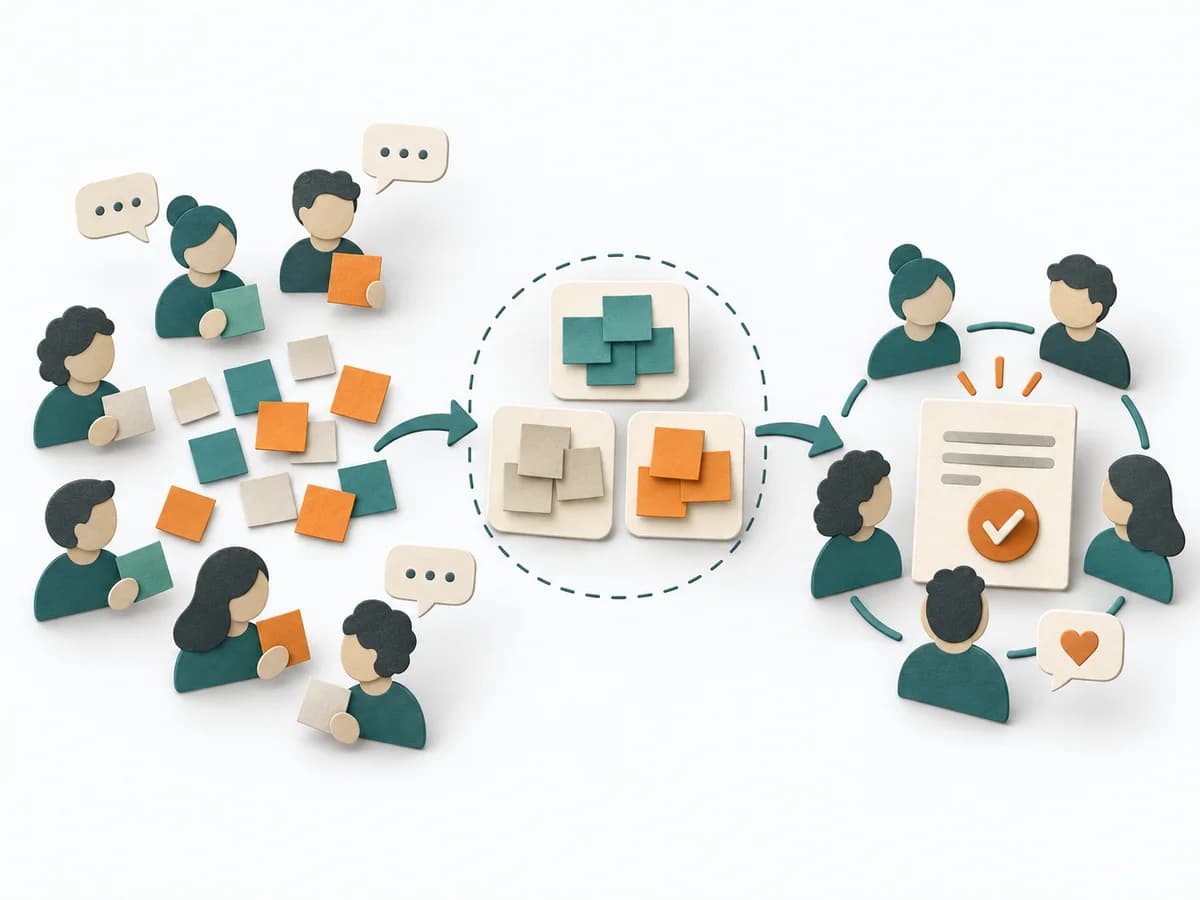 Facilitation Consensus Workshop |  Facilitation Power Interest Grid |
|---|---|---|---|---|
Purposedifferent | When research notes, feedback, or observations sit unconnected side by side, affinity diagramming sorts the raw material into solid themes. Many individual points turn into patterns that make decisions and opportunities clearer. | When several people work toward one goal but hold different mental maps, Alignment Mapping makes the discrepancies visible. It arranges goals, assumptions, and priorities so shared direction becomes verifiable. | When a group needs a solid decision without outvoting individual factions, a Consensus Workshop creates a negotiable common ground. It makes agreement, reservations, and open tensions discussable at the same time. | When many stakeholders compete for attention at once, the Power Interest Grid sorts them by influence and stake. It turns individual contributions into a visible selection. The result is captured as a Power Interest Grid and a stakeholder-specific strategy. |
Complexitydifferent | Low | Medium | Medium | Low |
Timedifferent | 45–90 min | 1-2 h | 1-3 h | 30-60 min |
Participantsdifferent | 3-10 | 4-12 | 5-30 | 2-8 |
Formatsame | Workshop | Workshop | Workshop | Workshop |
Outputdifferent | Theme clusters, Insight statements, Opportunity areas | Alignment Map, Open Issues, Decision Questions | Consensus Clusters, Theme Titles, Priority Areas | Power Interest Grid, Strategy per Stakeholder |
Tagsno overlap | SynthesisQualitativeRoot cause | AlignmentStakeholdersStrategyFacilitation | FacilitationConsensusWorkshopAlignment | StakeholdersFacilitationAlignmentPlanning |