View methods side by side.
Choose up to four methods. Add them using the search and share the comparison by copying its link.
Selected:Affinity DiagrammingArchitecture Decision RecordOpportunity InterviewOpportunity Solution Tree
| Criterion |  UX Research Affinity Diagramming |  Architecture Architecture Decision Record | 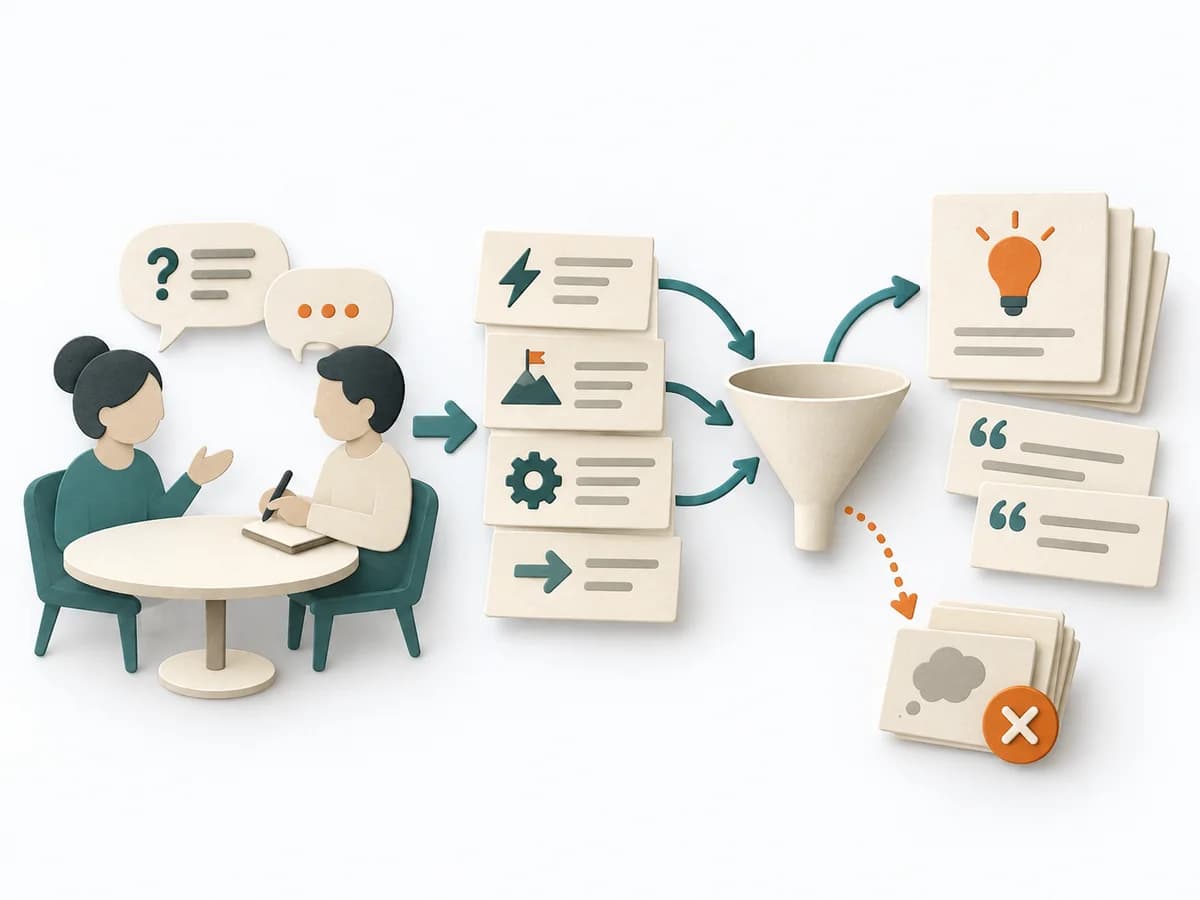 Product Discovery Opportunity Interview | 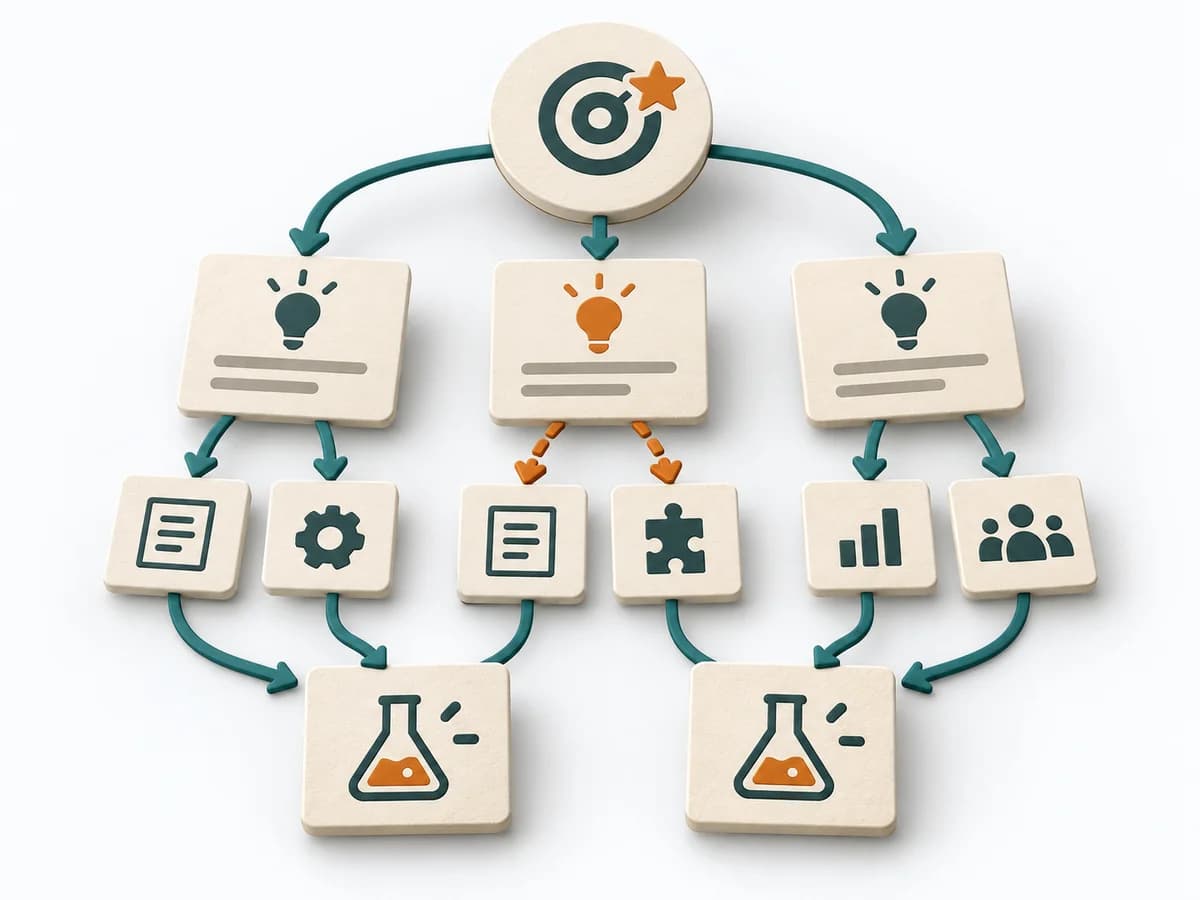 Product Discovery Opportunity Solution Tree |
|---|---|---|---|---|
Purposedifferent | When research notes, feedback, or observations sit unconnected side by side, affinity diagramming sorts the raw material into solid themes. Many individual points turn into patterns that make decisions and opportunities clearer. | An ADR permanently records an architecture decision with context, trade-offs, and consequence. It creates continuity for later changes because the decision path stays traceable. | When opportunities are still hidden behind signals of need, it structures conversations around needs and obstacles. It looks for patterns that lead to new product opportunities. | When discovery keeps swinging between goals, ideas, and learning loops, it creates clear steering logic. It connects the desired outcome, opportunities, and experiments into a legible structure. |
Complexitydifferent | Low | Low | Medium | Medium |
Timedifferent | 45–90 min | 15-45 min | 30-60 min je Interview | 1-2 h Setup, laufend |
Participantsdifferent | 3-10 | 1-3 | 5-12 Interviews | 2-6 |
Formatdifferent | Workshop | Async | Workshop + async | Workshop + async |
Outputdifferent | Theme clusters, Insight statements, Opportunity areas | ADR File, Decision Log, Rationale | Interview Notes, Opportunity Themes, Customer Quotes | Opportunity Solution Tree, Experiment Backlog, Learning Log |
Tagsno overlap | SynthesisQualitativeRoot cause | ArchitectureRationaleDocumentationGovernance | DiscoveryInterviewsOpportunityCustomer | DiscoveryOutcomesExperimentsOpportunity |