View methods side by side.
Choose up to four methods. Add them using the search and share the comparison by copying its link.
| Criterion |  Architecture Architecture Decision Record |  Decision Making Force Field Analysis | 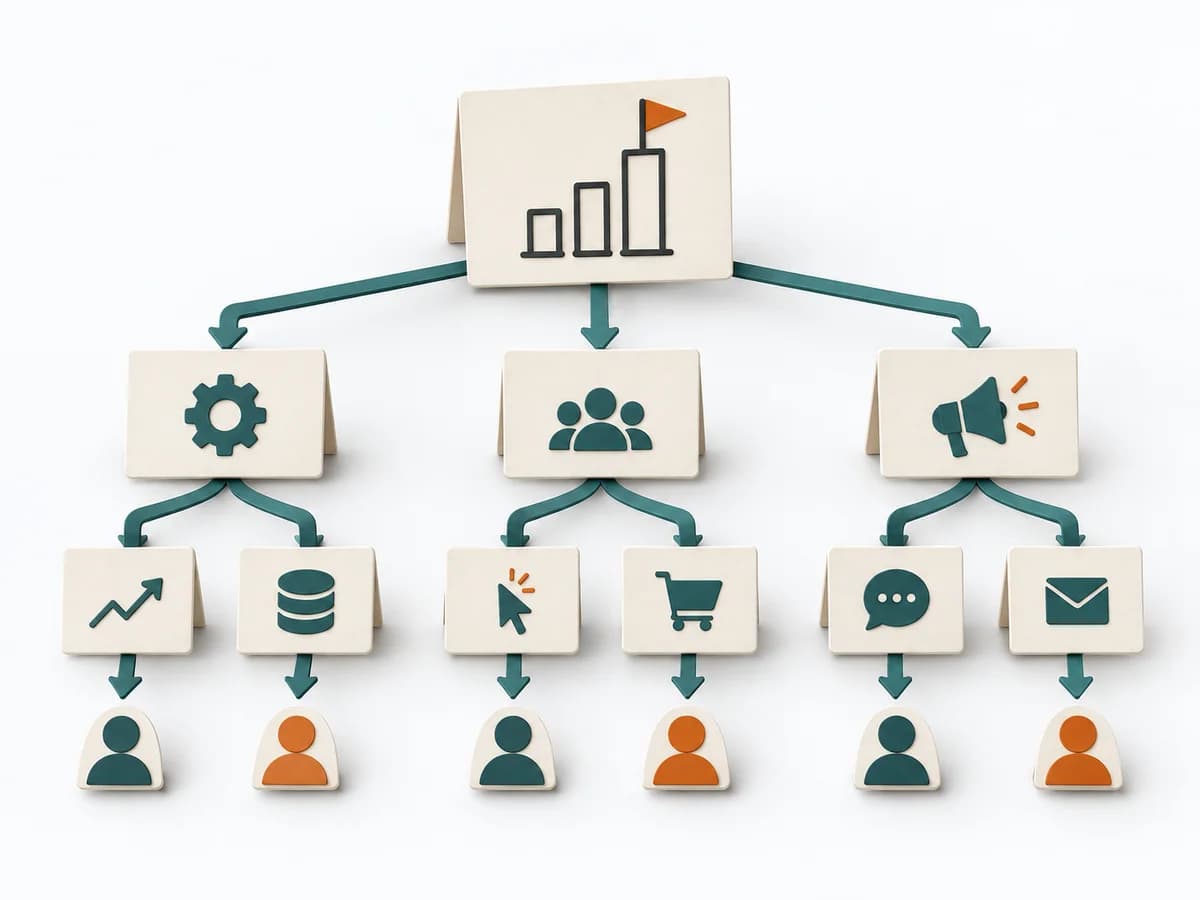 Product Strategy KPI Tree |  Decision Making Decision Rights Mapping |
|---|---|---|---|---|
Purposedifferent | An ADR permanently records an architecture decision with context, trade-offs, and consequence. It creates continuity for later changes because the decision path stays traceable. | In change initiatives, supporting and restraining forces sit at the table at the same time. Force Field Analysis makes these tensions explicit and shows where change can be pushed forward by strengthening or relieving. | When metrics across the organization drift apart, it arranges drivers and effects under one shared logic. It connects customer value, product logic, and decision priorities. The result is captured as a KPI tree and owner list. | In organizations with many stakeholders, it often blurs who actually decides and who is merely consulted. It separates options, evaluation criteria, and open risks. The result is captured as a Decision Rights matrix and an agreement. |
Complexitydifferent | Low | Low | Medium | Medium |
Timedifferent | 15-45 min | 45-90 min | 90-180 min initial, dann laufend | 90-180 min |
Participantsdifferent | 1-3 | 3-12 | 3-8 | 4-12 |
Formatdifferent | Async | Workshop | Workshop + async | Workshop |
Outputdifferent | ADR File, Decision Log, Rationale | Force Field Map, Change Levers, Risk Notes | KPI Tree, Owner List | Decision Rights Matrix, Agreement |
Tagsno overlap | ArchitectureRationaleDocumentationGovernance | ChangeDecisionStrategy | MetricsStrategyAlignmentMeasurement | DecisionGovernanceAlignmentResponsibility |