View methods side by side.
Choose up to four methods. Add them using the search and share the comparison by copying its link.
| Criterion |  Operations A3 Problem Solving |  Engineering Hypothesis-Driven Troubleshooting | 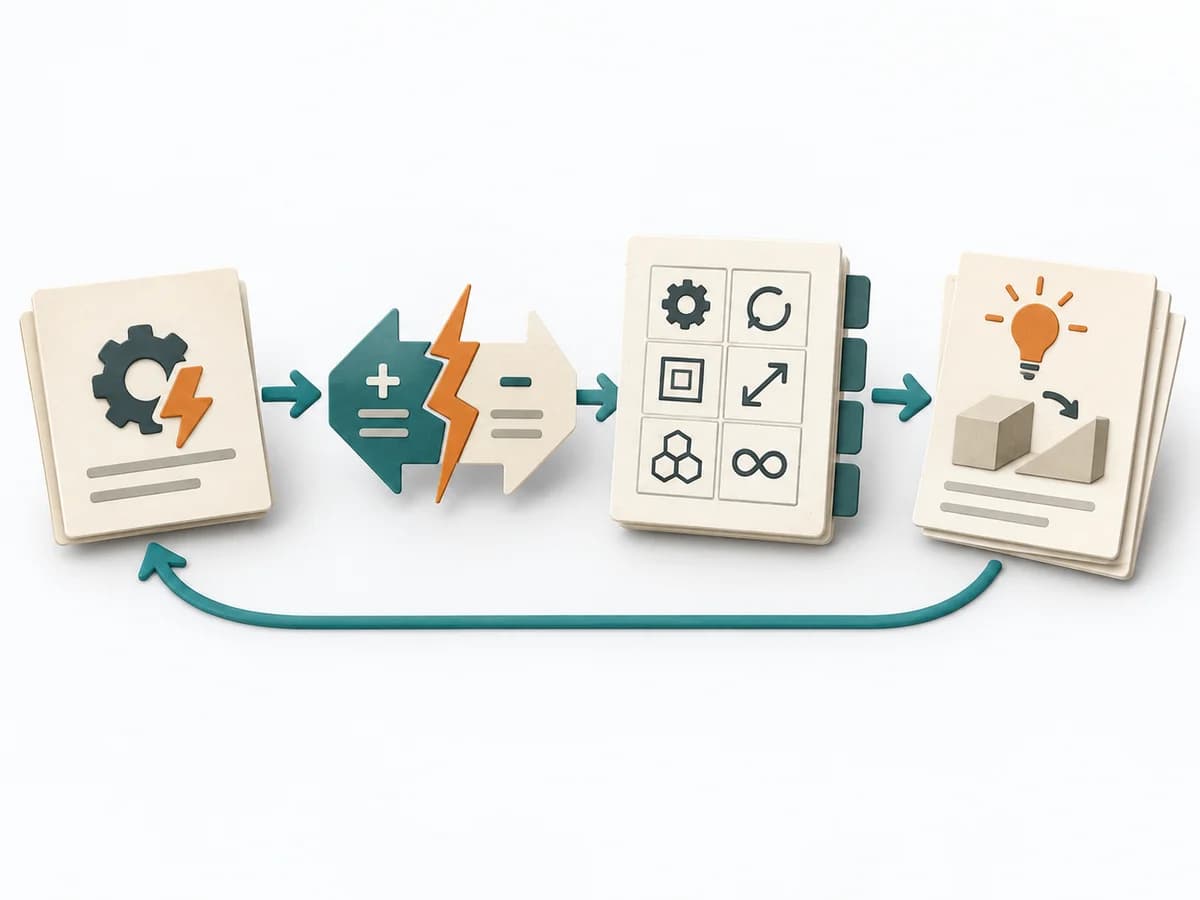 Innovation TRIZ | 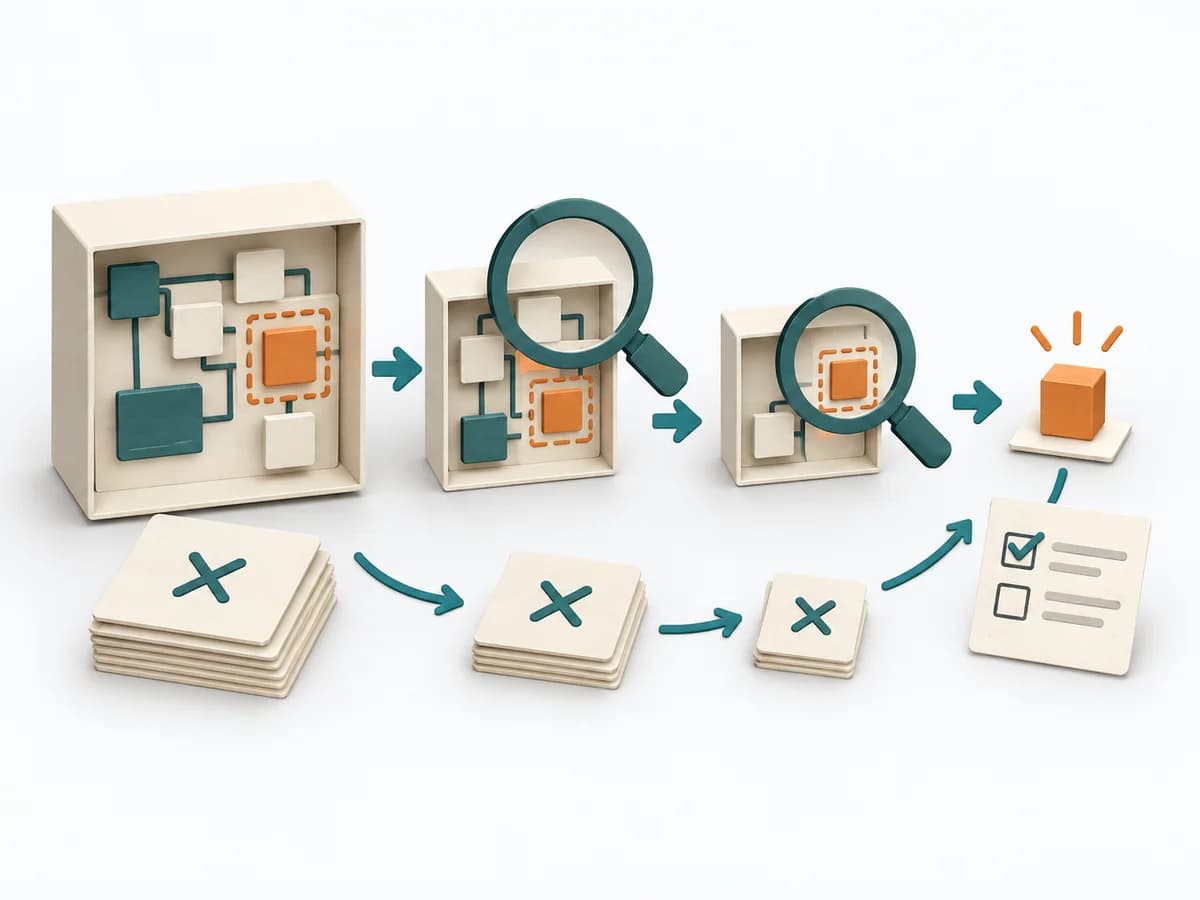 Engineering Fault Isolation |
|---|---|---|---|---|
Purposedifferent | For a complex deviation with several people involved, the method bundles problem, analysis, and decision onto one page. It creates a shared working space where causes, countermeasures, and follow-up fit together. | When systems fail unexpectedly, spontaneous attempts often produce more noise than insight. Hypothesis-driven Troubleshooting translates symptoms into testable assumptions and makes troubleshooting learnable. | For technical contradictions or trade-offs, the method looks for solutions that resolve opposing requirements at the same time. It translates limits into an explicit picture of conflict that becomes workable. This produces not just compromises but more elegant principles. | In technical failures, the visible symptom often gets mixed up with the actual cause. Fault Isolation narrows the fault space and progressively reduces which part of the system is truly affected. |
Complexitydifferent | Medium | Medium | High | Medium |
Timedifferent | 45-90 min | 30-240 min | 1-4 h | 30-180 min |
Participantsdifferent | 2-5 | 1-6 | 2-8 | 1-6 |
Formatsame | Workshop + async | Workshop + async | Workshop + async | Workshop + async |
Outputdifferent | A3 Report, Action Plan, Root Cause Analysis | Hypothesis Log, Test Plan, Evidence Notes, Diagnosis Summary | Contradiction Statement, Inventive Principles, Solution Concepts | Fault Isolation Map, Test Log, Excluded Hypotheses, Narrowed Fault Area |
Tagsno overlap | LeanProblem solvingCoachingOperations | TroubleshootingProblem solvingDiagnosis | InnovationProblem solvingContradictionsCreativity | TroubleshootingDiagnosisEngineering |