View methods side by side.
Choose up to four methods. Add them using the search and share the comparison by copying its link.
| Criterion |  Operations 8D Problem Solving | 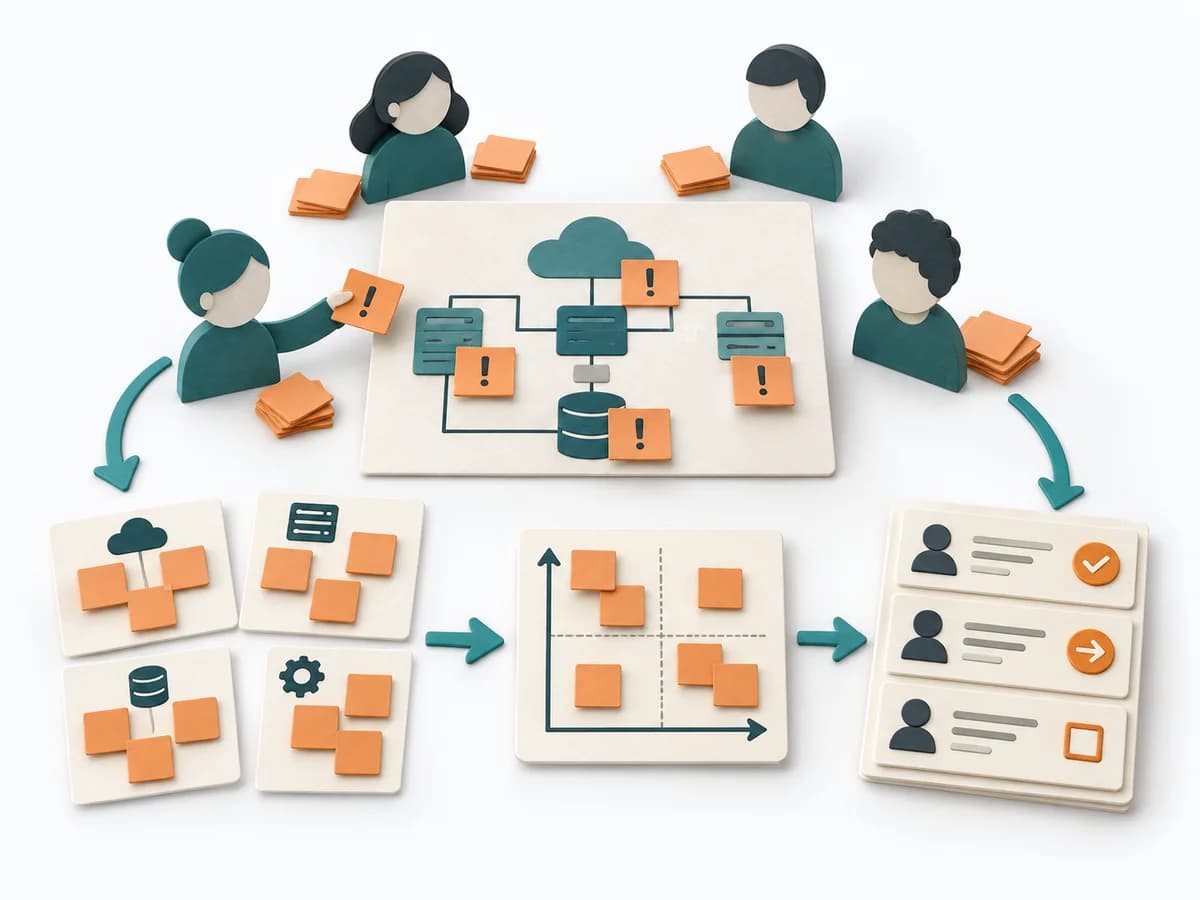 Architecture Risk Storming |  UX Research Empathy Mapping |  Operations Failure Mode and Effects Analysis |
|---|---|---|---|---|
Purposedifferent | For an acute quality or delivery problem, the method structures immediate protection and root cause work together. It keeps the situation stable while the actual cause is investigated cleanly. | Helps clarify architecture context, options, and consequences in concrete terms. It organizes technical context, alternatives, and consequences. The result is captured as an Annotated Diagram, a Prioritized Risk List, and an Action Backlog. | When a lot is assumed about a target group but little is seen jointly, empathy mapping makes knowledge and gaps directly comparable. The picture also shows which assumptions hold up and where evidence is missing. | For a process, product, or service with noticeable failure risks, the method assesses possible failure modes in advance. It directs attention to combinations of occurrence, effect, and detectability. |
Complexitydifferent | High | Low | Low | High |
Timedifferent | 1-6 Wochen | 60-90 min | 30–60 min | 2-6 h |
Participantsdifferent | 4-10 | 4-12 | 4-8 | 3-10 |
Formatdifferent | Workshop + async | Workshop | Workshop | Workshop |
Outputdifferent | 8D Report, Containment Plan, Root Cause Evidence, Corrective Action Plan | Annotated Diagram, Prioritized Risk List, Action Backlog | Empathy Map, Assumptions List, Research Gaps | FMEA Table, Risk Priority, Mitigation Actions |
Tagsno overlap | QualityProblem solvingRoot cause | RiskArchitectureWorkshopValidation | SynthesisQualitativeWorkshop | RiskQualityOperationsRoot cause |